Supplements — the long version
Most of the supplement industry is theatre. A small handful of compounds have replicated human outcome data — and the gap between that handful and everything else is bigger than the marketing suggests.
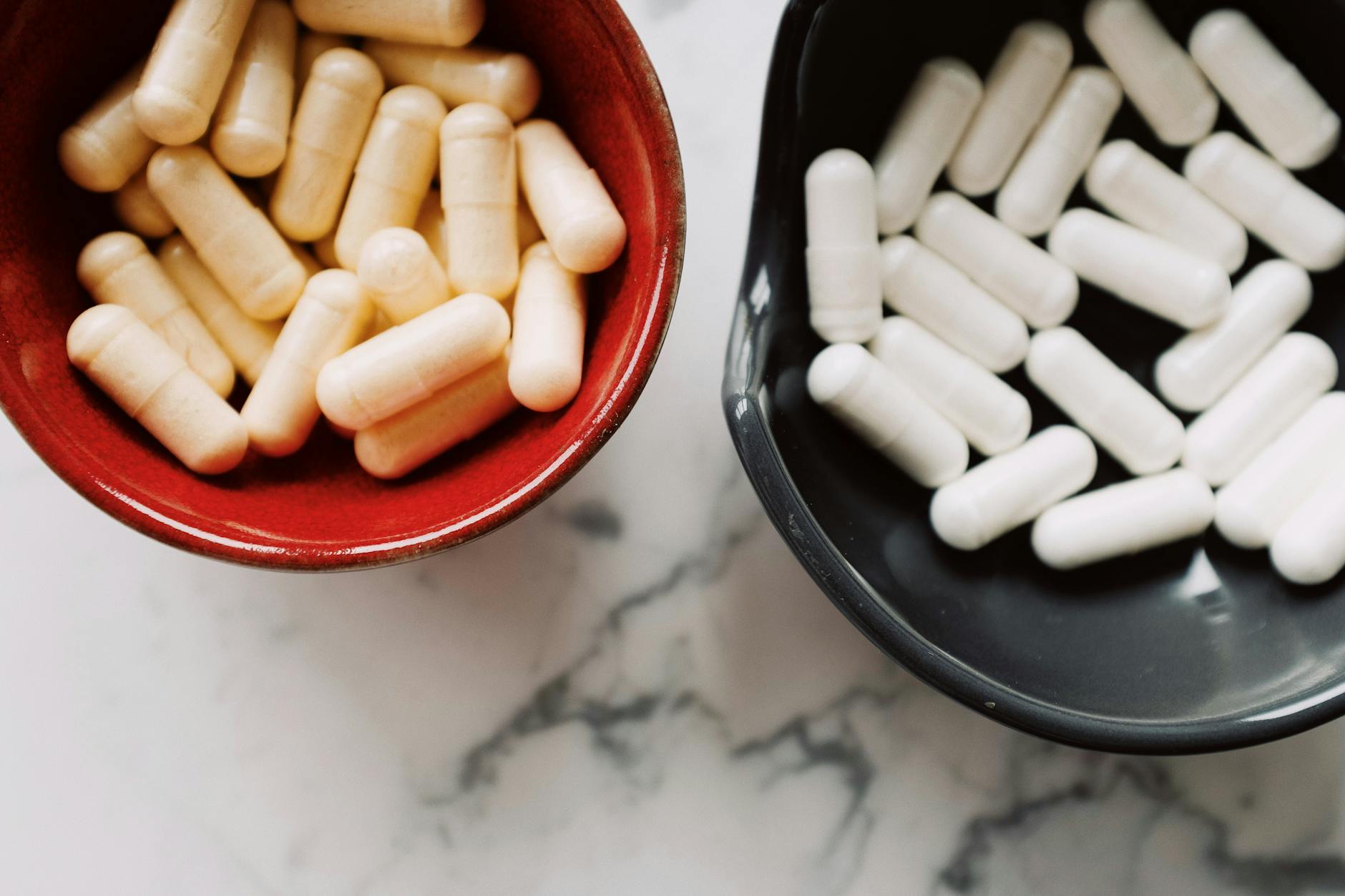
What "supplement" actually means
Under U.S. law, a dietary supplement is a product taken by mouth that contains a "dietary ingredient" — vitamins, minerals, herbs, amino acids, enzymes — and is regulated under DSHEA (Dietary Supplement Health and Education Act of 1994). The category is defined by what it is not: not a drug, not a food additive, not subject to pre-market efficacy review by the FDA. Manufacturers are responsible for safety. Efficacy is, in regulatory terms, on the buyer.
That framing matters more than people realize. It means the FDA can act on a supplement only after a safety problem appears, not before. It means label claims are policed under different rules than drug claims, with "structure-function" language ("supports immune health") legal where outright disease claims are not. And it means that the compendium of products on a shelf at a vitamin retailer covers a spectrum from molecules with phase-3-grade evidence to molecules whose human studies are a handful of underpowered crossover trials.
I treat the field through three filters. Established supplements have replicated randomized-controlled-trial (RCT) data on the outcome they are sold for. Promising supplements have plausible mechanism and limited or mixed human trials. Speculative supplements have a mechanism story and marketing momentum but little controlled human evidence.
Most of the products on any given shelf are in the third bucket. A small set sit in the first. The job of this page is to make the distinction visible.
The four supplements with hard outcome data
Four compounds, by my read of the literature, have replicated randomized trial data on outcomes most readers actually care about. They are unglamorous. They are also the ones I would not skip.
Creatine monohydrate. The most-studied ergogenic supplement in the human literature. Three to five grams daily increases intramuscular phosphocreatine, improves repeated-effort anaerobic performance, and — across dozens of trials — produces small but consistent gains in strength and lean mass when paired with resistance training [Kreider 2017]. Cognitive signals in older adults and in sleep-deprived subjects are smaller but real. Safety profile is, after thirty years, unremarkable.
Omega-3 EPA/DHA. Long-chain marine omega-3s (eicosapentaenoic acid and docosahexaenoic acid) at roughly 2 grams per day of combined EPA+DHA lower triglycerides, modestly reduce cardiovascular events in secondary-prevention populations, and have anti-inflammatory effects measurable in lipid mediators [Bhatt 2019]. The signal is strongest for prescription EPA at high dose in established cardiovascular disease; the dietary case is softer but defensible.
Vitamin D3. Useful for correcting deficiency, unimpressive for general supplementation in already-replete adults. VITAL, the largest RCT, did not show all-cause mortality or major cardiovascular benefit at 2,000 IU daily in a broadly-vitamin-D-replete American cohort [Manson 2019]. The story changes for people who are actually deficient, where supplementation matters; the consumer story too often skips that distinction.
Magnesium. Magnesium glycinate or citrate at 200–400 mg elemental magnesium daily improves subjective sleep quality in deficient or borderline-deficient adults and has small effects on blood pressure [Boyle 2017]. The U.S. population skews deficient enough that this is one of the few "fill a gap" arguments that actually holds up at population level.
Four supplements out of forty thousand SKUs have outcome data worth crossing the street for. That ratio is the whole story.
Probiotics, prebiotics, postbiotics — what survives the gut
Probiotic marketing has outrun the trial literature by a decade. The gut-microbiome story is real and scientifically rich. The translation from "the microbiome matters" to "this specific capsule of Lactobacillus rhamnosus GG will fix your specific symptom" is a much longer logical bridge than the marketing implies.
What the trials show: a few strains have meaningful, reproducible effects on specific narrow indications — Saccharomyces boulardii and Lactobacillus rhamnosus GG for antibiotic-associated diarrhea, Bifidobacterium infantis for irritable bowel syndrome in some trials, multi-strain formulations for pouchitis prevention. Outside those indications, the evidence is mixed, small-effect, or strain-and-dose-specific in ways the consumer-product category mostly ignores [Suez 2019].
Prebiotics — fermentable fibers like inulin, GOS, FOS — feed existing microbiota and have more consistent effects on short-chain fatty acid production than oral probiotics do on long-term colonization. Postbiotics (heat-killed bacteria, microbial metabolites) are a newer category where the trial base is thin but the conceptual case is interesting. None of this means a generic "gut health" capsule does what the bottle says.
If you took a course of antibiotics, a documented probiotic strain is a reasonable bet for two weeks. If you took a fall scrolling and are now reaching for "gut support" at a supplement store, eat the beans and the kefir first. Fiber outperforms most capsules in a fair fight.
Nootropics — caffeine, L-theanine, racetams, lion's mane
The nootropic category covers anything sold for cognitive enhancement. The honest assessment splits cleanly. Caffeine — 100 to 200 mg, 30 to 60 minutes before sustained cognitive or physical work — is the best-studied cognitive enhancer humans have ever used. L-theanine, paired with caffeine at roughly 2:1 theanine-to-caffeine, modestly attenuates the jitter and improves the focus profile in controlled trials [Owen 2008]. That pairing is the one nootropic claim where the data does what the product promises.
The racetam family — piracetam, aniracetam, phenylpiracetam — has a long Eastern European clinical history in cognitive-decline and post-stroke indications, with mixed Western replication. Piracetam is approved as a drug in several jurisdictions, sold as a supplement in others, and unregulated in still others. The effect size in healthy adults is modest where it exists at all.
Lion's mane (Hericium erinaceus) is the most-marketed "natural" nootropic of the past five years. The mechanism story — nerve growth factor stimulation in cell culture — is real. The human trial base is small. Mori 2009, a Japanese RCT in older adults with mild cognitive impairment, showed modest improvement on the Hasegawa Dementia Scale after 16 weeks of 3 g daily, with regression to baseline after washout [Mori 2009]. That is suggestive, not conclusive, and the supplement marketplace has run far ahead of one small trial.
Adaptogens — ashwagandha, rhodiola, and the cortisol story
Adaptogens are a category invented in Soviet pharmacology in the 1940s to describe compounds that improved non-specific resistance to stress. The modern marketplace has stretched the term to cover almost any plant extract with a stress-related sales pitch, but a smaller core of compounds has actual human trial work.
Ashwagandha (Withania somnifera) has the strongest RCT base in this category — roughly a dozen trials at 300 to 600 mg of standardized root extract daily show reductions in self-reported stress and modest reductions in serum cortisol over 8 to 12 weeks [Chandrasekhar 2012]. The effect size is real but modest, and trial heterogeneity is high. There are emerging case reports of hepatotoxicity at high doses that are worth tracking.
Rhodiola rosea (300–600 mg of standardized extract) has signal on fatigue and on perceived stress in shift-work and exam-stress cohorts, with effect sizes smaller than ashwagandha's. Other named adaptogens — eleuthero, schisandra, holy basil — have thin human trial bases and are marketed harder than the data justifies.
Stacks vs minimum effective dose
The supplement industry sells stacks because they raise average order value. The data favors the opposite approach: one variable at a time, at a dose with trial support, for long enough to know if it is doing anything. The reason is mechanical. If you start six compounds at once and feel better, you have learned almost nothing about which one helped. If one of them is causing a side effect, you cannot tell which.
The minimum-effective-dose discipline also forces honesty about what each compound is for. "Energy" is not a diagnosis. "Stress" is not an outcome. If a supplement's promise cannot be reduced to a measurable thing — sleep onset latency, training volume, lipid panel, perceived exertion — the trial that would prove it works does not exist.
The boring foundations still win every fair comparison: sleep, load, protein, fiber, fish, sunlight. Supplementation is at most a finishing layer on a body that is otherwise being looked after. A capsule on a body that does not move is, in honest pharmacological terms, a rounding error.
Creatine monohydrate (strength, lean mass, repeated effort), omega-3 EPA/DHA (cardiovascular, triglycerides), vitamin D for documented deficiency, magnesium for sleep and BP in deficient adults.
Ashwagandha for stress, rhodiola for fatigue, lion's mane for mild cognitive impairment, specific probiotic strains for narrow indications, urolithin A for mitochondrial markers. Worth tracking, not yet hill-to-die-on supplements.
Most "stack" products, fadogia agrestis, undocumented mushroom blends, most adrenal-support formulations, most generic "gut health" capsules. Marketing-mature, trial-immature.
Supplements are a real category with a tiny island of real evidence and a continent of speculation. The interventions that beat the shelf — sleep, training, protein, fiber, sunlight — are the ones nobody can charge a premium for. The good supplements are the boring ones.
- Kreider RB, et al. International Society of Sports Nutrition position stand: safety and efficacy of creatine supplementation. J Int Soc Sports Nutr. 2017;14:18.
- Bhatt DL, et al. Cardiovascular Risk Reduction with Icosapent Ethyl for Hypertriglyceridemia (REDUCE-IT). N Engl J Med. 2019;380:11-22.
- Manson JE, et al. Vitamin D Supplements and Prevention of Cancer and Cardiovascular Disease (VITAL). N Engl J Med. 2019;380:33-44.
- Boyle NB, Lawton C, Dye L. The Effects of Magnesium Supplementation on Subjective Anxiety and Stress — A Systematic Review. Nutrients. 2017;9(5):429.
- Suez J, et al. The pros, cons, and many unknowns of probiotics. Nat Med. 2019;25:716-729.
- Owen GN, et al. The combined effects of L-theanine and caffeine on cognitive performance and mood. Nutr Neurosci. 2008;11(4):193-198.
- Mori K, et al. Improving effects of the mushroom Yamabushitake (Hericium erinaceus) on mild cognitive impairment: a double-blind placebo-controlled clinical trial. Phytother Res. 2009;23(3):367-372.
- Chandrasekhar K, Kapoor J, Anishetty S. A prospective, randomized double-blind, placebo-controlled study of safety and efficacy of a high-concentration full-spectrum extract of ashwagandha root. Indian J Psychol Med. 2012;34(3):255-262.
- Phillips SM, Chevalier S, Leidy HJ. Protein requirements beyond the RDA. Appl Physiol Nutr Metab. 2016;41(5):565-572.
- Lonn E, et al. Effects of long-term vitamin E supplementation on cardiovascular events and cancer (HOPE-TOO). JAMA. 2005;293(11):1338-1347.