Breathwork, honestly: what slow breathing, box breathing, and the Wim Hof Method actually do
One of these has real trial evidence. One is plausible but barely tested. One produces genuine physiology and then gets oversold into disease cures — with a safety rule you cannot skip. Here's the calibrated read.
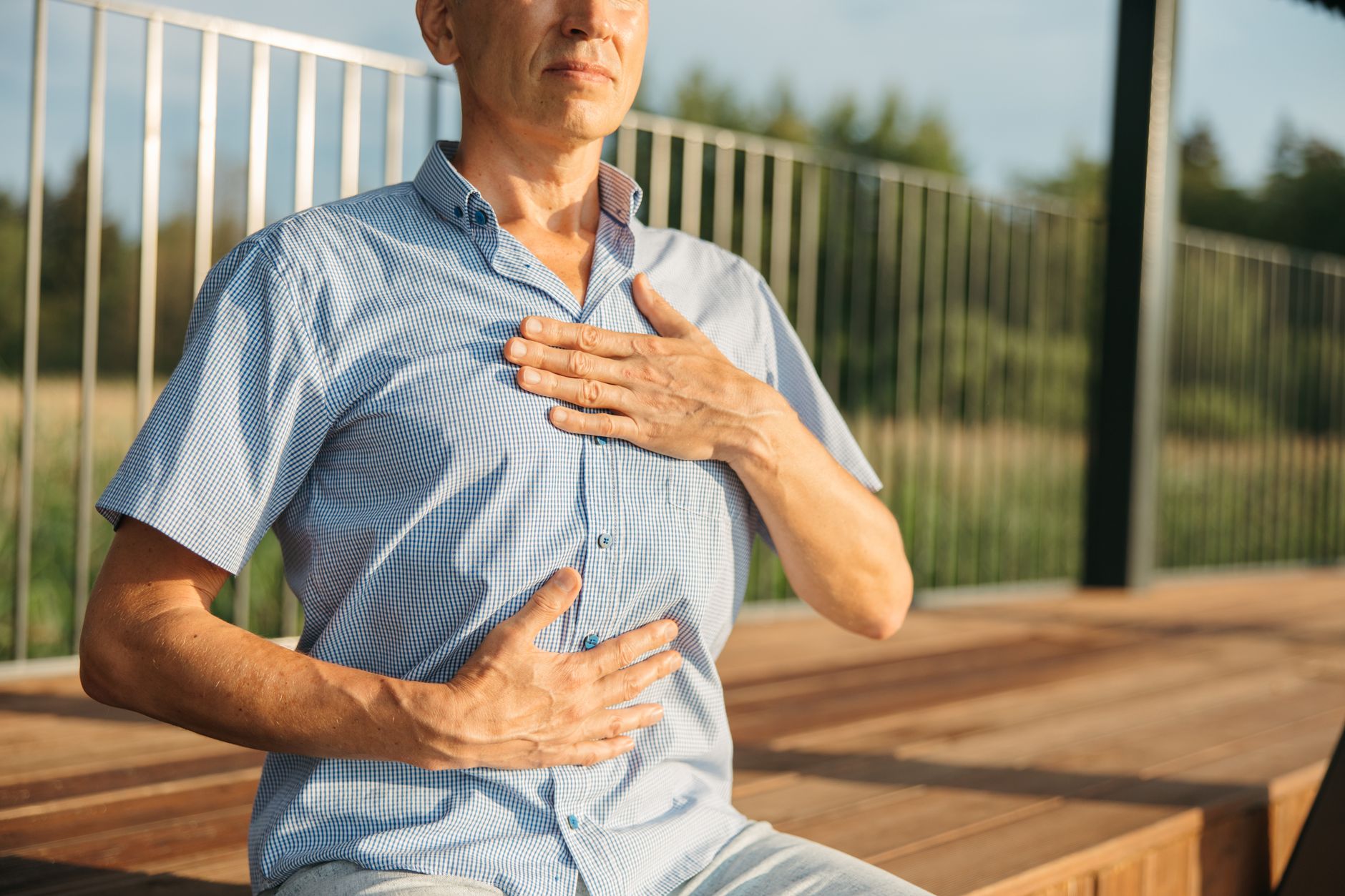
- Slow, paced breathing (~6 breaths a minute) is the winner: a meta-analysis of 12 trials links breathwork to lower stress, and a meta-analysis of 17 trials shows slow breathing trims blood pressure by roughly 5.6/3.0 mmHg.14
- Box breathing (4-4-4-4) is plausible and widely taught, but almost never tested on its own — the evidence is thinner than its reputation.2
- The Wim Hof Method genuinely shifts physiology — a 2014 study showed trainees could dampen an inflammatory challenge for hours6 — but the jump to "boosts immunity" or "prevents illness" is unproven.
- One hard rule: never do Wim Hof-style hyperventilation in or near water, or while driving. The hyperventilate-then-hold pattern can drop you unconscious before you feel it.9
- Why this matters now
- Mechanism: the lever your breath actually pulls
- Slow breathing: the one with the evidence
- Box breathing: plausible, popular, under-tested
- The Wim Hof Method: real physiology, oversold claims
- The safety rule you cannot skip
- A tiered way to think about it
- What we still don't know
- References
Why this matters now
Breathwork is having a moment, and that's exactly when the wheels come off the evidence. "Just breathe" has been repackaged into branded methods, app subscriptions, and claims that range from reasonable to wild. The honest position is that breathwork is one of the cheapest, lowest-risk tools you have for calming your nervous system on demand — and that some of the loudest claims attached to it are running well ahead of the data.
So let's separate the three things people actually mean when they say "breathwork." Slow, paced breathing. Box breathing. And the Wim Hof Method. They are not the same practice, they don't pull the same lever, and they don't have the same evidence behind them. A 2023 meta-analysis of randomized trials put it bluntly, warning against "a miscalibration between hype and evidence" even as it found a real signal.1 This piece sits in the biohacking file precisely because breathwork is where calibration matters most.
This is not medical advice or a treatment plan. It is a framework for reading the breathwork evidence the way a thoughtful clinician would — what's real, what's plausible, and what's marketing — so you can decide what's worth your five minutes.
Mechanism: the lever your breath actually pulls
Here's the plain-language version. Your breathing rate is one of the few automatic body functions you can grab the wheel of. When you slow your breath right down and lengthen the exhale, you send a signal that tells your body the emergency is over — heart rate eases between beats, and the calming branch of your nervous system gets the upper hand. When you breathe fast and hard, you pull the opposite signal: a jolt of alertness and stress chemistry. Most of breathwork is just learning to pull one of those two levers on purpose.
For the readers who want the technical layer: slow breathing at roughly six breaths per minute synchronizes respiration with the baroreflex rhythm, increasing respiratory sinus arrhythmia and shifting autonomic balance toward parasympathetic (vagal) tone, which shows up as higher heart rate variability (HRV) and reduced muscle sympathetic nerve activity.35 The Wim Hof breathing pattern does the reverse on purpose — cyclic hyperventilation drives respiratory alkalosis and a surge of epinephrine (adrenaline) before the breath-hold phase.6 That distinction — calming the system versus deliberately spiking it — is the whole story of why these methods feel and act so differently.
Slow breathing whispers "stand down" to your nervous system. The Wim Hof method shouts "go" and then holds. Both are real. They are not interchangeable.
Slow breathing: the one with the evidence
If you only adopt one breathing practice, make it this one. Slow, paced breathing — around six breaths per minute, often taught as coherent or resonance breathing — has the strongest and most consistent evidence of the three. In a randomized study of 112 participants, slow-paced breathing reliably raised HRV (measured as RMSSD) and improved emotional control and arousal, whether or not it was paired with a biofeedback screen.3 Smaller controlled work keeps reproducing the same acute pattern: lower heart rate, higher vagal modulation, and self-reported relaxation after just a few minutes.3
The blood-pressure data is what elevates this from "feels nice" to "clinically interesting." A 2019 systematic review and meta-analysis of 17 randomized controlled trials found that slow breathing at 10 breaths per minute or fewer, practiced for at least four weeks, lowered systolic blood pressure by about 5.62 mmHg and diastolic by about 2.97 mmHg in people with high or borderline-high readings.4 That's a modest but real effect — in the ballpark of what a single lifestyle change can do — and the authors flagged it as a reasonable first step for low-risk patients reluctant to start medication. Mechanistic work backs the autonomic story: a single guided slow-breathing session reduced sympathetic nerve activity and improved baroreflex sensitivity in healthy young adults of both sexes.5 Tracking how this shows up on a wearable? See our piece on what your HRV score actually tells you.
The blood-pressure benefit is real but heterogeneous, and the long-term durability is genuinely unclear — reviews note that improvements in baroreflex sensitivity seen acutely tend to fade over weeks to months.4 Treat slow breathing as a daily-practice tool, not a one-time fix.
Box breathing: plausible, popular, under-tested
Box breathing — inhale four counts, hold four, exhale four, hold four — is the technique most people have actually heard of, largely because it's taught to military and tactical personnel as a way to stay composed under pressure. It's intuitive, it's free, and it's almost certainly harmless. The problem is that for all its popularity, box breathing has rarely been tested as a distinct protocol with its own control arm.
The best evidence we have puts it in context rather than isolating it. A 2023 randomized trial in Cell Reports Medicine compared three five-minute daily breathwork styles against mindfulness meditation over a month. All improved mood — but the exhale-focused "cyclic sighing" pattern beat the others, including box breathing, on mood and on lowering respiratory rate.2 Box breathing helped; it just wasn't the standout. And in a 2025 crossover trial of 40 active adults, box breathing was actually worse than six-breaths-per-minute breathing for cardiovascular recovery after high-intensity exercise, producing higher post-exercise heart rate and perceived exertion.8 The breath-holds that make box breathing feel structured may add a mild stress load that's useful for focus but counterproductive for winding down.
The fair read: box breathing is a perfectly good acute tool for steadying yourself before a stressful moment, and the mechanism is sound. But if your goal is maximum nervous-system calm or recovery, the exhale-lengthening and slow-paced styles have the better data. Box breathing's reputation currently outruns its direct evidence.
The Wim Hof Method: real physiology, oversold claims
This is where breathwork gets genuinely fascinating and genuinely overhyped at the same time. The Wim Hof Method (WHM) combines cyclic hyperventilation, breath-holds, and cold exposure. And unlike most wellness practices, it has a landmark study with a striking result. In 2014, researchers trained 12 volunteers in the method, then injected all participants with a bacterial endotoxin to provoke an immune reaction. The trained group released far more adrenaline, produced more of the anti-inflammatory signal IL-10, generated fewer pro-inflammatory signals, and reported fewer flu-like symptoms than untrained controls.6 For the first time, people had voluntarily turned down their own innate immune response. That's real, and it's remarkable.
Now the calibration. That study had 24 people total, measured an acute response over hours, and tested a deliberately artificial inflammatory challenge — not a real infection. A 2023 systematic review of nine WHM trials concluded the method shows "promising" anti-inflammatory effects but that the evidence base is small, mixed on exercise and respiratory outcomes, and nowhere near supporting the bigger claims.7 So when you see WHM marketed as something that "boosts your immune system," "wards off infection," or "treats disease," understand that the leap from one clever acute experiment to long-term disease prevention is exactly that — a leap, unsupported by the data. The transient adrenaline spike is real. The durable immunity claim is not.
The Wim Hof study proved you can voluntarily dampen inflammation for a few hours. It did not prove you can prevent illness. Those are different claims, and only one of them is evidenced.
None of this means the method is worthless. Plenty of people find the practice energizing, focusing, and a genuine mood lift — and the cold-exposure component has its own separate literature worth reading; see our take on what cold plunges actually do. Just buy the practice for what it demonstrably is — a powerful acute physiological stimulus — not for the disease-curing story bolted onto it.
The safety rule you cannot skip
This is the one part of the article that isn't a matter of nuance. The Wim Hof breathing pattern — repeated hyperventilation followed by a breath-hold — can make you faint, and it can do so without warning. Hyperventilation blows off carbon dioxide, which is the very signal that normally screams at you to breathe. Suppress that alarm and you can stay in a breath-hold long past the point where your oxygen has dropped dangerously low, then lose consciousness suddenly. Controlled research in breath-hold divers confirms that pre-hold hyperventilation increases the likelihood of a hypoxic blackout by delaying the urge to breathe.9 It's a recognized danger in freediving, where it's a documented cause of drowning.10
Never practice Wim Hof-style hyperventilation or breath-holds in or near water — not in a pool, not in a bath, not at the beach. Never do it while driving or standing. Do it sitting or lying down on a safe surface, and stop if you feel lightheaded. A faint on dry land is a scare; a faint in water is a drowning. This single rule matters more than any benefit on this page.
A tiered way to think about it
We don't write prescriptions on this site. We write frameworks you can take into your own routine — or to a clinician if you have blood pressure or cardiac concerns.
Slow, paced breathing — roughly six breaths a minute, with the exhale longer than the inhale, five minutes a day. This is the highest-evidence, lowest-risk option and the one most likely to move HRV and blood pressure over weeks.34
Box breathing before a stressful task, or cyclic sighing when you need a quick mood reset. Both are safe and useful in the moment; cyclic sighing has the slightly better trial showing for mood.2 Don't expect either to lower resting blood pressure on its own.
The Wim Hof Method, for people who enjoy a strong physiological stimulus and accept the evidence is preliminary. Only ever seated or lying down, never near water or while driving.9 Skip the hyperventilation entirely if you're pregnant, have a seizure disorder, or have uncontrolled cardiovascular disease.
What we still don't know
The gaps are specific, and naming them is more useful than "more research is needed." Box breathing lacks a dedicated, adequately powered RCT testing it as a stand-alone protocol against an active control — almost everything we cite tests it inside a bundle.2 For slow breathing, the long-term durability of the blood-pressure effect past three months is genuinely unresolved; the acute baroreflex gains appear to fade, and we lack large trials tracking outcomes over a year.4 For the Wim Hof Method, the entire bridge from a single acute endotoxin experiment to any real-world clinical outcome — fewer infections, better autoimmune control, anything that matters to a patient — is unbuilt.7 Until that bridge exists, the immunity story stays a hypothesis, not a finding.
References
- Fincham GW, Strauss C, Montero-Marin J, Cavanagh K. Effect of breathwork on stress and mental health: A meta-analysis of randomised-controlled trials. Sci Rep. 2023;13:432. DOI · PMID 36624160
- Balban MY, Neri E, Kogon MM, et al. Brief structured respiration practices enhance mood and reduce physiological arousal. Cell Rep Med. 2023;4(1):100895. DOI · PMID 36630953
- Laborde S, Allen MS, Borges U, et al. Psychophysiologic effects of slow-paced breathing at six cycles per minute with or without heart rate variability biofeedback. Psychophysiology. 2022;59(1):e13952. DOI · PMID 34633079
- Chaddha A, Modaff D, Hooper-Lane C, Feldstein DA. Device and non-device-guided slow breathing to reduce blood pressure: A systematic review and meta-analysis. Complement Ther Med. 2019;45:179-184. DOI · PMID 31331557
- Adler TE, Coovadia Y, Cirone D, et al. Device-guided slow breathing reduces blood pressure and sympathetic activity in young normotensive individuals of both sexes. J Appl Physiol. 2019;127(4):1042-1049. DOI · PMID 31487225
- Kox M, van Eijk LT, Zwaag J, et al. Voluntary activation of the sympathetic nervous system and attenuation of the innate immune response in humans. Proc Natl Acad Sci USA. 2014;111(20):7379-7384. DOI · PMID 24799686
- Almahayni O, Hammond L. Does the Wim Hof Method have a beneficial impact on physiological and psychological outcomes in healthy and non-healthy participants? A systematic review. PLoS One. 2023;18(7):e0286933. DOI · PMID 37471362
- Kasap M, Akış T, et al. Box breathing or six breaths per minute: Which strategy improves athletes' post-HIIT cardiovascular recovery? PLoS One. 2025;20(7):e0327148. DOI
- Elia A, Barlow MJ, O'Hara JP, et al. Effects of hyperventilation on repeated breath-holding while in a fasting state: do risks outweigh the benefits? Am J Physiol Regul Integr Comp Physiol. 2024;327(2):R190-R200. DOI · PMID 38842512
- Pernett F, Schagatay E, et al. Toward a hyperventilation detection system in freediving: a proof of concept using force sensor technology. Front Physiol. 2025;16:1525399. DOI