Biohacking — the long version
Most of biohacking is theatre. A small set of practices have real outcome data — sauna, time-restricted eating, cold exposure, certain wearables. The rest is mechanism, anecdote, and clinic-economy spectacle. Here's how to tell which is which.
Sauna — the strongest non-exercise mortality signal
Of the entire biohacking shelf, the practice with the most impressive observational signal in humans is also the oldest and least photogenic: regular sauna use. The Finnish KIHD cohort (Kuopio Ischemic Heart Disease Risk Factor Study) has followed roughly 2,300 middle-aged Finnish men for more than two decades. Men using a sauna four to seven times per week had roughly 40% lower all-cause mortality and 50% lower fatal cardiovascular events compared to once-a-week users, in a hazard model adjusted for cardiovascular risk factors [Laukkanen 2015].
That is an observational signal, not a randomized one, and Finland has confounders the literature has tried to dissect: the population already saunas, the men who sauna often may be the men with the leisure and health to do so, and Finnish baseline cardiovascular risk is distinct. The mechanistic plausibility is good, however — heat acclimation produces measurable cardiovascular adaptation resembling moderate-intensity aerobic training, with effects on endothelial function, plasma volume, and heat-shock protein expression [Hannuksela 2001].
The protocol that maps to the KIHD data: 20-minute sessions at roughly 80°C (175°F) traditional Finnish sauna, three to seven times per week, post-exercise or evening, with adequate hydration. Infrared saunas are popular but were not the modality studied in KIHD, and the conduction profile is different in ways that may or may not preserve the cardiovascular signal.
The biohack with the strongest mortality association in human cohorts is a wood-lined room your great-grandparents already had.
Cold exposure — what it does, what it doesn't
Cold exposure — ice baths, cold plunges, cold showers — has become the most-photographed biohack of the past five years. The honest read on the human trial base is more modest than the social-media footprint suggests.
What cold exposure does, with reasonable evidence: increases norepinephrine acutely (roughly 2-3x baseline in a 3-5 minute immersion at 10°C/50°F), produces a measurable mood and alertness effect that most people report subjectively, recruits brown adipose tissue in repeated exposure with measurable but small effects on cold-induced thermogenesis. These are real physiological responses with reasonable mechanistic backing [Esperland 2022].
What cold exposure has been claimed to do, with thinner evidence: accelerate fat loss meaningfully (small effect at best in trials comparing matched populations), improve immune function via norepinephrine surges (small immunological changes, no outcome trials on infection), boost mental health beyond the acute post-immersion glow (one small Dutch trial suggests reduction in depressive symptoms, but the literature is thin). Cold-water immersion immediately after resistance training also blunts hypertrophic adaptation, which is a documented training trade-off and an argument for separating cold exposure from training sessions.
Cold exposure is real, modest, and not a substitute for sleep, training, or sunlight. If you enjoy it and it isn't displacing something that works, fine. If you're doing it because a podcast said "dopamine spike," and you are skipping the gym to do it, the trade is bad.
Time-restricted eating — what the trials show
Time-restricted eating (TRE) — confining all caloric intake to a narrow daily window, typically 6–10 hours — was the cleanest version of the intermittent-fasting argument: a circadian intervention, not a calorie one. The trial reality has been more complicated.
Several controlled trials in humans, when matched for calorie intake, have shown roughly equivalent weight and metabolic outcomes between time-restricted and unrestricted eating windows over 12-week periods [Lowe 2020]. The TREAT trial in particular, with no significant difference vs. unrestricted control after 12 weeks, took the strongest version of the TRE claim off the table. What TRE does provide, reliably: a structural calorie-reduction scaffold for people who eat less when their window is constrained. For some people, that is a meaningful intervention; the mechanism is calorie reduction by another name.
The longer-window questions — does TRE produce circadian-specific benefits beyond calorie restriction, does it modulate insulin sensitivity in metabolically healthy adults, does it support body-composition changes when paired with resistance training — have mixed evidence and trial heterogeneity is high. The boring read: TRE is a useful tool for some, not a metabolic special sauce, and protein distribution across fewer feedings can become a downside for muscle synthesis in some populations.
Continuous glucose monitors for non-diabetics
Continuous glucose monitors (CGMs) — Dexcom, Abbott Libre, and consumer-facing repackagings — have moved from a diabetes management tool to a wellness product in the past five years. The signal they provide is real. The interpretation framework most consumer apps wrap around them is dramatically overconfident.
What CGMs measure well: interstitial glucose, with a 5–15 minute lag from blood glucose, sampled every few minutes. They reveal patterns — post-meal excursions, dawn phenomenon, exercise responses, sleep glucose — that finger-stick monitoring cannot show. In diabetes management, the device is foundational.
What they don't tell you: that a 130 mg/dL post-meal spike in a metabolically healthy adult is pathological, that "flat lines" are a goal worth optimizing toward, or that individual food responses observed over a week of CGM data generalize cleanly across contexts. The PREDICT studies showed real interindividual variation in post-meal glucose responses, which is interesting, but consumer apps have run far ahead of any guideline support for using CGM data to make dietary decisions in non-diabetics [Berry 2020].
Wearables — Oura, WHOOP, Apple Watch
The wearables category has consolidated around a few credible devices that do specific things well and a marketing universe that suggests they do everything. The honest device-by-device read:
Oura ring measures heart rate variability, resting heart rate, skin temperature deviation, and sleep stages with photoplethysmography and an accelerometer. Sleep-stage accuracy is good for total sleep time and reasonable for stage classification relative to research-grade polysomnography, though the latter is always the gold standard. The temperature signal is genuinely useful for tracking female cycles and illness onset.
WHOOP is built around recovery (HRV-derived) and strain (heart-rate-derived training load). The recovery metric is a useful proxy for autonomic-nervous-system state but is sensitive to sleep position, hydration, and alcohol in ways the marketing tends to flatten. Strain is reasonable as a relative training-load gauge, not an absolute physiological truth.
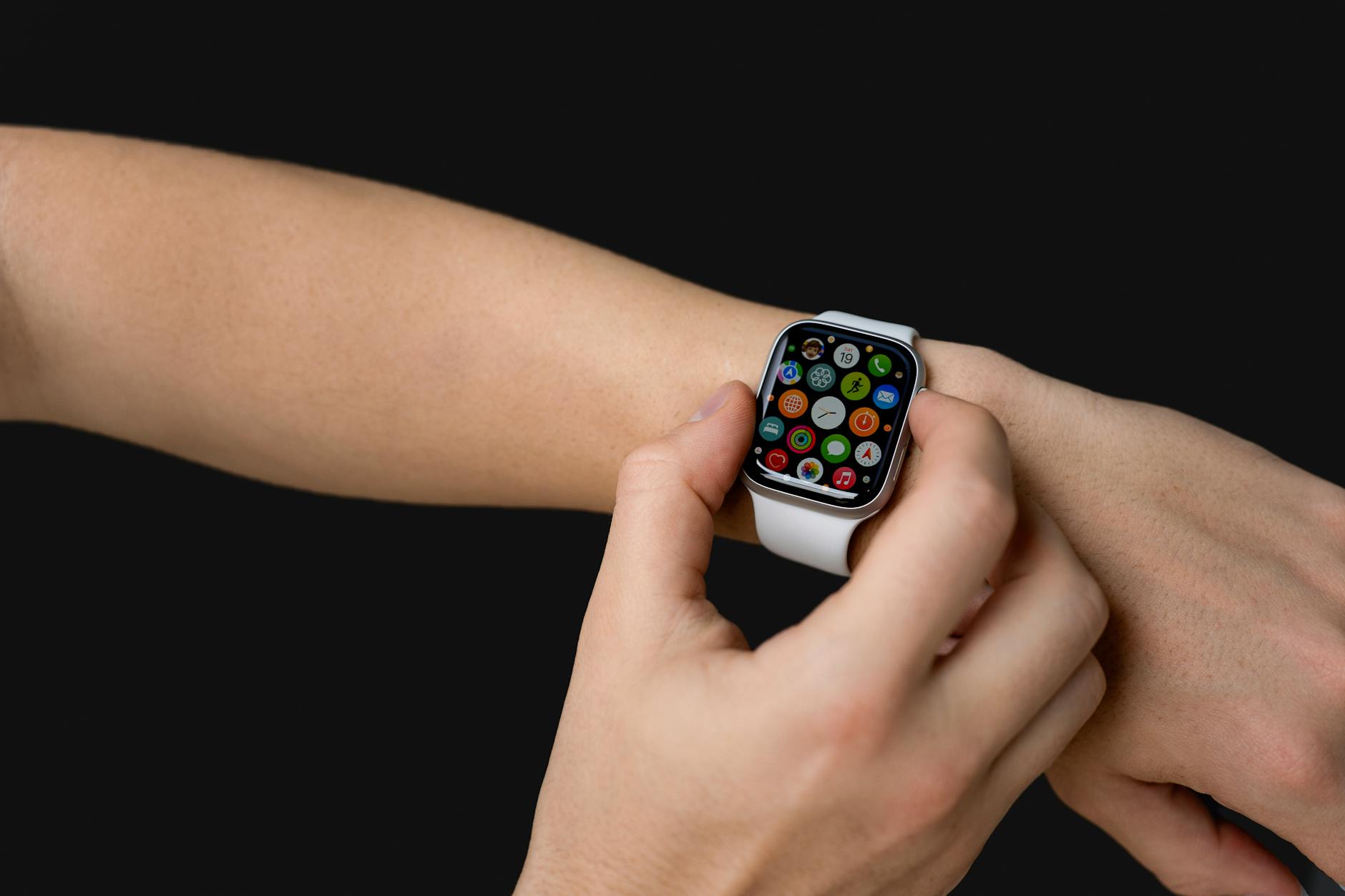
Apple Watch is the best-validated consumer device for atrial-fibrillation screening and emergency fall detection. As a sleep and HRV tracker, it is adequate but optimized for a different primary use case. As an ECG device for one-lead rhythm screening in flagged users, it has FDA clearance and demonstrable real-world utility [Perez 2019].
What all wearables are useful for: trend detection over weeks, not absolute number worship over days. What none of them are useful for: a "score" that should reorganize your behavior in the absence of feeling worse. The signal is in the patterns, not the daily digit.
Hyperbaric, ozone, IV vitamin clinics — be skeptical
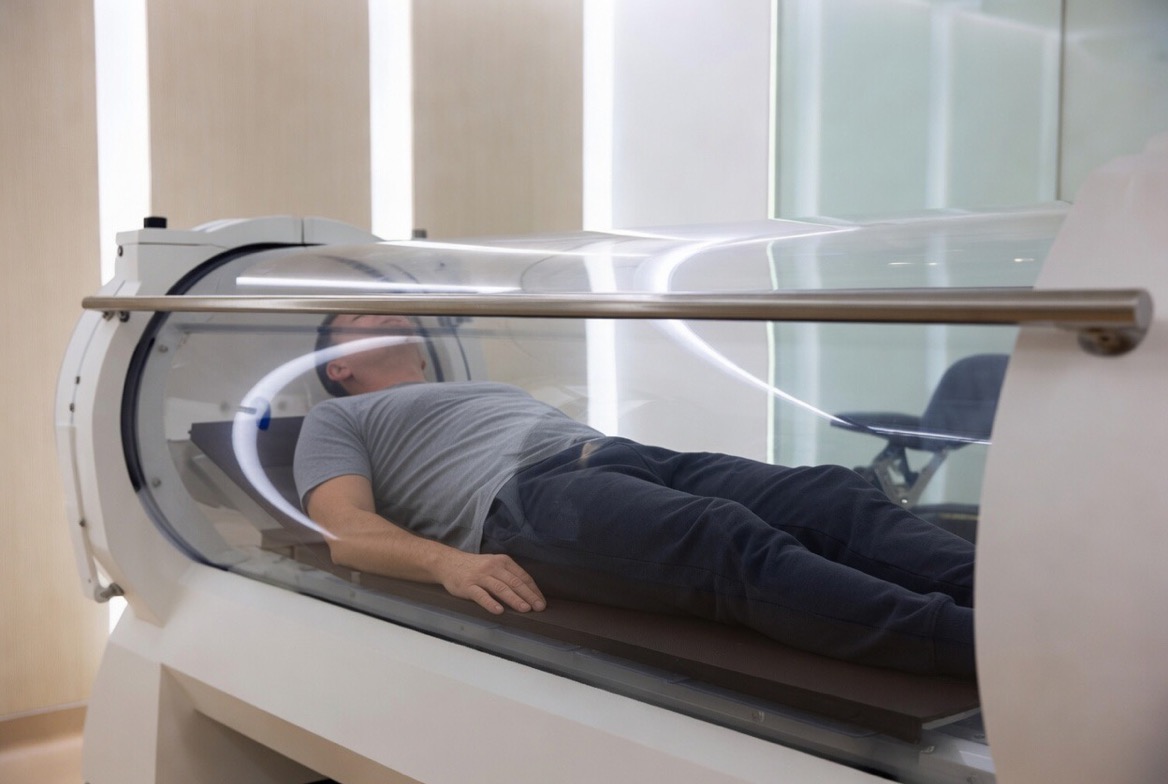
At the more expensive end of the biohacking economy sit a cluster of clinic-delivered modalities: hyperbaric oxygen therapy (HBOT) for non-approved indications, ozone therapy, intravenous vitamin drips, stem-cell injections in jurisdictions where they are unregulated, full-body MRI screening. The pattern across all of them is the same: a real mechanism story, narrow approved indications, and a wellness- market expansion that has run well past the trial evidence.
HBOT has FDA-cleared indications (decompression sickness, certain non-healing wounds, carbon-monoxide poisoning) where the evidence is strong. The expanded marketing — neurodegenerative disease, long COVID, "anti-aging," general cognitive enhancement — has limited randomized human evidence. One small Israeli trial in healthy older adults reported telomere lengthening and senescent-cell reduction markers after 60 sessions [Hachmo 2020]; the trial is small, unreplicated at scale, and the outcome marker is not a clinical endpoint.
IV vitamin clinics deliver pharmacologic doses of B-complex, vitamin C, glutathione, and other nutrients to people whose oral absorption is, in most cases, adequate. The clinical case for IV nutrition outside specific malabsorption diseases and chemotherapy-adjunct settings is thin. People feel better after a liter of saline. That is not, by itself, a vitamin effect.
Full-body MRI screening for asymptomatic adults is the most expensive single biohacker line item, and the medical literature on incidental findings — most of which require follow-up imaging, biopsy, or intervention that produces net harm relative to the cancers actually caught — is unfavorable for healthy adults without specific risk factors [USPSTF 2016]. There are edge cases where it makes sense. The mass-market version is not one of them.
Regular sauna use (4-7×/week, traditional Finnish, KIHD data), zone-2 cardio and VO2max work (the strongest non-pharmacologic mortality signal in any cohort), sleep extension in chronically short-sleeping adults, resistance training in everyone over 30.
Cold exposure for acute mood and norepinephrine, time-restricted eating as a calorie scaffold, validated wearables (Oura, WHOOP, Apple Watch) for trend detection, HBOT for approved indications.
CGMs for non-diabetics making dietary decisions on the score, IV vitamin clinics outside malabsorption, ozone therapy, full-body MRI screening of asymptomatic low-risk adults, off-label HBOT for cognitive enhancement.
Biohacking is mostly old advice in new packaging. The interventions with real human-cohort data are the unsexy ones: heat, cold within reason, movement, sleep, food. The clinic-economy interventions are the ones to be most skeptical of, in roughly direct proportion to their price tag.
- Laukkanen T, et al. Association between sauna bathing and fatal cardiovascular events and all-cause mortality. JAMA Intern Med. 2015;175(4):542-548.
- Hannuksela ML, Ellahham S. Benefits and risks of sauna bathing. Am J Med. 2001;110(2):118-126.
- Espeland D, et al. Health effects of voluntary exposure to cold water — a continuing subject of debate. Int J Circumpolar Health. 2022;81(1):2111789.
- Lowe DA, et al. Effects of Time-Restricted Eating on Weight Loss and Other Metabolic Parameters in Women and Men with Overweight and Obesity (TREAT). JAMA Intern Med. 2020;180(11):1491-1499.
- Berry SE, et al. Human postprandial responses to food and potential for precision nutrition (PREDICT 1). Nat Med. 2020;26:964-973.
- Perez MV, et al. Large-Scale Assessment of a Smartwatch to Identify Atrial Fibrillation (Apple Heart Study). N Engl J Med. 2019;381:1909-1917.
- Hachmo Y, et al. Hyperbaric oxygen therapy increases telomere length and decreases immunosenescence in isolated blood cells. Aging (Albany NY). 2020;12(22):22445-22456.
- U.S. Preventive Services Task Force. Screening for Skin Cancer and incidental findings on whole-body imaging. JAMA. 2016;316(4):429-435.
- Cipriani A, et al. Heat acclimation produces cardiovascular adaptations similar to moderate aerobic training. J Appl Physiol. 2016;120(2):245-252.
- Phillips SM, Chevalier S, Leidy HJ. Protein requirements beyond the RDA. Appl Physiol Nutr Metab. 2016;41(5):565-572.