Cold plunges: what they actually do, and the one trade-off nobody mentions
The cold plunge has gone from Scandinavian folk practice to podcast-fuelled wellness ritual, and somewhere in that climb the claims outran the data. Depending on who you follow, an ice bath will sharpen your mind, melt body fat, bulletproof your immune system, and turbocharge your recovery. Some of that is genuinely true. The mood-and-alertness jolt is real and the mechanism is well understood. The recovery benefit is real but modest. But the metabolic and immune promises are thin, and there is one finding the cold-plunge economy almost never mentions: stepping into cold water right after a hard lift can quietly blunt the muscle you just trained to build. Here is my honest read on what cold water immersion does, what it doesn’t, and where to put it — or not — in your week.
How this article was built: Primary sources: the Cain et al. 2025 systematic review and meta-analysis of cold-water immersion on health and wellbeing in PLOS ONE, the Bleakley et al. 2012 Cochrane review of cold-water immersion for muscle soreness, the Šrámek et al. 2000 cold-immersion catecholamine study in the European Journal of Applied Physiology, the Roberts et al. 2015 strength-training trial in The Journal of Physiology, the Fyfe et al. 2019 hypertrophy trial in the Journal of Applied Physiology, and the van der Lans et al. 2013 brown-fat cold-acclimation study in the Journal of Clinical Investigation — all retrieved and verified through PubMed.
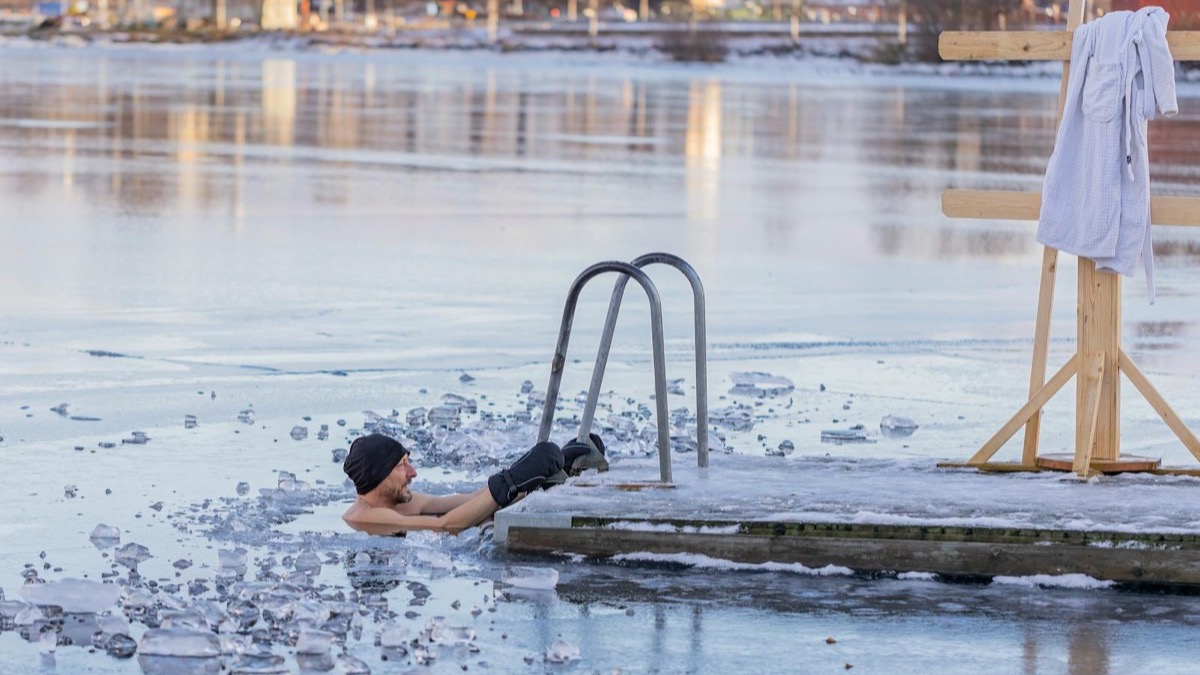
- The mood and alertness hit is real. Cold immersion triggers a large surge in noradrenaline and dopamine — on the order of a five-fold rise in noradrenaline in cold water — which plausibly explains the sharp, short-lived lift in energy, focus and mood people describe. This is the best-mechanistically-grounded claim in the whole field.
- The recovery benefit is real but modest. Pooled trials show cold-water immersion after exercise reduces delayed-onset muscle soreness and perceived fatigue versus doing nothing — small-to-moderate effect sizes, heterogeneous, mostly about how you feel rather than how you perform the next day.
- The big metabolic, fat-loss and immune claims are weak or overstated. Cold does activate brown fat and bump energy expenditure, but it has never been shown to drive meaningful fat loss in humans. The immune and “inflammation-lowering” story is thin — the best meta-analysis actually found cold acutely raises inflammatory markers.
- The trade-off nobody mentions: don’t ice right after lifting if muscle is the goal. Cold-water immersion immediately after resistance training repeatedly blunts long-term muscle growth by suppressing the anabolic signals that build it. Strength is more spared than size — but if hypertrophy matters to you, keep cold away from your lifts.
- What “cold water immersion” actually means
- The mechanism: vasoconstriction and the catecholamine surge
- Mood and alertness: the strongest real claim
- Recovery and soreness: real but modest
- The hypertrophy trade-off — the most important finding
- Metabolism, brown fat and the fat-loss myth
- Inflammation and immunity: the weakest claims
- How people actually use it
- Where it fits: a tiered view
- Grey areas and open questions
- What this article is not saying
- References
What “cold water immersion” actually means
Cold water immersion (CWI) is exactly what it sounds like: submerging the body, or most of it, in cold water for a set period. In the research literature it has a reasonably specific definition — water at or below roughly 15°C (59°F), for anything from 30 seconds to several minutes, via an ice bath, a cold plunge tub, a cold shower, or open water.1 Most of the popular practice clusters around 10–15°C for a few minutes, which is also where much of the trial data sits.
That definitional precision matters, because “cold” covers a wide physiological range. A bracing cold shower, a 12°C plunge, and a 4°C ice hole are not the same stimulus, and the effects do not scale neatly with how unpleasant it feels. Throughout this piece, the population also matters: an elite athlete using CWI to recover between two competition rounds is asking a completely different question than a desk worker chasing a morning mood lift. The evidence answers those questions differently, and conflating them is where most of the hype comes from.
The mechanism: vasoconstriction and the catecholamine surge
Hit cold water and your body responds within seconds, before any conscious decision. Surface blood vessels clamp down — peripheral vasoconstriction — shunting blood toward the core to protect temperature. Heart rate and blood pressure jump. You gasp involuntarily. This bundle is the “cold shock response,” and it is driven by a sharp activation of the sympathetic nervous system.2
The headline event for the wellness claims is what that sympathetic surge does to your stress hormones. In a controlled study of head-out immersion at different water temperatures, Šrámek and colleagues found that cold water at 14°C raised plasma noradrenaline by about 530% and dopamine by about 250%, while adrenaline was essentially unchanged and cortisol actually tended to decrease.2 The metabolic rate in that cold trial rose roughly 350% as the body worked to generate heat.2 Those are large, fast, measurable shifts — and crucially, they were attributable to the cold itself, since immersion in thermoneutral water did not produce them.2
Noradrenaline and dopamine are the chemistry of arousal, vigilance, drive and mood. A several-fold spike in both is a perfectly plausible engine for the “I feel amazing and razor-sharp” sensation that defines the cold-plunge experience. Note what is not in that mechanism: nothing here directly burns meaningful fat, strengthens your immune system, or speeds tissue repair. The mechanism is real and specific. The job now is to see which downstream claims it actually supports.
The cold-plunge high isn’t a metaphor. It’s a several-fold surge of noradrenaline and dopamine. The mistake is assuming a real neurochemical jolt must also mean fat loss, immunity, and faster gains. It doesn’t.
Mood and alertness: the strongest real claim
Of everything attributed to cold plunges, the acute mental lift has the cleanest support. The mechanism is documented — that catecholamine surge above2 — and it lines up with what people consistently report: a few minutes after getting out, a window of heightened alertness, energy and elevated mood. The 2025 systematic review and meta-analysis by Cain and colleagues, the most comprehensive synthesis of CWI for general health and wellbeing, found improvements in self-reported quality of life and noted increases in subjective alertness, with participants describing greater energy and focus after exposure.1
Two honest caveats keep this from becoming hype. First, this is an acute effect — a state shift lasting from minutes to a few hours, not a proven cure for clinical depression or a permanent personality upgrade. The same review found that while quality-of-life and sleep-quality measures improved, validated mood scales did not consistently move, and stress only dropped reliably about 12 hours post-immersion, not immediately.1 Second, expectation does real work here: choosing to do something hard and unpleasant, then feeling accomplished, is a genuine psychological lift that is hard to separate from the cold’s direct neurochemistry. Both can be true at once. The defensible claim is narrow and worth having: cold immersion reliably produces a short-term boost in alertness and subjective wellbeing, with a plausible biological mechanism. That is more than can be said for most of the rest of the list.
Recovery and soreness: real but modest
The original sports-science use of CWI was recovery, and here the evidence is genuinely positive — with the emphasis on modest. The 2012 Cochrane review by Bleakley and colleagues pooled 17 trials and found that cold-water immersion after exercise significantly reduced delayed-onset muscle soreness (DOMS) compared with passive rest, with standardized mean differences around −0.55 at 24 hours and −0.66 at 48 hours.3 A separate group also reported lower ratings of fatigue immediately after immersion.3 A more recent 2023 meta-analysis reached a similar verdict: CWI significantly cut DOMS and perceived exertion right after exercise, and lowered the muscle-damage marker creatine kinase at 24 hours.4
Now the honesty. The Cochrane authors graded study quality as low and the results as heterogeneous, and stressed that most of the benefit shows up in how sore and tired people feel rather than in objective next-day performance.3 Two of their own findings deserve flagging: cold-water immersion was no better than simple contrast or warm-water immersion in head-to-head pooling,3 and the same 2023 meta-analysis found no effect on the inflammatory markers C-reactive protein and IL-6 over 48 hours.4 So the picture is real but bounded: if you have a tournament tomorrow or back-to-back hard sessions, CWI can plausibly make you feel fresher and less sore. As a route to a measurable performance edge the next day, the evidence is far weaker than the marketing suggests.
in 14°C water
dopamine +250% — the mood/alertness engine
(SMD) at 48 h
Cochrane — “small to moderate”
in most protocols
~30 s to a few minutes
The hypertrophy trade-off — the most important finding
Read this section twice. It is the most counterintuitive finding here, the most replicated, and the one the cold-plunge economy almost never mentions. I'll say it plainly: if you lift weights to build muscle, plunging into cold water immediately afterward can actively work against the adaptation you just trained for.
The landmark trial is Roberts and colleagues, 2015. Twenty-one men strength-trained for 12 weeks, with each session followed by either 10 minutes of cold-water immersion or active recovery. The active-recovery group gained significantly more muscle mass and strength. Type-II muscle fibre cross-sectional area rose 17% and the number of myonuclei per fibre rose 26% in the active group — but not in the cold group.5 Probing the mechanism, the same study found that cold immersion blunted the post-exercise activation of satellite cells (the stem-like cells that drive fibre growth) and the kinases that signal muscle protein synthesis. The authors’ conclusion was blunt: regular post-exercise cold-water immersion as a recovery strategy “should be reconsidered.”5
A 2019 trial by Fyfe and colleagues refined the picture in a way that matters. Over seven weeks of whole-body resistance training, cold-water immersion (15 minutes at 10°C) again attenuated the growth of type-II fibres and blunted the post-exercise mTOR-pathway signalling that builds muscle — while increasing markers of protein breakdown.6 But maximal strength (one-rep-max leg press) improved similarly in both groups.6 So the trade-off is partly mode-specific: cold reliably dampens muscle size, while raw strength — which depends heavily on neural factors, not just fibre size — is more spared. Their practical line was unambiguous: post-exercise cold-water immersion should be avoided if muscle hypertrophy is desired.6
Why does cold do this? The leading explanation, laid out in mechanistic and review work, is that the same vasoconstriction and reduced metabolic activity that calm post-exercise inflammation also suppress the anabolic signalling cascade and satellite-cell recruitment that translate a hard session into new muscle.7 A separate analysis found cold immersion altered the muscle’s fibre-type and blood-vessel (angiogenic) response to training at the level of gene, protein and microRNA expression.10 Importantly, this blunting appears specific to resistance training: endurance and aerobic adaptations seem largely unaffected, and may even be compatible with cold exposure.8 The takeaway is precise, not alarmist: cold immersion is not bad for you, and it is not bad for endurance work — but using it right after lifting, when the anabolic window is open, taxes the very process you went to the gym to start.
Metabolism, brown fat and the fat-loss myth
Here is where the gap between a real mechanism and a real outcome is widest. Cold exposure genuinely activates brown adipose tissue (BAT) — the metabolically active “good” fat that burns energy to make heat — and that fact has been spun into “cold plunges melt fat.” The data do not support that leap.
The cleanest human study is van der Lans and colleagues, 2013. A 10-day cold-acclimation protocol increased brown-fat activity and non-shivering thermogenesis in healthy adults, and the authors framed it as a possible route to nudge up daily energy expenditure.9 Real and interesting — but notice the careful framing. This was repeated cold exposure over days, the increase in energy expenditure was modest, and the study did not demonstrate meaningful fat or weight loss. It showed a physiological adaptation, not a body-composition result. A brief plunge is a far weaker stimulus than the structured protocol used here, and the metabolic bump from any single cold session is small and short-lived — trivially easy to erase with a post-plunge snack.
The honest summary: cold can recruit brown fat and slightly raise calorie burn, which is a legitimate area of metabolic research. But “activates brown fat” is not the same claim as “causes weight loss,” and no human trial has shown cold-water immersion driving meaningful fat loss. Treat the fat-burning pitch as the weakest, most oversold claim in the category.
Inflammation and immunity: the weakest claims
These are the two claims I'd push back on hardest. The promises that cold plunging “lowers inflammation” and “boosts immunity” deserve the most skepticism, because the best evidence often points the other way.
On inflammation, the 2025 Cain meta-analysis found that cold-water immersion produced a significant increase in inflammatory markers immediately after exposure and one hour later — an acute inflammatory response to the cold stressor, not a reduction.1 Any longer-term anti-inflammatory benefit is unproven and, given the hypertrophy data above, the local inflammation-dampening effect after exercise is precisely the double-edged sword that blunts muscle growth. On immunity, the same review found no significant effect of CWI on immune-function markers immediately or an hour after immersion. It did flag one suggestive narrative finding — a roughly 29% reduction in self-reported sickness absence among people taking routine cold showers in one trial — but the authors were explicit that the overall evidence base is constrained by few randomized trials, small samples, and limited population diversity.1
So the responsible position is: a single intriguing self-report signal on sick days, no consistent effect on measured immune function, and an acute inflammatory bump rather than a reduction. That is a long way from “ice baths fortify your immune system.” File these under weak and overstated.
How people actually use it
We do not give prescriptive medical protocols here, but it is useful to know what the trials and common practice actually involve — as description, not instruction. The temperatures studied for wellbeing and recovery cluster around 10–15°C, with some protocols as cold as 7°C.1 Durations in the research range widely, from about 30 seconds to a few minutes for the mood and recovery effects, with longer being neither necessary nor obviously better.1
The single most actionable point is timing relative to training, because the evidence makes the rule clean:
For a mental or recovery lift on its own — a cold shower or plunge in the morning, or on a rest day — timing is flexible; this is where the alertness benefit lives and there is no muscle to protect.
Around resistance training — the recovery trials and the hypertrophy trials point in opposite directions, and the resolution is to separate cold from your lifts. If you train for muscle and still want to plunge, the cautious read of the data is to put cold on non-lifting days, or hours away from a hypertrophy session, rather than immediately after.56
In a competition or tournament block — where feeling recovered for the next round matters more than long-term muscle growth — immediate post-exercise CWI is a defensible trade, which is exactly how the periodized-recovery literature frames it.8
Where it fits: a tiered view
It helps to place cold water immersion honestly on a spectrum of how settled the evidence is and who it is for.
Foundational — a low-cost mood and alertness tool. The least controversial use is a short cold shower or plunge for the acute energy, focus and subjective-wellbeing lift, on its own schedule.12 The mechanism is documented, the cost is near zero, and as long as the medical cautions at the top are respected, the downside for a healthy person is mainly discomfort. This tier asks nothing speculative of you.
Research-curious — targeted recovery between hard efforts. If you are an athlete or serious trainee using CWI to feel fresher between competition rounds or back-to-back sessions — and you are not in a muscle-building phase — the soreness-and-fatigue data make this a reasonable, evidence-backed use.34 Expect to feel better, not necessarily to perform measurably better.
Experimental — cold for fat loss, immunity, or daily post-lift recovery. Plunging to lose weight, fortify immunity, or as a habitual cooldown right after every lifting session is the weakest-supported tier. The fat-loss and immune claims are thin to absent,19 and the post-lift habit may cost you the muscle you are training for.56 This is the territory where the marketing is loudest and the evidence is thinnest.
Cold-water immersion is a real but narrow tool — great for an acute mood lift, useful for short-term recovery, counterproductive after a hypertrophy session, and oversold for fat and immunity. The worst mistake is treating any single ritual as the whole answer. The right question is rarely “cold plunge: yes or no,” it’s “what actually moves recovery, mood and body composition for someone at my level, and where does cold rank against sleep, training structure, heat exposure, and nutrition?” The Manual maps the recovery-and-performance levers against each other — what each one’s evidence genuinely supports, the timing windows that make or break them, who benefits, and how to combine them without working against yourself. See the Manual →
Grey areas and open questions
The cold-shock cardiac risk is not theoretical. The gasp-and-spike response to sudden cold immersion sharply raises heart rate and blood pressure and can trigger arrhythmias or, in open water, inhaled water and drowning — especially in the unconditioned or those with heart disease.2 This is the one place where “it’s just cold water” can be genuinely dangerous, and it is why the medical caveat sits at the top of this article rather than the bottom.
The hype economy. Cold plunging is now a product category — tubs, memberships, branded protocols — and the financial incentive to overstate benefits is large. A real acute mood effect with a clean mechanism gets stretched into fat loss, immunity and longevity claims the data do not carry. Separating the documented narrow effect from the marketed broad one is most of the work.
Contrast therapy. Alternating hot and cold (sauna-then-plunge) is popular, but the Cochrane pooling found cold-water immersion was no better than contrast or warm-water immersion for soreness.3 Whether contrast offers anything cold alone does not, for recovery or wellbeing, is genuinely unresolved.
Individual variation and dosing are wide open. Optimal temperature, duration and frequency for any given goal are not nailed down, the trials are small and heterogeneous, and women and older adults are underrepresented.1 Much of what circulates as a precise “protocol” is extrapolation, not established fact.
What this article is not saying
I'm not telling you cold plunges don’t work. They do something real. The acute surge in noradrenaline and dopamine is documented, the alertness-and-mood lift is the best-supported claim in the field, and the post-exercise soreness benefit is genuine if modest. Dismissing cold immersion entirely is as wrong as overselling it — and I won't do either.
This is not “cold plunges transform your health.” The fat-loss pitch outruns the evidence, the immune-boost claim is thin, the “lowers inflammation” line is contradicted by the best meta-analysis in the acute window, and the recovery effect is mostly about how you feel. A real, narrow, conditional set of benefits is what the data support — and exactly what the marketing inflates.
And this is not a protocol or a dare. The cold-shock response is a real cardiac and drowning risk for the unconditioned and for anyone with heart or blood-pressure conditions; if that is you, or if you are pregnant or new to cold, make this a clinician conversation and never plunge alone in open water. The point of this piece is to tell you what the trials show and where they stop — including the hypertrophy trade-off most enthusiasts never hear — so your expectations can be honest ones.
References
- Cain T, Brinsley J, Bennett H, Nelson M, Maher C, Singh B. Effects of cold-water immersion on health and wellbeing: a systematic review and meta-analysis. PLoS One. 2025;20(1):e0317615. DOI: 10.1371/journal.pone.0317615. PMID: 39879231.
- Šrámek P, Simečková M, Janský L, Savlíková J, Vybíral S. Human physiological responses to immersion into water of different temperatures. Eur J Appl Physiol. 2000;81(5):436-442. DOI: 10.1007/s004210050065. PMID: 10751106.
- Bleakley C, McDonough S, Gardner E, Baxter GD, Hopkins JT, Davison GW. Cold-water immersion (cryotherapy) for preventing and treating muscle soreness after exercise. Cochrane Database Syst Rev. 2012;2012(2):CD008262. DOI: 10.1002/14651858.CD008262.pub2. PMID: 22336838.
- Xiao F, Kabachkova AV, Jiao L, Zhao H, Kapilevich LV. Effects of cold water immersion after exercise on fatigue recovery and exercise performance — meta analysis. Front Physiol. 2023;14:1006512. DOI: 10.3389/fphys.2023.1006512. PMID: 36744038.
- Roberts LA, Raastad T, Markworth JF, et al. Post-exercise cold water immersion attenuates acute anabolic signalling and long-term adaptations in muscle to strength training. J Physiol. 2015;593(18):4285-4301. DOI: 10.1113/JP270570. PMID: 26174323.
- Fyfe JJ, Broatch JR, Trewin AJ, et al. Cold water immersion attenuates anabolic signaling and skeletal muscle fiber hypertrophy, but not strength gain, following whole-body resistance training. J Appl Physiol (1985). 2019;127(5):1403-1418. DOI: 10.1152/japplphysiol.00127.2019. PMID: 31513450.
- Petersen AC, Fyfe JJ. Post-exercise cold water immersion effects on physiological adaptations to resistance training and the underlying mechanisms in skeletal muscle: a narrative review. Front Sports Act Living. 2021;3:660291. DOI: 10.3389/fspor.2021.660291. PMID: 33898988.
- Ihsan M, Abbiss CR, Allan R. Adaptations to post-exercise cold water immersion: friend, foe, or futile? Front Sports Act Living. 2021;3:714148. DOI: 10.3389/fspor.2021.714148. PMID: 34337408.
- van der Lans AAJJ, Hoeks J, Brans B, et al. Cold acclimation recruits human brown fat and increases nonshivering thermogenesis. J Clin Invest. 2013;123(8):3395-3403. DOI: 10.1172/JCI68993. PMID: 23867626.
- D'Souza RF, Zeng N, Markworth JF, et al. Divergent effects of cold water immersion versus active recovery on skeletal muscle fiber type and angiogenesis in young men. Am J Physiol Regul Integr Comp Physiol. 2018;314(6):R824-R833. DOI: 10.1152/ajpregu.00421.2017. PMID: 29466686.