Ashwagandha for cortisol and stress: what the clinical trials actually show.
Ashwagandha (Withania somnifera) has more human RCT data behind it than almost any other adaptogen in active use. The cortisol-reduction signal is real and consistently replicated — but the effect size, extraction method, dose, and study population all determine whether you will see meaningful results. Here is an honest synthesis of the clinical trial record.
How this article was built: Randomized, controlled human trials and pharmacological mechanism reviews. We report effect sizes, confidence intervals, and study quality where the source data provides them. Where results have been replicated, we say so; where findings come from single studies with funding conflicts, we note that.
- What ashwagandha is — and what withanolides are
- Mechanism: how it acts on the HPA axis
- The cortisol RCTs — numbers, effect sizes, caveats
- Sleep and anxiety outcomes
- Cognitive function data
- KSM-66 vs Sensoril vs generic root powder
- Safety profile and contraindications
- A practical framework
- References
What ashwagandha is — and what withanolides are
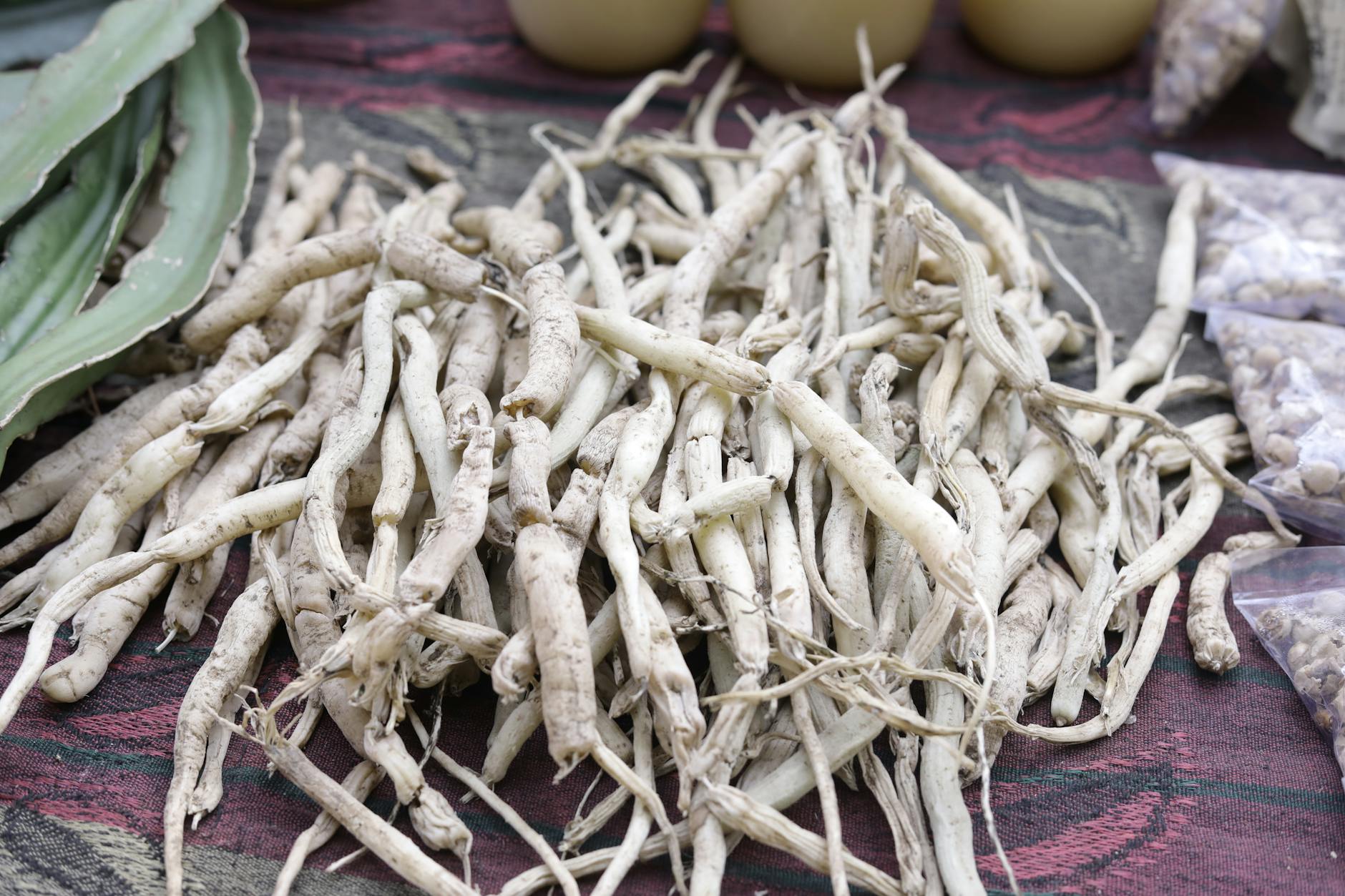
Ashwagandha (Withania somnifera, also known as Indian winter cherry or Indian ginseng) is a small shrub native to India, North Africa, and the Mediterranean. It has been used in Ayurvedic medicine for over 3,000 years as a rasayana — a rejuvenating tonic. Modern pharmacological interest focuses on its withanolide content: a class of naturally occurring steroidal lactones concentrated in the root, with withanolide A, withanolide D, and withaferin A being the most studied compounds [1].
Withanolides are structurally similar to plant steroids and exert diverse biological activity: they bind to glucocorticoid receptors, modulate NF-κB (nuclear factor kappa-light-chain-enhancer of activated B cells) — a central driver of inflammatory signaling — inhibit stress-response chaperone proteins, and interact with GABA-A (gamma-aminobutyric acid type A) receptors in ways that parallel the mechanism of some anxiolytics. The key practical implication: the withanolide content of a supplement determines its pharmacological activity, and withanolide content varies enormously between root powder and standardized extracts.
Crude dried root powder typically contains 0.1-0.5% withanolides by mass. Standardized extracts — KSM-66, Sensoril, and similar branded forms — are concentrated to 2.5-10% withanolides. At a dose of 300 mg of KSM-66 (standardized to 5% withanolides), you receive roughly 15 mg of active withanolides. The same 300 mg of generic root powder delivers less than 2 mg. This gap explains much of the inconsistency in the broader ashwagandha literature and why trials using branded extracts tend to produce larger, more consistent effects than those using crude root.
Mechanism: how it acts on the HPA axis
The HPA (hypothalamic-pituitary-adrenal) axis is the body's primary stress-response system. Perceived stress activates the hypothalamus to release corticotropin-releasing hormone (CRH), which signals the pituitary to release adrenocorticotropic hormone (ACTH), which in turn signals the adrenal cortex to produce cortisol. Cortisol then feeds back to inhibit further CRH and ACTH release — a negative feedback loop that normally prevents runaway cortisol elevation.
Chronic psychological stress appears to blunt this negative feedback: cortisol levels remain chronically elevated because the hypothalamus and pituitary become less sensitive to the inhibitory signal. Ashwagandha's withanolides appear to act at multiple points in this system — enhancing glucocorticoid receptor sensitivity (improving the feedback signal), reducing NF-κB-mediated inflammatory activation (which can independently drive cortisol-like stress responses), and modulating GABA-A signaling to reduce the "noise" level in the stress-response system [2].
The GABA-A receptor interaction is particularly interesting. GABA (gamma-aminobutyric acid) is the brain's primary inhibitory neurotransmitter; benzodiazepines work by enhancing GABA-A receptor function. Some withanolide compounds appear to modulate GABA-A activity via a distinct binding site — producing anxiolytic-like effects without direct benzodiazepine activity. The practical implication is that ashwagandha may work through mechanisms that overlap with those of pharmaceutical anxiolytics, which is clinically relevant for people on those medications [1].
Ashwagandha doesn't blunt your stress response — it restores the feedback mechanism that prevents cortisol from staying chronically elevated. That's a meaningful pharmacological distinction.
The cortisol RCTs — numbers, effect sizes, caveats
The foundational clinical trial is the 2012 Chandrasekhar, Kapoor, and Anishetty study in the Indian Journal of Psychological Medicine: a randomized, double-blind, placebo-controlled trial in 64 chronically stressed adults (18-54 years), randomized to 300 mg KSM-66 twice daily or placebo for 60 days [3].
The primary outcome was serum cortisol. At 60 days, the ashwagandha group showed a 27.9% reduction in serum cortisol from baseline, compared to 7.9% in the placebo group — a statistically significant between-group difference (p<0.0006). Secondary outcomes included the Perceived Stress Scale (PSS) and multiple quality-of-life measures; PSS scores improved by 44% in the ashwagandha group versus 5.5% in placebo. These are large effects for a supplement.
The Lopresti and colleagues 2019 trial in Medicine (n=60, 240 mg Shoden extract or placebo, 60 days) showed statistically significant reductions in morning cortisol (p<0.001) and improvements in cortisol awakening response (CAR), the morning cortisol spike that is a sensitive marker of HPA axis function [4]. Note: this trial used Shoden (a root-and-leaf extract standardized to 35% withanolide glycosides), not KSM-66. CAR normalization is particularly interesting because it suggests ashwagandha acts on the rhythm of cortisol secretion, not just the total level.
Choudhary and colleagues' 2017 study used 300 mg KSM-66 twice daily in a body-weight management context and found — alongside modest weight loss benefits — significant reductions in cortisol, food cravings, and appetite ratings [5]. This connects the HPA-axis modulation to the downstream metabolic effects of chronic cortisol: visceral fat accumulation, appetite dysregulation, and insulin resistance.
The combined picture from multiple replications: a well-standardized ashwagandha extract at ≥300 mg/day consistently reduces serum cortisol by 15-28% in chronically stressed populations over 8-12 weeks. The effect is real, replicated, and clinically meaningful at the population level — though individual response varies substantially.
Caveats worth stating: most trials use KSM-66 or Sensoril extracts, not generic root powder. Most have been conducted in Indian populations or with industry-adjacent funding. Most enroll "stressed but healthy" adults rather than populations with cortisol disorders. Effect sizes in industry-funded trials tend to be larger than in independent replications — a pattern visible across supplement research broadly. The effect is real; its magnitude in a general population is less certain.
Sleep and anxiety outcomes
Langade and colleagues' 2019 randomized trial in Cureus focused specifically on sleep quality: 60 adults with insomnia complaints, randomized to 300 mg ashwagandha root extract twice daily or placebo for 10 weeks [6]. Sleep onset latency, total sleep time, and sleep quality ratings all improved significantly in the ashwagandha group versus placebo. Sleep efficiency (time asleep ÷ time in bed) increased by approximately 6 percentage points — a clinically relevant improvement.
The mechanism for sleep improvement likely overlaps with cortisol modulation (lower evening cortisol improves sleep onset) and GABA-A receptor activity (similar pathway to how melatonin and low-dose anxiolytics facilitate sleep). Ashwagandha is not a sedative — it does not produce the drowsiness that pharmaceutical sleep aids do — but it appears to lower the arousal threshold that prevents normal sleep onset in stressed individuals.
Anxiety outcomes have been assessed with the Hamilton Anxiety Rating Scale (HAM-A) and Perceived Stress Scale (PSS) in most trials; some also used the Beck Anxiety Inventory. The Pratte 2014 systematic review synthesized five human RCTs and found consistent anxiolytic effects across formats, noting that all five studies showed greater improvement with ashwagandha versus placebo — though heterogeneity and risk of bias limited pooled meta-analysis [7]. A 2022 meta-analysis of 12 RCTs (n=1,002) found significant reductions in both anxiety (SMD: −1.55) and stress (SMD: −1.75) versus placebo, with the authors rating overall certainty of evidence as low due to heterogeneity across trials.
Cognitive function data
The cognitive-function data for ashwagandha is smaller but interesting. Gopukumar and colleagues published a 2021 RCT specifically targeting cognitive function in healthy, stressed adults: 300 mg ashwagandha root extract (sustained-release capsule; Prolanza) once daily for 90 days versus placebo, with outcomes measured on the Cambridge Neuropsychological Test Automated Battery (CANTAB) [8]. Significant improvements were found in recall memory and pattern recognition compared to placebo; the authors also reported lower PSS scores and improved sleep quality in the treatment group.
The mechanism is uncertain — whether the cognitive effects are primary (direct effects on cholinergic and GABAergic neurotransmission) or secondary (reduced cortisol reduces the cognitive burden of chronic stress) is not established. The working hypothesis is that both pathways contribute: withanolides have demonstrated cholinesterase-inhibitory activity in some in vitro models (a mechanism shared with Alzheimer's drugs), and cortisol reduction would independently be expected to improve prefrontal cortex function that is impaired under chronic stress.
KSM-66 vs Sensoril vs generic root powder
The two dominant standardized extracts in the research literature are KSM-66 (produced by Ixoreal Biomed, standardized to ≥5% withanolides via a milk-based extraction process) and Sensoril (produced by Natreon Inc., standardized to ≥10% withanolides from root and leaf).
Most cortisol and stress trials use KSM-66. Most sleep trials have also used KSM-66 or comparable root-only extracts. Sensoril has been used in trials targeting cognitive function and body composition. The practical differences: KSM-66 is root-only (higher ratio of root withanolides); Sensoril uses root and leaf (which contains withaferin A at higher concentrations — a compound with additional anti-inflammatory and potentially anti-proliferative effects that also carries theoretical safety concerns at high doses).
Generic root powder at equivalent milligram doses delivers substantially less withanolide content. At 600 mg of generic root powder, you are receiving roughly what 100-150 mg of KSM-66 delivers in active compounds. This makes dosing comparisons between generic-powder trials and standardized-extract trials difficult and explains why generic-powder trials consistently produce smaller effects.
The practical recommendation based on the evidence: if using ashwagandha for cortisol reduction or sleep, favor a KSM-66 or equivalent standardized extract over generic root powder, at a dose of 300-600 mg/day (in one or two doses). The twice-daily dosing used in most trials likely reflects the compound's half-life rather than a strict pharmacological requirement.
Safety profile and contraindications
Ashwagandha has an acceptable safety profile in the doses studied in trials (up to 1,250 mg/day of root extract for 30 days in one study; 600 mg/day for 12 weeks in multiple trials). Common adverse events are GI-related: nausea, loose stools, and gastric upset, primarily reported at higher doses and on an empty stomach.
Thyroid interactions require explicit mention. Ashwagandha has been associated with increased T3 and T4 levels in some studies — a mechanism not fully characterized but potentially related to its effects on thyroid-stimulating hormone (TSH) sensitivity. For individuals on thyroid medication or with hyperthyroidism or Hashimoto's thyroiditis in active flare, ashwagandha should be used with physician oversight and thyroid function monitoring [9].
Liver toxicity signals have emerged in published case series, not only isolated case reports. Björnsson et al. 2020 described five cases of cholestatic or mixed liver injury (including jaundice) from Iceland and the US DILIN network. Philips et al. 2023 reported eight single-ingredient cases from India, three of whom had pre-existing chronic liver disease and all three died. The injury pattern is typically cholestatic hepatitis; most cases in otherwise-healthy individuals resolve within one to five months, but acute-on-chronic liver failure with fatal outcomes has been documented. Root-only formulations (KSM-66) appear lower-risk than leaf-containing extracts, but available data do not establish a safe threshold. Individuals with any pre-existing liver condition should not use ashwagandha without direct physician oversight; all users should discontinue if jaundice, dark urine, or marked fatigue develops.
Pregnancy is a contraindication — ashwagandha has historically been used as a uterine stimulant in traditional medicine, and no modern safety data in pregnancy exists.
Interactions with sedatives, benzodiazepines, and immunosuppressants are plausible given the GABA-A and NF-κB activity — these combinations warrant physician discussion rather than self-management.
A practical framework
We do not write personal protocols. What follows is a framework based on the clinical trial record and pharmacological profile, for discussion with a clinician or registered dietitian.
The lowest effective dose from trials. Single morning dose to match cortisol awakening response timing. 8-12 week trial period before evaluating effect. Useful for stress-related sleep difficulties as well as daytime cortisol elevation.
The dosing used in the Chandrasekhar trial (27.9% serum cortisol reduction) and the Choudhary 2017 weight-management trial. Morning and early evening doses (not immediately before bed unless targeting sleep onset). Most data for combined cortisol + anxiety + sleep outcomes comes from this protocol.
Used in cognitive-function and exercise-recovery trials. Limited additional benefit over 600 mg/day; increasing dose above this level increases GI side effects without proportional benefit in the cortisol literature. Liver function monitoring reasonable at this level for extended use (>12 weeks).
The label should specify the extract form (KSM-66 or equivalent branded, standardized extract), the withanolide percentage, and whether it is root-only or root+leaf. "Ashwagandha root extract 300 mg" without withanolide standardization tells you nothing useful about the active compound content. "KSM-66 ashwagandha root extract 300 mg (standardized to ≥5% withanolides)" is the level of specificity the evidence base supports.
It will not correct a structural cortisol disorder (Cushing's syndrome, adrenal insufficiency, or HPA axis dysregulation from prolonged exogenous steroid use). It will not replace sleep, exercise, or stress-management practices as the primary interventions for chronic stress. It is a meaningful complement to a solid foundation — not a substitution for it.
References
- Singh N, et al. An overview on ashwagandha: a rasayana (rejuvenator) of Ayurveda. Afr J Tradit Complement Altern Med. 2011;8(5 Suppl):208-213.
- Bhattacharya SK, Muruganandam AV. Adaptogenic activity of Withania somnifera: an experimental study using a rat model of chronic stress. Pharmacol Biochem Behav. 2003;75(3):547-555.
- Chandrasekhar K, Kapoor J, Anishetty S. A prospective, randomized double-blind, placebo-controlled study of safety and efficacy of a high-concentration full-spectrum extract of ashwagandha root in reducing stress and anxiety in adults. Indian J Psychol Med. 2012;34(3):255-262.
- Lopresti AL, Smith SJ, Malvi H, Kodgule R. An investigation into the stress-relieving and pharmacological actions of an ashwagandha extract: a randomized, double-blind, placebo-controlled study. Medicine (Baltimore). 2019;98(37):e17186.
- Choudhary D, et al. Body Weight Management in Adults Under Chronic Stress Through Treatment With Ashwagandha Root Extract. J Evid Based Complementary Altern Med. 2017;22(1):96-106.
- Langade D, et al. Efficacy and Safety of Ashwagandha (Withania somnifera) Root Extract in Insomnia and Anxiety: A Double-blind, Randomized, Placebo-controlled Study. Cureus. 2019;11(9):e5797.
- Pratte MA, et al. An alternative treatment for anxiety: a systematic review of human trial results reported for the Ayurvedic herb ashwagandha. J Altern Complement Med. 2014;20(12):901-908.
- Gopukumar K, et al. Efficacy and Safety of Ashwagandha Root Extract on Cognitive Functions in Healthy, Stressed Adults: A Randomized, Double-Blind, Placebo-Controlled Study. Evid Based Complement Alternat Med. 2021;2021:8254344.
- Sharma AK, Basu I, Singh S. Efficacy and Safety of Ashwagandha Root Extract in Subclinical Hypothyroid Patients: A Double-Blind, Randomized Placebo-Controlled Trial. J Altern Complement Med. 2018;24(3):243-248.
- Majeed M, et al. A standardized Withania somnifera extract significantly reduces stress-related parameters in chronically stressed humans. J Am Nutraceutical Assoc. 2012;15(1):11-16.
- Björnsson HK, et al. Ashwagandha-induced liver injury: A case series from Iceland and the US Drug-Induced Liver Injury Network. Liver Int. 2020;40(4):825-829.
- Philips CA, et al. Ashwagandha-induced liver injury — A case series from India and literature review. Hepatol Commun. 2023;7(2):e0031.