Kava for anxiety: what the clinical trials actually show.
Kava (Piper methysticum) has more randomized controlled trial data for anxiety than almost any botanical. The evidence is also more complicated than either the enthusiasts or the liver-toxicity headlines suggest. A 16-week GAD (generalized anxiety disorder) trial, a network meta-analysis across twelve botanical comparators, the kavalactone mechanism, and the water-extract-vs-solvent-extract liver safety divide — all in one place.
- What kava is
- How kavalactones signal the nervous system
- The RCT evidence — what it shows and what it doesn't
- The 16-week GAD trial: the most rigorous test
- Meta-analysis landscape
- Liver safety: the extract-type divide
- Dosing, timing, and what to look for on labels
- Who kava fits — and who it doesn't
- References
What kava is
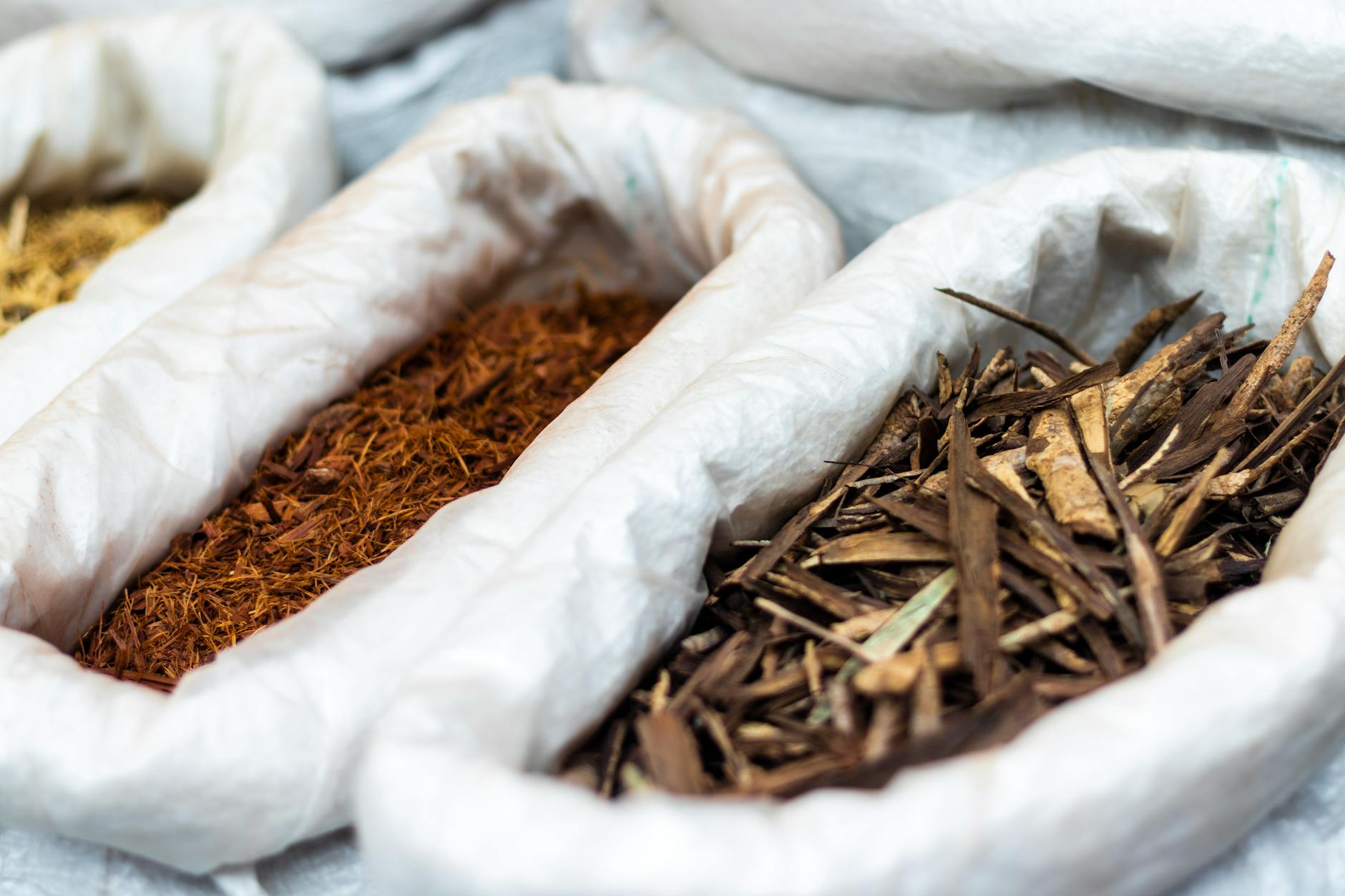
Kava (Piper methysticum G. Forster) is a shrub native to the islands of the South Pacific — Fiji, Vanuatu, Tonga, Samoa, Hawaii. Its root and rhizome have been consumed ceremonially and medicinally across Oceania for at least three thousand years, prepared by grinding or pounding the root into a powder and suspending it in water. The resulting drink — which is slightly bitter, mildly numbing, and produces a distinctive relaxed clarity — has been central to diplomatic, healing, and community ritual across the Pacific without the intoxication or disinhibition profile of alcohol.
The active constituents are kavalactones (also called kavapyrones) — a group of structurally related alpha-pyrone compounds including kavain, dihydrokavain, methysticin, dihydromethysticin, yangonin, and desmethoxyyangonin. Different kava cultivars and different parts of the plant have different kavalactone profiles, which is directly relevant to both efficacy and safety.
Western interest in kava as an anxiolytic supplement accelerated in the 1990s. A wave of clinical trials followed, a wave of liver toxicity reports in the early 2000s triggered bans in Germany and Switzerland, then a slow rehabilitation of kava's safety profile as the hepatotoxicity cases were linked to specific extract types and adulterant plant parts. Understanding where the evidence actually lands requires tracking this history.
How kavalactones signal the nervous system
Kavalactones are not single-mechanism compounds. The anxiolytic signal pulls through several simultaneous pathways [7]:
- GABA-A receptor modulation: Kavalactones enhance binding at GABA-A (gamma-aminobutyric acid type A) receptors — the same target as benzodiazepines and alcohol, though at a different binding site and with a different efficacy profile. GABA-A potentiation increases chloride ion conductance into neurons, producing inhibitory signaling that reduces excitability in the central nervous system.
- Sodium and calcium channel blocking: Kavalactones block voltage-gated sodium and calcium channels in neurons, reducing action potential generation. This contributes to the muscle-relaxing and mild analgesic effects observed alongside the anxiolytic action.
- MAO-B inhibition: Yangonin and related kavalactones inhibit monoamine oxidase B (MAO-B), the enzyme that degrades dopamine in the brain. This may contribute to the mood-elevating quality of kava that distinguishes it from purely sedative anxiolytics.
- Noradrenalin and dopamine reuptake inhibition: Some kavalactones have demonstrated modest reuptake inhibition for catecholamines, potentially contributing to an alerting or mood-lifting dimension alongside sedation.
This multi-mechanism profile is why kava does not feel like a simple sedative. The combination of GABAergic inhibition, dopaminergic modulation, and sodium/calcium channel blockade produces the characteristic kava state: reduced anxiety, physical relaxation, and a relative preservation of mental clarity at moderate doses — a profile that is genuinely different from alcohol or benzodiazepines despite superficial pharmacological overlap.
Kava's anxiolytic signal runs through GABA-A, MAO-B inhibition, and dopamine reuptake simultaneously. The result is a profile that does not simply sedate — it calms without the cognitive fog of classical GABAergic drugs.
The RCT evidence — what it shows and what it doesn't
Kava has more completed randomized controlled trial data for anxiety than almost any other botanical supplement. The honest summary of that database is that it shows a consistent anxiolytic signal in sub-clinical anxiety populations and shorter-duration studies, and a more ambiguous picture when formally tested in diagnosed generalized anxiety disorder (GAD) with rigorous trial design.
Early RCTs through the 1990s and early 2000s consistently reported kava reducing anxiety scores on the Hamilton Anxiety Rating Scale (HAM-A) in anxious adults. Effect sizes in meta-analyses of these earlier trials range from standardized mean differences of −0.59 to −0.99 in favor of kava over placebo — clinically meaningful in the context of behavioral interventions, though the individual trials were relatively small and short in duration [3, 4].
A 2022 network meta-analysis by Zhang et al. compared twelve medicinal herbs for anxiety across 29 trials, finding kava among the better-performing botanicals relative to both placebo and active comparators in the included literature [9]. But the picture gets more complicated when the largest, most rigorous trial is examined.
The 16-week GAD trial: the most rigorous test
The most methodologically rigorous kava anxiety trial to date was published in 2020 by Sarris and colleagues — a 16-week, double-blind, randomized, placebo-controlled, multi-site trial involving 171 adults with formally diagnosed generalized anxiety disorder (GAD) [1].
The intervention was an aqueous (water) extract of dried kava root, standardized to 120 mg of kavalactones twice daily (240 mg/day total). Duration was 16 weeks — substantially longer than most botanical trials. Participants were adults with current GAD who were not on psychotropic medication at enrollment.
The results were not what kava advocates had hoped. The primary endpoint — reduction in Hamilton Anxiety Rating Scale (HAM-A) score — showed a non-significant difference between kava and placebo groups, with a relative reduction favoring placebo by 1.37 points (p = 0.25). Remission rates (HAM-A below 7) were 17.4% in the kava group versus 23.8% in the placebo group (p = 0.46) — numerically worse for kava.
Kava was also associated with higher rates of memory problems (36 events vs. 23 in placebo, p = 0.044) and tremor/shakiness (36 vs. 23, p = 0.024). Liver function abnormalities occurred more frequently in the kava group, though no participant met the criteria for herb-induced hepatic injury.
The honest read of this trial: kava at the studied dose and preparation was not effective for diagnosed GAD over 16 weeks in this population. The trial was adequately powered and well designed. This is a meaningful negative finding, not a minor data point to wave away.
The likely explanation for the gap between earlier positive trials and the 2020 negative trial is population selection. Earlier trials enrolled adults with anxiety symptoms who did not necessarily meet diagnostic criteria for GAD — a heterogeneous group that may include people with situational anxiety, subthreshold anxiety, or anxiety secondary to lifestyle factors where a modest GABA-modulating herb can be meaningful. Formal GAD is a chronic, more treatment-resistant condition with a strong placebo response and requires a higher effect size to detect benefit. The earlier positive trials were not wrong about kava — they were studying a different population than the rigorous 2020 trial.
Meta-analysis landscape
The cumulative meta-analysis picture reflects the population-selection split. Reviews that include the older sub-clinical anxiety trials generally favor kava, with effect sizes in the small-to-moderate range. Reviews or analyses that weight the 2020 GAD trial more heavily reach more equivocal conclusions.
A 2018 review by Ooi, Henderson, and Pak examined the kava literature through the lens of diagnosed GAD specifically, finding evidence from two positive placebo-controlled trials and one reference-controlled trial, alongside the single negative trial at that point [2]. The evidence was characterized as promising but not conclusive — a reasonable position that the 2020 Sarris trial has since tilted toward the cautious end.
A Cochrane-style systematic review of kava for anxiety found a statistically significant effect on anxiety symptom scales in the broader anxiety literature, but noted heterogeneity in populations, preparations, and outcome measures that limits confident generalization [4].
The practical synthesis: kava has a real pharmacological effect on anxiety symptoms in sub-clinical and non-GAD populations, especially at shorter durations. For formally diagnosed GAD, the best available evidence does not support kava as a monotherapy at the standard aqueous extract dose. This distinction matters enormously for appropriate use.
Liver safety: the extract-type divide
The liver toxicity concern that triggered German and Swiss bans in 2002 is real — but the mechanism is now considerably better characterized, and the risk is not uniformly distributed across all kava products. Understanding this requires separating the extract type question from the blanket hepatotoxicity narrative.
Traditional Pacific kava preparation uses water as the solvent — the root is pounded or ground and the kavalactones are suspended in water. Kavalactones are only partially water-soluble, so traditional preparations are moderate in potency and contain the full co-constituent profile of the root including glutathione — a cellular antioxidant that may provide endogenous hepatoprotection.
European pharmaceutical kava products, particularly those involved in the 2002 hepatotoxicity cases, used acetone or ethanol solvents that extract higher concentrations of kavalactones but also extract compounds not present in traditional water preparations [5]:
- Flavokavins — particularly flavokavin B, present in higher concentrations in solvent extracts and shown to have hepatotoxic potential in cell culture
- Pipermethystine — an alkaloid found at higher concentrations in stem peelings and aerial parts of the plant (not used in traditional preparations), shown to have cytotoxic activity in hepatocytes
- Loss of glutathione and other protective co-constituents present in water preparations
The hepatotoxicity mechanism in the affected cases likely involved reactive quinone metabolite formation from kavalactone oxidation, combined with the absence of protective co-constituents and potentially the presence of adulterant plant parts in European tablet formulations [5, 6].
The Pacific kava paradox — that millions of Pacific islanders have consumed kava regularly for millennia with no epidemic liver disease — is resolved by this extract-type distinction. Traditional water-prepared kava from noble cultivar roots appears to carry a substantially lower liver risk than concentrated solvent-extracted European supplements, particularly those using non-root plant material.
The European Medicines Agency's 2011 assessment concluded that no significant hepatotoxicity was found in controlled studies with standardized kava preparations from the root [8]. A German court overturned the kava ban in 2014, partly on the basis of the accumulated safety data from traditional-preparation studies.
If using kava: choose products specifying noble cultivar root (not aerial parts or stem peelings), aqueous or water extract (not acetone or ethanol-extracted concentrate), and from brands with third-party testing. Avoid with alcohol and hepatotoxic drugs (including acetaminophen at high doses). Do not use if you have pre-existing liver disease. Duration: limit to 4–8 weeks of continuous use; take breaks. Monitor liver enzymes if using for more than 4 weeks — particularly ALT/AST.
Dosing, timing, and what to look for on labels
Clinical trials have used a wide range of kavalactone doses, from 70 mg to 280 mg per dose. The studied range for anxiety is typically 120–280 mg of kavalactones per day, with effects appearing over 4–8 weeks of consistent use rather than acutely [2].
This onset timeline is important and routinely underappreciated. Kava is not a fast-acting anxiolytic in the clinical trial context — unlike the acute effect felt from a bowl of traditionally prepared kava, which can be perceptible within 20–30 minutes. Supplement capsule formulations at clinical trial doses appear to require weeks to produce measurable anxiety score reductions.
On supplement labels, look for:
- Kavalactone content expressed in milligrams (not just root powder weight, which tells you nothing about potency)
- "Noble cultivar" kava — specific varieties bred for ceremonial use with favorable kavalactone profiles and minimal bitter or stimulant chemotypes
- "Aqueous extract" or "water extract" — the safest preparation method based on available evidence
- Root only — not aerial parts, stem peelings, or leaves
- Third-party testing for heavy metals and microbial contamination
Kava bars serving traditionally prepared kava (fresh root or dried root in water) are increasingly common in North America. The acute anxiolytic and social relaxation effects are real and observable — the experience is different from the slow-build clinical trial data on capsule forms, and the two should not be conflated when interpreting the research.
Who kava fits — and who it doesn't
The honest evidence-based picture on kava in 2026 lands here:
Situational anxiety, social anxiety in non-clinical populations, and stress-related anxiety without formal diagnosis represent the population where the positive RCT signal is strongest. Aqueous noble-cultivar kava at 120–240 mg kavalactones daily for 4–8 weeks, with liver monitoring if continuing beyond that, is consistent with the available evidence.
For people wanting to try kava as a complement to the foundational anxiety management work — sleep quality, exercise, caffeine reduction — a structured 4–8 week trial with a quality aqueous product is reasonable. Document your anxiety scores at baseline and end. The response is individual and the trial period gives you actual data on whether it works for you.
The 2020 Sarris trial is the best evidence available, and it did not find kava effective for diagnosed GAD over 16 weeks at the studied dose. If you have formally diagnosed GAD, kava is not currently evidence-supported as your primary treatment. For panic disorder specifically, a different supplement carries the better-controlled signal — high-dose myo-inositol has small RCTs in panic that kava lacks. It does not replace CBT (cognitive behavioral therapy), evidence-based pharmaceuticals, or clinician-guided care. If you want to use it as a complement, that is a conversation to have with the clinician managing your condition.
Kava should not be combined with: alcohol (additive CNS depression, increased liver burden), benzodiazepines or other GABAergic drugs (additive sedation), antidepressants (potential pharmacokinetic interactions via CYP450 pathways), or hepatotoxic medications. CNS-depressant combinations are the most acute risk and the most commonly encountered. This is a clinician conversation, not a label warning to skip.
References
- Sarris J, Byrne GJ, Bousman CA, et al. Kava for generalised anxiety disorder: a 16-week double-blind, randomised, placebo-controlled study. Aust N Z J Psychiatry. 2020;54(3):288-297. doi:10.1177/0004867419891246
- Ooi SL, Henderson P, Pak SC. Kava for generalized anxiety disorder: a review of current evidence. J Altern Complement Med. 2018;24(8):770-780. PMID:29641222
- Smith K, Leiras C. The effectiveness and safety of kava kava for treating anxiety symptoms: a systematic review and analysis of randomized clinical trials. Complement Ther Clin Pract. 2018;33:107-117.
- Pittler MH, Ernst E. Kava extract versus placebo for treating anxiety. Cochrane Database Syst Rev. 2003 (updated review, PMC6999799).
- Clouatre DL. Kava kava: examining new reports of toxicity. Toxicol Lett. 2004. Constituents in kava extracts potentially involved in hepatotoxicity. Chem Res Toxicol. 2011. doi:10.1021/tx100412m
- Teschke R, et al. Kava hepatotoxicity in traditional and modern use: the presumed Pacific kava paradox hypothesis revisited. Br J Clin Pharmacol. 2011;73(2):170-174. PMC3269575
- Cairney S, et al. Kavalactone pharmacology: GABA-A modulation, sodium and calcium channel effects, MAO-B inhibition. Psychopharmacology (Berl). 2003. ScienceDirect: Kavalactones overview.
- European Medicines Agency. Assessment report on Piper methysticum G. Forst., rhizoma. EMA/HMPC/627658/2014. 2014.
- Zhang X, et al. Network meta-analysis comparing 12 medicinal herbs for anxiety in 29 trials. Phytother Res. 2022. PMID:35619673
- National Center for Complementary and Integrative Health (NCCIH). Kava. NIH. https://www.nccih.nih.gov/health/kava. Updated 2020.