Zepbound + Taltz beat biologic alone in psoriasis: 31x higher remission in Phase 3b trials.
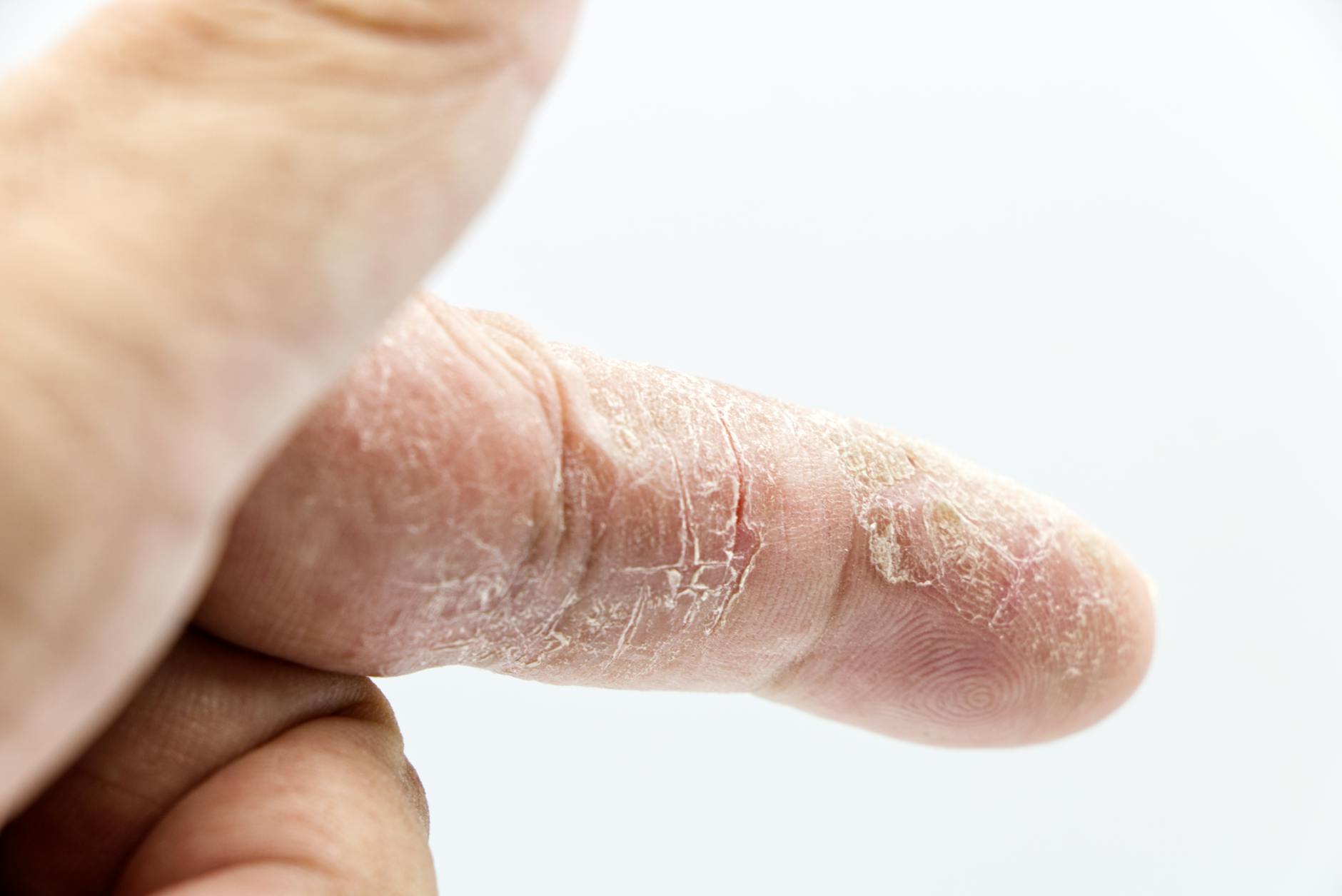
Eli Lilly's TOGETHER-PsO and TOGETHER-PsA trials asked a pointed question: what happens when you add tirzepatide — the GLP-1/GIP dual agonist sold as Zepbound — to an IL-17A biologic in patients with psoriatic disease and obesity? In psoriatic arthritis, composite remission jumped from 0.8% to 31.7%. In plaque psoriasis, complete skin clearance with meaningful weight loss went from 5.8% to 27.1%. These numbers are forcing a conversation about what GLP-1 drugs actually do.
- The drugs: tirzepatide and ixekizumab
- TOGETHER-PsA: the psoriatic arthritis trial
- TOGETHER-PsO: the plaque psoriasis trial
- Why obesity is not just a comorbidity
- How tirzepatide might be modulating inflammation directly
- GLP-1 drugs in other autoimmune conditions
- Tirzepatide vs. semaglutide: why the distinction matters here
- What this means for patients now
- Limitations and what we still do not know
- References
The drugs: tirzepatide and ixekizumab
Tirzepatide (marketed as Mounjaro for type 2 diabetes, Zepbound for obesity) is a dual agonist at two incretin hormone receptors: the glucagon-like peptide-1 receptor (GLP-1R) and the glucose-dependent insulinotropic polypeptide receptor (GIPR). It was FDA-approved for obesity in 2023. At maximum dose (15 mg weekly), it produces average weight loss of approximately 20.9% of body weight over 72 weeks — currently the most effective pharmacological weight loss approved in the US. Full mechanism and trial profile at the tirzepatide reference page.
Ixekizumab (Taltz) is a monoclonal antibody targeting interleukin-17A (IL-17A), a pro-inflammatory cytokine that plays a central role in psoriasis and psoriatic arthritis (PsA). IL-17A signals drive keratinocyte proliferation (producing psoriatic plaques), joint inflammation, and bone erosion in PsA. Ixekizumab is FDA-approved for moderate-to-severe plaque psoriasis and active PsA, typically producing PASI 100 (complete clearance) in 32–42% of patients at week 12 in pivotal trials (UNCOVER-1, -2, -3), depending on dosing schedule and timepoint.
The TOGETHER trials asked what would happen if you gave both — specifically in patients with psoriatic disease who also had obesity or overweight with at least one weight-related comorbidity. The rationale: adipose tissue in obesity is not metabolically inert. It is an active source of inflammatory cytokines including TNF-α, IL-6, and IL-17A itself. Reducing adipose mass might meaningfully enhance biologic response.
TOGETHER-PsA: the psoriatic arthritis trial
TOGETHER-PsA enrolled 271 adults with active psoriatic arthritis and obesity or overweight (BMI ≥27) plus at least one weight-related comorbidity. Participants were randomized to ixekizumab plus tirzepatide (combination arm) or ixekizumab alone (monotherapy arm). The trial ran 52 weeks, with the primary endpoint assessed at week 36.
The primary endpoint was a composite: achieving ACR50 response (American College of Rheumatology 50 — at least 50% improvement in joint count, pain, function, and inflammation markers) plus achieving at least 10% body weight loss simultaneously.
| Outcome | Combination (Tirz + Ixek) | Monotherapy (Ixek alone) |
|---|---|---|
| Composite: ACR50 + ≥10% weight loss | 31.7% | 0.8% |
| ACR50 alone | 33.5% | 20.4% |
| Statistical significance (composite) | p < 0.001 | |
The composite result — 31.7% versus 0.8% — is a 40-fold difference and among the largest treatment-response differentials in a modern rheumatology Phase 3 trial. The weight loss component is the primary mathematical driver of the gap (almost no one achieves at least 10% weight loss on biologic monotherapy alone). But the ACR50-alone comparison also tells a real story: 33.5% versus 20.4% represents a 64% relative improvement in joint disease control with tirzepatide added. The biologic works better when the metabolic environment is treated simultaneously.
TOGETHER-PsO: the plaque psoriasis trial
TOGETHER-PsO enrolled 274 patients with moderate-to-severe plaque psoriasis, obesity or overweight, and at least one comorbidity. Approximately 97% had psoriasis affecting high-morbidity sites — face, scalp, genitals, or intertriginous areas — where lesions disproportionately affect quality of life regardless of total body surface area. Randomization was the same: ixekizumab plus tirzepatide versus ixekizumab alone. Primary endpoint at week 36.
| Outcome | Combination (Tirz + Ixek) | Monotherapy (Ixek alone) |
|---|---|---|
| Composite: PASI 100 + ≥10% weight loss | 27.1% | 5.8% |
| PASI 100 alone | 40.6% | 29.0% |
| Statistical significance (composite) | p < 0.001 | |
The composite is a 4.7-fold difference. The PASI 100 alone comparison — 40.6% versus 29.0% — is a 40% relative improvement in complete skin clearance. This is not weight-loss math driving the result; tirzepatide is genuinely improving the biologic's skin-clearing ability in obese patients. Getting an additional 11 percentage points of complete clearance from a drug not designed for dermatology is substantial. The question is why — and whether the effect is weight-mediated, directly immune-mediated, or both.
PASI 100 means complete skin clearance — zero measurable psoriatic plaques across the entire body surface. For patients who have lived with visible psoriasis affecting the face, scalp, or genitals, complete clearance carries quality-of-life weight beyond what a percentage score captures. Getting 40.6% of obese psoriasis patients to PASI 100 on combination therapy versus 29.0% on biologic alone is a clinically meaningful addition.
Why obesity is not just a comorbidity
The conventional framing treats obesity in psoriasis as additive burden: heavier patients have worse disease and worse biologic response, but as independent problems requiring separate management. The TOGETHER trials are built on a different premise: obesity is a driver of psoriatic disease activity, not merely a concurrent condition.
Adipose tissue — particularly visceral fat — is an active endocrine organ producing adipokines (leptin, adiponectin, resistin) and cytokines including TNF-α, IL-6, and critically, IL-17A. In psoriasis, this matters directly: the inflammatory signal that ixekizumab blocks at the receptor level is simultaneously being generated at higher volume by excess adipose tissue. Treating the receptor without reducing the source is like mopping the floor while the tap runs. The mechanisms linking adipose inflammation to insulin resistance and systemic cytokine burden are covered in depth separately.
Observational data has been consistent on this for over a decade. A 2018 meta-analysis found obese psoriasis patients had significantly lower biologic response rates than non-obese patients across multiple drug classes. Weight loss through bariatric surgery or intensive lifestyle intervention had been shown to improve PASI scores independently of medication — but those interventions are not scalable or pharmacologically optimizable the way tirzepatide is.
The TOGETHER trials are the first controlled demonstration that a weight-reducing pharmacological agent, given alongside a biologic, produces significantly better outcomes than the biologic alone. The directional story was expected. The magnitude of the composite results was not.
How tirzepatide might be modulating inflammation directly
The weight-loss mechanism alone does not fully account for the PASI 100 improvement. A 40% relative gain in complete skin clearance is more than a BMI effect — this raises the question of whether tirzepatide has direct anti-inflammatory properties beyond its metabolic effects.
The signal tirzepatide pulls through the GLP-1 receptor goes beyond glucose and appetite regulation. GLP-1 receptors are expressed on immune cells — macrophages, dendritic cells, and T cells. Activation of GLP-1R on macrophages reduces NF-κB signaling and decreases production of pro-inflammatory cytokines including TNF-α, IL-6, and IL-1β. In psoriasis and PsA, these are upstream signals feeding the IL-17A pathway that ixekizumab targets downstream.
The GIPR component of tirzepatide — absent in semaglutide — adds another layer. GIP receptor activation in adipose tissue promotes anti-inflammatory polarization of adipose macrophages, reducing cytokine output of visceral fat independent of fat mass reduction. This is a pharmacological effect that occurs even before meaningful weight loss has accrued. If tirzepatide's immune effects are partially weight-independent, it would explain why the combination outperforms biologic monotherapy even at early time points.
This remains a mechanistic hypothesis. The TOGETHER trials measured clinical outcomes; they were not designed to isolate weight-dependent from weight-independent components of tirzepatide's effect. That distinction matters enormously for the broader question of GLP-1 drugs as autoimmune modulators.
GLP-1 drugs in other autoimmune conditions
The TOGETHER results are not isolated. A convergent body of evidence is positioning GLP-1 receptor agonists as plausible immunomodulators across multiple conditions — not just metabolic disease.
In rheumatoid arthritis (RA), observational studies find GLP-1 agonist use associates with lower CRP (C-reactive protein) and better biologic response rates in obese patients versus matched controls. No randomized trial data exists yet. In inflammatory bowel disease, GLP-1R agonists have shown anti-inflammatory effects in murine colitis models. Small human case series in Crohn's patients with comorbid obesity have suggested combined weight loss and disease-activity improvement — but these are not controlled.
The most striking signal outside psoriatic disease is Parkinson's: a Phase 2 trial published in 2024 found semaglutide slowed motor decline in early Parkinson's patients — a disease driven in part by neuroinflammation. The GLP-1 receptor's anti-inflammatory reach extends well beyond the gut-pancreas axis into central and peripheral immune regulation.
The TOGETHER trials are the most rigorous demonstration yet that this immune-modulating capacity translates to measurable clinical outcomes in a specific autoimmune population. They are not proof that GLP-1 drugs should replace immunotherapy — they are evidence that the two strategies may act synergistically.
Tirzepatide vs. semaglutide: why the distinction matters here
These trials used tirzepatide (Zepbound), not semaglutide (Ozempic/Wegovy). The distinction is pharmacologically significant for the immune question.
Semaglutide is a selective GLP-1R agonist. Tirzepatide is a dual GLP-1R and GIPR agonist — with activity at the GIP receptor that semaglutide entirely lacks. The GIP receptor is expressed on visceral adipocytes, macrophages, and immune cells. GIPR activation promotes anti-inflammatory macrophage polarization, reduces adipose cytokine output, and may have direct effects on T-cell activity. Tirzepatide is modulating the immune environment through a channel semaglutide cannot access.
Tirzepatide also produces greater average weight loss than semaglutide: approximately 20.9% versus 14.9% at maximum approved doses (STEP 1 trial) — a head-to-head comparison covered in detail here. Some of the psoriasis benefit is weight-mediated — and tirzepatide's greater weight-loss efficacy removes more adipose cytokine burden than semaglutide would. These two effects compound. Whether semaglutide plus an IL-17A biologic would produce a comparable result is not known. There is no equivalent semaglutide-plus-biologic Phase 3 trial in psoriasis. Extrapolating the TOGETHER data to the GLP-1 class broadly is premature.
What this means for patients now
The TOGETHER results were presented at the 2026 American Academy of Dermatology Annual Meeting and have not yet resulted in an FDA label update for either drug in this combination indication. Patients cannot currently access tirzepatide plus ixekizumab as a formally labeled combination.
What has changed is the clinical conversation. Dermatologists and rheumatologists treating obese patients with moderate-to-severe psoriasis or PsA now have randomized evidence that treating the obesity component pharmacologically improves biologic outcomes significantly. The question of whether to add tirzepatide is no longer hypothetical.
Practically: a patient with PsA and a BMI of 35 on ixekizumab who has not achieved ACR50 is now someone for whom tirzepatide is a biologically grounded co-intervention, not just a weight management add-on. A referral to endocrinology or obesity medicine — previously considered cosmetic — is now clinically strategic. If this applies to you, speak with your rheumatologist or treating physician before initiating any new pharmacological agent alongside an existing biologic.
The access problem is real. Tirzepatide for obesity faces coverage battles with many US payers. Combinations of two expensive medications — a biologic running $20,000–40,000 per year and Zepbound at $800–1,200 per month out-of-pocket — are beyond reach for many patients. Trial results do not resolve insurance barriers.
Limitations and what we still do not know
The TOGETHER composite endpoints were demanding by design — requiring both disease control and meaningful weight loss simultaneously. The 31.7% composite remission in TOGETHER-PsA is striking, but a patient who achieves ACR50 with only 8% weight loss does not count as a composite responder. The composite reflects a specific clinical goal (integrated disease and weight control) but does not capture all patients who benefit from combination therapy.
The trials were not blinded on the tirzepatide side — patients and clinicians knew who was receiving the combination. For clinician-assessed endpoints (ACR scoring, joint counts), observer bias is a real risk. PASI scoring is more objective, but still involves clinical judgment.
Long-term data beyond 52 weeks is absent. Psoriasis and PsA are lifelong conditions; what the combination looks like at 2 and 5 years — disease flare risk on discontinuation, maintenance of weight loss, long-term tolerability — is unknown.
The mechanistic question — how much of tirzepatide's benefit is weight-mediated versus direct immune effect — is unresolved. That distinction matters for policy (if purely weight-mediated, bariatric surgery might be equally effective) and future drug development (if there is a direct immune signal, GLP-1/GIPR agonists might have a role in non-obese patients).
Finally: the TOGETHER population was obese patients with psoriatic disease. The results do not apply to normal-weight psoriasis patients, who represent a significant fraction of the total population. This is an obesity-specific intervention story.
References
- Lilly Press Release. Lilly's TOGETHER-PsA and TOGETHER-PsO Phase 3b trials demonstrate tirzepatide significantly improved outcomes when added to ixekizumab in patients with psoriatic arthritis and plaque psoriasis. Presented at AAD Annual Meeting, 2026.
- Jastreboff AM, et al. Tirzepatide Once Weekly for the Treatment of Obesity. New England Journal of Medicine. 2022;387(3):205-216.
- Blauvelt A, et al. Efficacy and safety of ixekizumab for the treatment of moderate-to-severe plaque psoriasis: results through 108 weeks (UNCOVER-3). Journal of the American Academy of Dermatology. 2017;76(6):1013-1023.
- Mease PJ, et al. Ixekizumab for the treatment of biologic-naive patients with active psoriatic arthritis. Annals of the Rheumatic Diseases. 2017;76(1):79-87.
- Wolk K, et al. Adipokines in psoriasis: relations to obesity and metabolic comorbidities. Journal of the European Academy of Dermatology and Venereology. 2020;34(4):e168-e171.
- Mahajan R, et al. Obesity and psoriasis: a literature review. Cutis. 2020;105(6):E6-E11.
- Fève B, Bastard JP. The role of interleukins in insulin resistance and type 2 diabetes mellitus. Nature Reviews Endocrinology. 2009;5(6):305-311.
- Drucker DJ. The biology of incretin hormones. Cell Metabolism. 2006;3(3):153-165.
- Wan Y, et al. GLP-1 receptor agonists in rheumatic diseases: current evidence and future perspectives. Frontiers in Immunology. 2024;15:1385542.
- Lazzeri G, et al. GLP-1 Receptor Signaling in Inflammation: A Novel Perspective on Autoimmune Diseases. International Journal of Molecular Sciences. 2024;25(3):1380.
- Dolgin E. Why GLP-1 drugs beyond diabetes may hinge on whether effects are direct or driven by weight loss. Nature Medicine. 2024.
- Derkach K, et al. Effects of GLP-1 receptor agonists on inflammatory markers in obese patients. Obesity Reviews. 2023;24(8):e13601.