Scientists Found a Way to Make Cells Burn More Calories — Without Damaging the Heart.
University of Technology Sydney researchers have published a new class of mild mitochondrial uncouplers in Chemical Science — compounds that raise cellular energy expenditure without the cardiovascular toxicity that killed every previous uncoupler from DNP onward. What uncoupling actually means, why nearly a century of prior attempts failed, what the chemistry distinguishes here, and the honest timeline to any human application.
- What mitochondrial uncoupling actually is
- DNP: the 90-year cautionary tale
- Why every successor compound failed
- The University of Technology Sydney research
- The chemistry that makes the difference
- What the safety data actually shows — and doesn't
- The broader uncoupler drug-development landscape
- Honest timeline to human use
- References
What mitochondrial uncoupling actually is
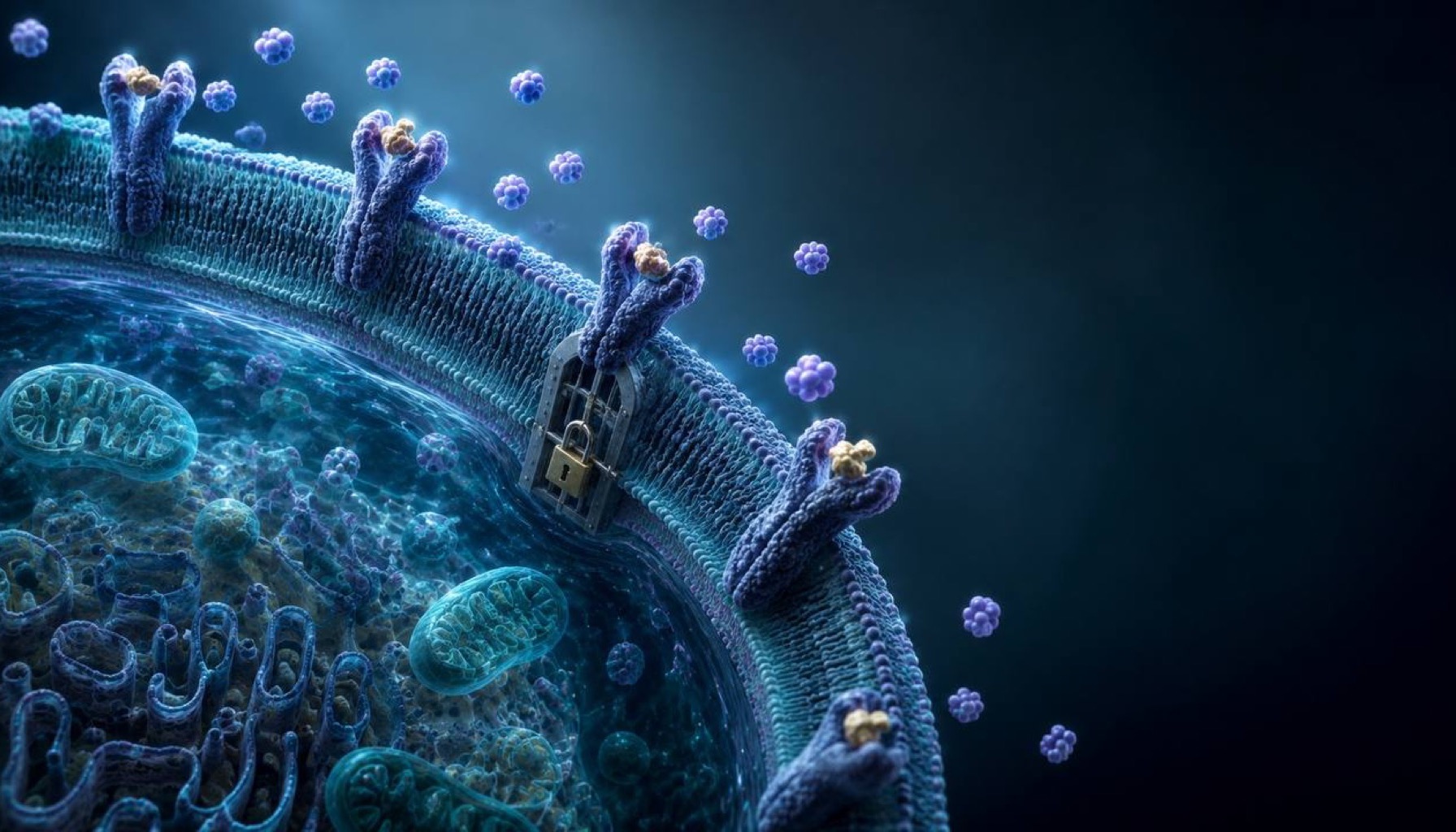
Your mitochondria produce energy through a process called oxidative phosphorylation. In the inner mitochondrial membrane, electrons move down a protein chain — the electron transport chain — pumping protons (hydrogen ions) from the inside of the mitochondria out to a space between the two membranes, building up a proton gradient. That gradient is the stored energy. Normally, those protons flow back in through a molecular turbine called ATP synthase (adenosine triphosphate synthase), spinning it to produce ATP (adenosine triphosphate) — the universal cellular energy currency.
Uncoupling breaks that sequence. An uncoupler lets protons leak back across the membrane directly, bypassing ATP synthase entirely. The gradient dissipates as heat instead of being captured in ATP. The result: the mitochondria spin faster, burning more substrate (fat and glucose), but producing less ATP per cycle. Net effect at the cellular level — increased metabolic rate and heat output without any increase in physical activity.
This is not a theoretical mechanism. Your body uses natural uncoupling continuously. Brown adipose tissue (BAT) — the fat that generates heat rather than storing it — works precisely this way, through a protein called UCP1 (uncoupling protein 1). Mild uncoupling also plays a role in protecting against excessive reactive oxygen species (ROS) production in normal metabolism. The biological machinery already exists. The challenge has always been triggering it pharmacologically, at the right intensity, in the right tissues, without killing the person.
DNP: the 90-year cautionary tale
2,4-dinitrophenol — universally abbreviated DNP — is the compound that defined both the promise and the catastrophe of uncoupler-based weight loss. DNP is a small, fat-soluble molecule that acts as a protonophore: it picks up protons on one side of the mitochondrial membrane and drops them on the other, shuttling the gradient away continuously without any regulation.
DNP was first observed to cause weight loss in munitions workers in France during the First World War — people handling the compound noticed dramatic body-weight reduction alongside hyperthermia. By the early 1930s it was being marketed commercially as a weight-loss drug in the United States, with estimates of 100,000 users at peak [1]. The weight loss was real and substantial — basal metabolic rate (BMR) increases of 11–40% were documented depending on dose.
So was the death toll. DNP toxicity produces a characteristic clinical picture: profuse sweating, severe hyperthermia, tachycardia (elevated heart rate), tachypnoea (rapid breathing), metabolic acidosis, and cardiovascular collapse. Average time to death in fatal overdoses is approximately 14 hours from symptom onset [2]. Published fatalities in the medical literature number in the dozens for documented cases, but the true historical count is larger. The US Food and Drug Administration (FDA) banned DNP in 1938. The compound continues to resurface periodically in online bodybuilding communities, with recurring fatalities including in young adults with no underlying cardiac disease [3].
The mechanism of DNP's cardiac toxicity is direct: the heart is a high-energy-demand organ with no tolerance for ATP depletion. When uncoupling is uncontrolled, cardiac ATP production falls faster than demand, leading to mechanical failure. The heart does not have the same metabolic flexibility as skeletal muscle. It cannot simply reduce output when ATP is constrained.
DNP killed not because uncoupling is inherently lethal — your own brown fat does it continuously — but because DNP had no off switch. It uncoupled without any ceiling, any tissue selectivity, or any feedback regulation.
Why every successor compound failed
DNP's toxicity did not kill the research direction — it defined the engineering problem for the next 85 years. If you could find a compound that uncoupled mitochondria mildly, with a ceiling before ATP collapse, you would have a pharmacological metabolic accelerator with no exercise required and no appetite suppression needed.
Every classical uncoupler — FCCP (carbonyl cyanide-4-(trifluoromethoxy)phenylhydrazone), CCCP (carbonyl cyanide m-chlorophenylhydrazone), and many others in the research literature — shares the same failure mode: they lack dose-ceiling behavior. At low concentrations they work. As concentration increases slightly, they produce full uncoupling, ATP collapse, and cell death. The therapeutic window is essentially zero. You cannot titrate them safely.
More recent drug-development attempts have included BAM15 (a selective mitochondrial uncoupler that avoids plasma membrane depolarization) and its derivative SHD865. These compounds show superior safety profiles in animal models — BAM15 does not lower core body temperature even at high doses, suggesting a cardiac-sparing mechanism [4]. But none of the modern candidates have yet demonstrated a clear path to human clinical use. The roadblock is always the same: demonstrating genuine safety separation between metabolic benefit and cardiovascular risk in a human dosing range.
The University of Technology Sydney research, published in Chemical Science in 2025, represents a different engineering approach — one that targets the rate of proton transport itself as the primary safety lever, rather than trying to find compounds with inherently better tissue selectivity.
The University of Technology Sydney research
The team, led by Associate Professor Tristan Rawling at the University of Technology Sydney and collaborating with researchers at Memorial University of Newfoundland, designed a family of arylamide-substituted fatty acid compounds specifically to test whether slowing the rate of proton transport — rather than blocking it entirely — could produce mild, controlled uncoupling behavior [5].
The core research question was mechanistic: can you build a compound whose chemistry physically constrains how fast it transports protons, so that at no dose does it produce the runaway uncoupling that characterizes DNP and the classical protonophores?
The team tested a series of arylamide compounds — labeled in the paper as compounds 2b through 6b — against benchmark classical uncouplers DNP and CCCP in human breast cancer cell lines and in reconstituted phospholipid membrane systems that model the inner mitochondrial membrane. The cell lines used in early-phase work are standard pharmacological screening tools; they allow measurement of mitochondrial membrane potential, oxygen consumption, and ATP levels under controlled conditions.
The results divided cleanly. Some arylamide variants — those with a 3,5-disubstitution pattern on the aromatic ring — behaved like classical full uncouplers: they depolarized the mitochondrial membrane completely and mirrored DNP's cytotoxic profile at higher concentrations. Others — the 3,4-disubstituted variants — produced a different behavior: they raised oxygen consumption (a measure of cellular respiration rate), partially depolarized the membrane, but then plateaued. ATP levels did not fall significantly. Cell viability was not compromised.
This plateau behavior is what the researchers call "mild uncoupling" — and it is mechanistically different from just using less of a classical uncoupler. The mild variants were not merely underdosed full uncouplers. They had a ceiling built into their mechanism.
The chemistry that makes the difference
The mechanism the team identified comes down to a single step in the proton transport cycle: the capacity of the compound to self-assemble into membrane-permeable dimers.
Protonophoric uncouplers work through a cycling mechanism. The compound picks up a proton at one face of the membrane (the acidic inter-membrane space), diffuses across the membrane in its protonated form, releases the proton on the other side, then diffuses back to start the cycle again. For the return trip — crossing the membrane in the deprotonated (anionic) form — the compound has to either flip as a monomer or briefly pair with another molecule to form a membrane-crossing dimer.
The 3,4-disubstituted arylamides have reduced capacity to form these membrane-crossing dimers compared to the 3,5-disubstituted versions. The rate-limiting step of the proton transport cycle is slower by design — not blocked, just constrained. The compound still uncouples, but it does so at a rate that cannot exceed the mitochondria's ability to maintain adequate ATP production. The gradient dissipates partially, metabolic rate rises, but the cell does not hit the collapse threshold [6].
This is a structural control mechanism, not a biological feedback mechanism. The safety ceiling is built into the molecule's geometry, not into any cellular sensing pathway. The practical implication is that the margin between "mild uncoupling that raises metabolic rate" and "full uncoupling that collapses ATP" is wider — though in this early-stage work, it has only been demonstrated in cell lines and membrane models, not in animals or humans.
Rawling's team describes the finding as "a clear framework for future drug design" in the published paper — language that accurately reflects where the work sits. This is proof-of-concept for a design principle, not a candidate drug.
What the safety data actually shows — and doesn't
It is worth being precise about what the safety evidence in this study demonstrates. The 3,4-disubstituted arylamides did not deplete ATP at concentrations that produced measurable increases in cellular respiration. They did not reduce cell viability in the human breast cancer cell lines tested. They did not produce the total mitochondrial membrane collapse seen with DNP and CCCP.
What the study does not show: cardiovascular safety data. There is no cardiac cell line data in this publication, no cardiomyocyte (heart muscle cell) testing, no animal dosing, and no pharmacokinetic (PK) data on absorption, distribution, metabolism, or elimination. The study authors did not make cardiovascular safety claims — that framing has emerged in popular science coverage rather than from the paper itself.
The distinction matters for a specific reason. The historical cardiac toxicity of uncouplers is not just a general cellular toxicity problem — it is specifically a problem of the heart's ATP dependence and its inability to reduce contractile demand when energy supply falls. A compound that is safe in a breast cancer cell line (which has far more metabolic flexibility than a cardiac myocyte) tells you something useful about the mild-uncoupling mechanism. It does not tell you how cardiac tissue would respond. That experiment has not been done yet.
The honest version of the safety claim at this stage of research is: the design principle demonstrated here has the potential to produce cardiovascular-sparing uncouplers, because the ceiling mechanism limits the depth of uncoupling. Whether any specific compound derived from this framework is actually cardiac-safe will require dedicated testing — first in cardiac cell models, then in animal models, then in carefully designed human trials.
This research is exciting at the mechanistic level because it solves a design problem that has blocked the field since the 1930s. It is not a drug. The compounds tested here were studied in human cell lines, not in living organisms. The path from this publication to any approved human therapeutic is a decade-scale project at minimum — and the majority of compounds that look promising in cell studies do not survive animal testing, let alone human trials.
The broader uncoupler drug-development landscape
The UTS research sits within a broader revival of interest in mitochondrial uncoupling as a metabolic target. The obesity and metabolic syndrome epidemic has renewed pressure on pharmacological research to find pathways that increase energy expenditure without the off-target risks of stimulants, the lean-mass loss associated with GLP-1 receptor agonists (GLP-1 RAs), or the complexity of thermogenic sympathomimetics.
BAM15 is the most-studied modern uncoupler in animal models. A 2024 paper in Diabetes (American Diabetes Association) showed that a related compound improved metabolic homeostasis in high-fat-diet mice without raising core body temperature — the classic sign of dangerous excess uncoupling [7]. The mechanism involves selectivity for the mitochondrial membrane potential without affecting the plasma membrane, which may explain the cardiac-sparing profile relative to classical protonophores.
Carbon monoxide (CO)-releasing molecules have also been proposed as a route to controlled uncoupling, exploiting CO's inhibition of cytochrome c oxidase to reduce the efficiency of the electron transport chain in a dose-controllable way [8]. This approach is still highly experimental.
The UCP1 pathway in brown and beige fat continues to attract attention, with research into β3-adrenergic receptor agonists (β3-AR agonists) that activate BAT thermogenesis and into the conversion of white adipocytes to a beige phenotype through cold exposure, exercise, and various pharmacological signals. These approaches work through natural biological uncoupling rather than chemical protonophores, which avoids the ceiling problem entirely — but the achievable metabolic rate increase in adults with limited BAT is modest [9].
The proton-leak contribution to resting metabolic rate in humans is estimated at 20–30% of basal oxygen consumption [10]. That is the theoretical addressable space — raising the leak fraction pharmacologically could meaningfully increase daily energy expenditure even without exercise. Whether any compound can do this safely in humans remains the open question.
Honest timeline to human use
The UTS research establishes a design principle in cell models. What would need to happen before any compound based on this chemistry reaches human use:
- Cardiomyocyte testing. The cardiac cell line studies needed to determine whether the mild-uncoupling ceiling is maintained in heart muscle — the critical safety question that primary publication did not address.
- In vivo animal pharmacology. Dose-finding in rodents and larger animals, with cardiovascular monitoring, metabolic phenotyping, and toxicology. This phase alone typically takes 2–5 years for a novel compound class.
- Lead optimization. The arylamide compounds in this paper are starting points, not drug candidates. Medicinal chemistry work to optimize half-life, oral bioavailability, tissue distribution, and metabolic stability would produce a lead compound.
- IND filing and Phase 1 human trials. First-in-human studies focused on safety, tolerability, and pharmacokinetics. The FDA Investigational New Drug (IND) process precedes any human testing.
- Phase 2 and Phase 3 for metabolic endpoints. Demonstrating efficacy for weight loss or metabolic disease indication in adequately powered randomized controlled trials (RCTs).
Realistic timeline from this publication to a hypothetical approved drug: 12–20 years, assuming nothing fails in any phase. Most novel compound classes do fail, typically in animal cardiovascular toxicity or in Phase 1 safety. The 90-year history of this field counsels against premature optimism about any specific candidate.
What the UTS research does change is the framing of the problem. The previous assumption was that the ceiling mechanism had to come from biological selectivity — targeting the compound to specific tissues, or building in pH-sensitivity that limited activity to non-cardiac environments. The new work suggests that the ceiling can be built into the chemistry of proton transport itself, which is a structurally simpler and potentially more general design principle.
That is genuinely new. It is not a drug. It is a better question to ask.
References
- Grundlingh J, et al. 2,4-Dinitrophenol (DNP): a weight loss agent with significant acute toxicity and risk of death. J Med Toxicol. 2011;7(3):205-212.
- Downey T, et al. 2,4-Dinitrophenol overdose: toxicokinetics, mechanisms of toxicity and management. Toxicol Commun. 2020;4(1):22-30.
- Pereira LC, et al. Fatal long-term intoxication by 2,4-dinitrophenol and anabolic steroids in a young bodybuilder with muscle dysmorphia. Front Public Health. 2024;12:1452196.
- Kenwood BM, et al. Identification of a novel mitochondrial uncoupler that does not depolarize the plasma membrane. Mol Metab. 2014;3(2):114-123.
- Rawling TR, et al. (University of Technology Sydney & Memorial University of Newfoundland). The role of transmembrane proton transport rates in mild mitochondrial uncoupling by arylamide substituted fatty acids. Chemical Science (RSC). 2025/2026;d5sc06530e.
- Rupprecht A, et al. Protonophoric fatty acids and proton transport across phospholipid membranes: a biophysical perspective. Biochemistry. 2020;59(32):2930-2942.
- Axelrod CL, et al. A new mitochondrial uncoupler improves metabolic homeostasis in mice. Diabetes. 2024;73(3):357-367.
- Motterlini R, et al. Obesity and mitochondrial uncoupling — an opportunity for carbon monoxide-based pharmacology of metabolic diseases. Biochem Pharmacol. 2025; (in press).
- Frontini A, Cinti S. Distribution and development of brown adipocytes in the murine and human adipose organ. Cell Metab. 2010;11(4):253-256.
- Brand MD, Esteves TC. Physiological functions of the mitochondrial uncoupling proteins UCP2 and UCP3. Cell Metab. 2005;2(2):85-93.
- Thrush AB, et al. Implications of mitochondrial uncoupling in skeletal muscle in the development and treatment of obesity. FEBS J. 2013;280(20):5015-5029.
- Divakaruni AS, Brand MD. The regulation and physiology of mitochondrial proton leak. Physiology (Bethesda). 2011;26(3):192-205.