MSM for joint pain and recovery: what the evidence actually shows
MSM — methylsulfonylmethane, the organic-sulfur compound that turns up in nearly every joint and recovery formula on the shelf — is one of those supplements where the honest answer sits squarely between the hype and the dismissal. It has a plausible mechanism as a sulfur donor with antioxidant and anti-inflammatory effects, and a handful of small randomized trials show modest, real improvements in knee osteoarthritis pain and in exercise-induced muscle soreness. That signal deserves to be said plainly. But it comes wrapped in caveats the label never mentions: the trials are small and short, often industry-funded, frequently bundle MSM with glucosamine or other actives so you can’t isolate it, and the effect sizes are modest. Here is the honest read on what MSM does for joints and recovery, and where the standalone evidence runs thin.
How this article was built: Primary sources: the Butawan et al. 2017 applications-and-safety review in Nutrients, the Kim et al. 2006 osteoarthritis pilot trial in Osteoarthritis and Cartilage, the Debbi et al. 2011 randomized controlled study in BMC Complementary and Alternative Medicine, the Brien et al. 2011 meta-analysis of DMSO/MSM in knee OA, the Xu et al. 2023 mild-knee-pain quality-of-life RCT in Nutrients, and the Withee et al. 2017 half-marathon recovery trial in the Journal of the International Society of Sports Nutrition — retrieved and verified through peer-reviewed literature databases.
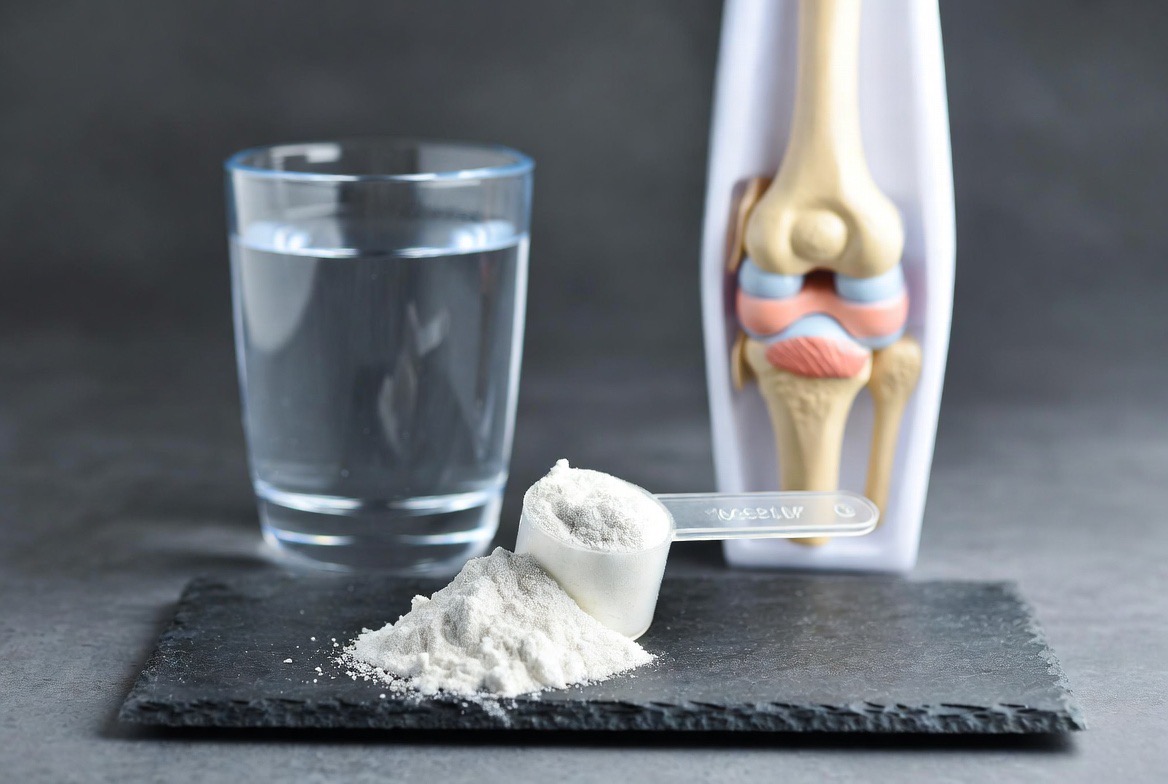
- The signal is real but modest. A handful of small randomized trials show MSM cuts knee osteoarthritis pain and improves function versus placebo — one 12-week trial reported a roughly 25% drop in WOMAC pain — but the effect is modest and the trials are small.
- The standalone evidence is thin. A meta-analysis that isolated the cleaner trials found the pooled pain reduction was not statistically or clinically significant, and many positive results come from MSM combined with glucosamine or other actives, so you can’t cleanly credit MSM alone.
- Recovery is the same story. After hard exercise, MSM has attenuated muscle and joint soreness and shifted some oxidative-stress and muscle-damage markers in small trials — promising, often below the threshold of statistical significance, and not yet settled.
- Who it’s for: people with mild-to-moderate knee OA or heavy training loads who want a genuinely low-risk add-on to — not a replacement for — movement, strength work and weight management. Reasonable, well-tolerated adjunct; not a miracle, and it does not reverse arthritis.
- What MSM actually is
- Why it might work: sulfur, oxidative stress and the inflammatory signal
- The osteoarthritis evidence, in numbers
- MSM for exercise recovery and soreness
- The combination-product problem
- Evidence Radar: how strong is each claim?
- A tiered way to think about it
- Grey areas and honest limits
- Open questions
- What this article is not saying
- References
What MSM actually is
MSM is methylsulfonylmethane — a small, naturally occurring organosulfur compound (dimethyl sulfone, chemically) found in trace amounts in plants, animals and humans, and produced industrially for supplement use. It is the oxidized cousin of DMSO (dimethyl sulfoxide), the solvent better known for its medical and topical uses, and in fact a portion of ingested DMSO is converted to MSM in the body. What MSM brings to the table is sulfur — a mineral the body uses to build connective tissue, antioxidant systems and countless proteins.1
It has become one of the most widely used joint-and-recovery supplements precisely because it is cheap, stable, tasteless enough to formulate, and recognized as safe at typical doses. It also rarely travels alone: open most joint-support products and you will find MSM sitting next to glucosamine and chondroitin, and most recovery blends fold it in with other ingredients. That ubiquity is part of why its reputation runs ahead of its standalone data — people experience the blend and credit the MSM. Keep that in mind before any numbers: when a product “works,” it is often the whole formula doing the work, and untangling MSM’s specific contribution is one of the central problems in reading this literature.1
Why it might work: sulfur, oxidative stress and the inflammatory signal
The mechanistic case for MSM is genuinely plausible, which is more than many supplements can claim. It rests on three threads. First, MSM is a bioavailable sulfur donor: sulfur is structurally central to connective tissue, to the joint matrix, and to glutathione, the body’s master intracellular antioxidant. Supplying sulfur, the argument goes, supports the systems that maintain cartilage and quench oxidative damage.1
Second, and more concretely, MSM behaves as an antioxidant and anti-inflammatory in laboratory and human work. In cell and animal models it dampens the inflammatory cascade by interfering with NF-κB (nuclear factor kappa-B) — the transcription-factor switch that, when activated, turns on the genes for pro-inflammatory cytokines such as TNF-α and interleukin-6. Lower NF-κB activation means a quieter cytokine signal, and a quieter cytokine signal means less of the inflammation that drives joint pain and post-exercise soreness.1 Third, in human exercise studies, MSM has measurably moved oxidative-stress chemistry — raising total antioxidant capacity and blunting markers of oxidative damage after exhaustive exercise.8
So the signal MSM pulls is the oxidative-stress-and-cytokine signal: it tops up the body’s sulfur and antioxidant pools and turns down the inflammatory volume. That is a coherent story, and it is partly confirmed in human blood.8 But label it honestly: a plausible, partially demonstrated mechanism is a reason to take the clinical question seriously, not proof that the supplement changes how a joint feels. Mechanism is a hypothesis-generator. The real test is whether it survives contact with randomized trials — and there, the picture is more mixed.
The osteoarthritis evidence, in numbers
Start with the positive trials, because they are real. Kim et al. 2006, a randomized double-blind placebo-controlled pilot in Osteoarthritis and Cartilage, gave 50 adults with knee OA either MSM 3 g twice daily (6 g/day) or placebo for 12 weeks. Compared with placebo, MSM produced statistically significant improvements in WOMAC pain and physical-function scores — a roughly 25% reduction in the pain score — though it did not significantly move stiffness or the aggregate index, and the authors explicitly called it a pilot needing larger confirmation.2
Debbi et al. 2011, in BMC Complementary and Alternative Medicine, randomized 49 knee-OA patients to MSM 1.125 g three times daily (3.375 g/day) or placebo for 12 weeks. The MSM group showed a significant improvement in WOMAC physical function and total score — about a 21% improvement — versus placebo, with pain trending in the same direction.3 And Xu et al. 2023, a more recent randomized double-blind placebo-controlled trial in Nutrients, gave 88 people with mild knee pain a lower 2 g/day dose for 12 weeks and reported a significant improvement in a knee quality-of-life measure versus placebo.5 Three independent placebo-controlled trials, all pointing the same direction on function or pain.
Now the honesty tax. Brien et al. 2011 ran a meta-analysis of the cleaner DMSO/MSM osteoarthritis trials and found that, pooled, the reduction in pain on the visual analogue scale was about 6.3 mm — and that this was neither statistically nor clinically significant, with two trials showing a statistically significant but not clinically relevant effect and one showing no group difference at all.4 The authors concluded the current evidence does not establish MSM (or DMSO) as clinically effective for OA pain.4 A blunt real-world echo: Crawford et al. 2017 randomized 180 military trainees to 3 g/day MSM or placebo for 8 weeks to prevent knee pain and found no significant benefit on knee outcome scores.7
vs placebo, 12 wk
Kim 2006, n=50, 6 g/day
not significant
Brien 2011 meta-analysis
180 trainees, 8 wk
Crawford 2017, 3 g/day
Read those numbers together and the honest verdict falls out: individual trials show modest, statistically significant gains on function and sometimes pain; pooled and pressure-tested, the standalone effect on pain shrinks toward the noise. Both things are true. The compound is doing something for some people in some trials — but the high-quality, MSM-only evidence is not strong enough to call it an established treatment. That is exactly the profile of an emerging claim, not a settled one.
MSM for exercise recovery and soreness
The second big use case is muscle recovery, and the story rhymes with the joint one: a real but soft signal. The cleanest trial is Withee et al. 2017 in the Journal of the International Society of Sports Nutrition, a double-blind placebo-controlled study in which half-marathon runners took 3 g/day of MSM for three weeks before the race. The result: MSM attenuated post-exercise muscle and joint pain at a level the authors called clinically meaningful — but it did not reach statistical significance, and it did not reliably lower the oxidative-stress or muscle-damage markers the trial measured.6 “Felt better, blood markers mostly unchanged, p-value didn’t clear the bar” is an honest one-line summary of where MSM and DOMS (delayed-onset muscle soreness) actually stand.
Other small studies push the oxidative-stress thread a little harder. Barmaki et al. 2012 gave a single dose of MSM before exhaustive exercise and reported reduced markers of oxidative damage and higher antioxidant capacity afterward.8 The applications review pulls these together into a consistent direction: across the small recovery literature, MSM tends to nudge antioxidant capacity up and soreness down, with the muscle-damage enzyme picture more variable.1 The pattern is encouraging and mechanistically coherent. It is also built on tiny samples over short windows, which is why “reduces soreness” earns an emerging grade rather than a confident one.
The honest headline isn’t “MSM fixes joints and erases soreness.” It’s “a low-risk sulfur supplement with a plausible mechanism and a few small trials pointing the right way” — modest, real, and a long way from proven.
The combination-product problem
Here is the single most important fact for reading anything about MSM, and the one the marketing most reliably blurs: MSM is usually not tested alone. A large share of the supportive joint data comes from products that pair MSM with glucosamine, chondroitin, or other anti-inflammatory ingredients — and when a combination beats placebo, you cannot cleanly attribute the win to the MSM inside it. The active you feel might be the glucosamine; it might be additive; it might be neither.
This is why the MSM-only trials matter so much, and why the meta-analysis that isolated them lands softer than the headline products imply.4 A “clinically proven” joint formula containing MSM is not the same evidentiary claim as “MSM is clinically proven.” The first can be true while the second stays unsettled. When you see MSM credited for a blend’s results, treat it as a question, not an answer — the same discipline that formulation imposes on curcumin and that standardization imposes on boswellia for the same joints.
Evidence Radar: how strong is each claim?
Wellness Radar grades the specific claims, not the headline. These grades are reviewed by our editorial team against current literature; here is the honest read on MSM for joints and recovery.
A tiered way to think about it
This is a framework for understanding the evidence, not a prescription. Dosing and product choice for a medical condition belong with your clinician.
Foundational (low-risk, modest evidence). For mild-to-moderate knee OA or a heavy training load, MSM is one of the more benign things you can add to the work that actually moves outcomes: regular movement, lower-limb strength work, and weight management if relevant. The trial-level intake clusters around 3 g/day, with some OA studies running higher (up to 6 g/day) and a recent mild-pain trial showing a signal at just 2 g/day, typically over 8–12 weeks.235 The risk is low; the realistic expectation is “modest help for some,” not transformation.
Research-curious. If you train hard and recovery is the goal, the 3 g/day pre-loading approach used in the runner trial is the most-studied template — a reasonable thing to test on yourself, with eyes open that the soreness benefit was real-feeling but statistically soft.6 It pairs logically with the other evidence-backed recovery levers; you can browse the wider recovery and pain evidence to see where it sits among them.
Experimental. Treating MSM as disease-modifying — expecting it to rebuild cartilage or reverse arthritis — runs well ahead of the human evidence, which is symptomatic at best. Megadoses far above the studied range, exotic stacks, and treating it as a structural cure all push past where the trials can vouch for benefit or safety. Low-risk does not mean limitless.
Grey areas and honest limits
The trials are small, short and often industry-funded. The MSM-only OA studies run to a few dozen patients over 8–12 weeks, and several were supported by supplement makers. That doesn’t make the results false, but it is the configuration where effect sizes tend to run optimistic, and it is why the OA and recovery claims sit at EMERGING rather than higher.24
The combination confound is pervasive. Because MSM is usually sold and studied alongside glucosamine and other actives, a large slice of the “it works” impression is borrowed from blends. The cleaner, isolated trials are fewer and softer — which is the honest reason the headline grade isn’t stronger.4
The recovery signal is below the statistical bar. The best recovery trial found a clinically meaningful but not statistically significant soreness benefit, with muscle-damage markers largely unmoved. That is genuinely promising and genuinely unproven at the same time — a small-sample limitation, not a null result, but not a confirmation either.6
Safety is the strong part of the story. Here MSM earns its MODERATE grade: it is recognized as safe and well tolerated at doses up to 3–4 g/day, with side effects in trials — mild gastrointestinal upset, occasional headache or fatigue — appearing at rates similar to placebo.1 What’s thin isn’t the safety record; it’s the efficacy ceiling. “Won’t hurt, might help a little” is an honest summary — not nothing, but not a headline.
Open questions
The honest gaps are specific. Does MSM do anything for joints on its own, or is most of its reputation borrowed from the glucosamine it ships with? The isolated trials are too few and too small to settle it. What is the optimal dose — does the 6 g/day used in the strongest OA trial beat the 2–3 g in others, or does benefit plateau? Unknown. Is the exercise-recovery effect real or a small-sample mirage, and does pre-loading for weeks matter versus dosing around the session? Untested at scale. And does MSM touch the disease process at all — cartilage, structure, progression — or only, at most, how the joint feels? No human trial has shown structural benefit. None of these gaps erase the modest symptomatic signal — but they mark exactly where the evidence stops and the marketing begins.
MSM is one of the lowest-risk entries in the joint-and-recovery toolkit — but it is one tool, and a modestly evidenced one, and the right question is rarely “MSM: yes or no,” it’s “which anti-inflammatory and recovery levers fit this joint, this goal, and this risk profile.” MSM tops up the sulfur-and-antioxidant pool; curcumin and boswellia pull other levers; and the foundational work — load, strength, weight — does the heavy lifting no capsule replaces. The right move is usually to layer the evidence-backed pieces, not to chase a single hero supplement.
What this article is not saying
This is not “MSM is useless.” It has a coherent mechanism, a genuine safety record, and several placebo-controlled trials showing modest gains in OA function and post-exercise soreness. For a cheap, low-risk add-on, that is a respectable hand — just a modest one.
This is not “MSM heals joints” or “regrows cartilage” or “reverses arthritis.” Every benefit shown in humans is symptomatic at best, the standalone effect on pain shrinks when the trials are pooled, and no study has shown structural disease modification. Anyone selling it as a regenerative cure is well ahead of the data.
And this is not “stop your prescribed treatment.” MSM’s value is as a well-tolerated adjunct with a plausible mechanism — a reason to discuss it with a clinician, not to make a unilateral swap. We’d rather tell you exactly where the randomized evidence ends — at modest, sometimes-significant symptom relief, in small and often-combined trials — than pretend the line extends to cartilage, structure or a cure. The point is to let an informed conversation with your clinician start from what’s actually known.
References
- Butawan M, Benjamin RL, Bloomer RJ. Methylsulfonylmethane: applications and safety of a novel dietary supplement. Nutrients. 2017;9(3):290. DOI: 10.3390/nu9030290 · PMID 28300758
- Kim LS, Axelrod LJ, Howard P, Buratovich N, Waters RF. Efficacy of methylsulfonylmethane (MSM) in osteoarthritis pain of the knee: a pilot clinical trial. Osteoarthritis Cartilage. 2006;14(3):286-294. DOI: 10.1016/j.joca.2005.10.003 · PMID 16309928
- Debbi EM, Agar G, Fichman G, et al. Efficacy of methylsulfonylmethane supplementation on osteoarthritis of the knee: a randomized controlled study. BMC Complement Altern Med. 2011;11:50. DOI: 10.1186/1472-6882-11-50 · PMID 21708034
- Brien S, Prescott P, Lewith G. Meta-analysis of the related nutritional supplements dimethyl sulfoxide and methylsulfonylmethane in the treatment of osteoarthritis of the knee. Evid Based Complement Alternat Med. 2011;2011:528403. DOI: 10.1093/ecam/nep045 · PMID 19474240
- Xu G, Zhou T, Gu Y, et al. Methylsulfonylmethane improves knee quality of life in participants with mild knee pain: a randomized, double-blind, placebo-controlled trial. Nutrients. 2023;15(13):2995. DOI: 10.3390/nu15132995 · PMID 37447322
- Withee ED, Tippens KM, Dehen R, Tibbitts D, Hanes D, Zwickey H. Effects of methylsulfonylmethane (MSM) on exercise-induced oxidative stress, muscle damage, and pain following a half-marathon: a double-blind, randomized, placebo-controlled trial. J Int Soc Sports Nutr. 2017;14:24. DOI: 10.1186/s12970-017-0181-z · PMID 28736511
- Crawford C, Boyd C, Berry K, Deuster P. A randomized controlled trial evaluating methylsulfonylmethane versus placebo to prevent knee pain in military initial entry trainees. Mil Med. 2017;182(11):e2030-e2042. DOI: 10.7205/MILMED-D-17-00146 · PMID 29214616
- Barmaki S, Bohlooli S, Khoshkhahesh F, Nakhostin-Roohi B. Effect of methylsulfonylmethane supplementation on exercise-induced muscle damage and total antioxidant capacity. J Sports Med Phys Fitness. 2012;52(2):170-174. DOI: 10.23736/S0022-4707.16.05804-6 · PMID 24523764