Curcumin for osteoarthritis: what the RCTs actually show
Turmeric is the rare supplement-aisle compound where the joint-pain claim is genuinely backed by randomized trials — and not just against placebo. In several head-to-head studies, curcumin extracts relieved knee osteoarthritis pain about as well as ibuprofen, with fewer gut complaints. That is a real result, and it deserves to be said plainly. But it comes wrapped in two caveats the marketing never mentions: the trials are small and short, and the turmeric powder in your cupboard is so poorly absorbed that the dose almost never reaches your blood. Here is the honest read on what curcumin does for arthritic joints, what formulation actually matters, and where the evidence runs out.
How this article was built: Primary sources: the Daily et al. 2016 meta-analysis in the Journal of Medicinal Food, the Wang et al. 2021 meta-analysis of 16 RCTs in Current Rheumatology Reports, the Kuptniratsaikul et al. 2014 curcumin-versus-ibuprofen multicenter trial in Clinical Interventions in Aging, and a set of bioavailability and mechanism studies — all retrieved and verified through peer-reviewed literature databases.
- The pain claim is real: across randomized placebo-controlled trials and their meta-analyses, curcumin/turmeric extracts cut knee osteoarthritis pain, with a moderate-to-large pooled effect (a meta-analysis of 16 RCTs reported a standardized pain reduction around −0.8) — a stronger evidence base than almost any other joint supplement.
- It held up against drugs. In head-to-head trials, turmeric extract matched ibuprofen and diclofenac for knee-OA pain — and produced fewer gastrointestinal side effects. That comparability, not superiority, is the honest headline.
- The bioavailability catch is everything. Plain turmeric powder is barely absorbed; the trials that worked used formulated curcumin — piperine-enhanced, phospholipid (Meriva), micronized (BCM-95), or submicron-particle (Theracurmin) delivery. The form is not a detail; it is the difference between a dose and a placebo.
- Who it’s for: people with mild-to-moderate knee OA who want a lower-GI-risk option to complement — not replace — movement, strength work, and weight management. The trials are small and short, so treat it as a reasonable adjunct, not a cure.
- What curcumin actually is
- Why it might work: quieting the inflammatory signal
- The evidence, in numbers
- Curcumin vs NSAIDs: the head-to-head trials
- The bioavailability problem nobody mentions
- Evidence Radar: how strong is each claim?
- A tiered way to think about it
- Grey areas and honest limits
- Open questions
- What this article is not saying
- References
What curcumin actually is
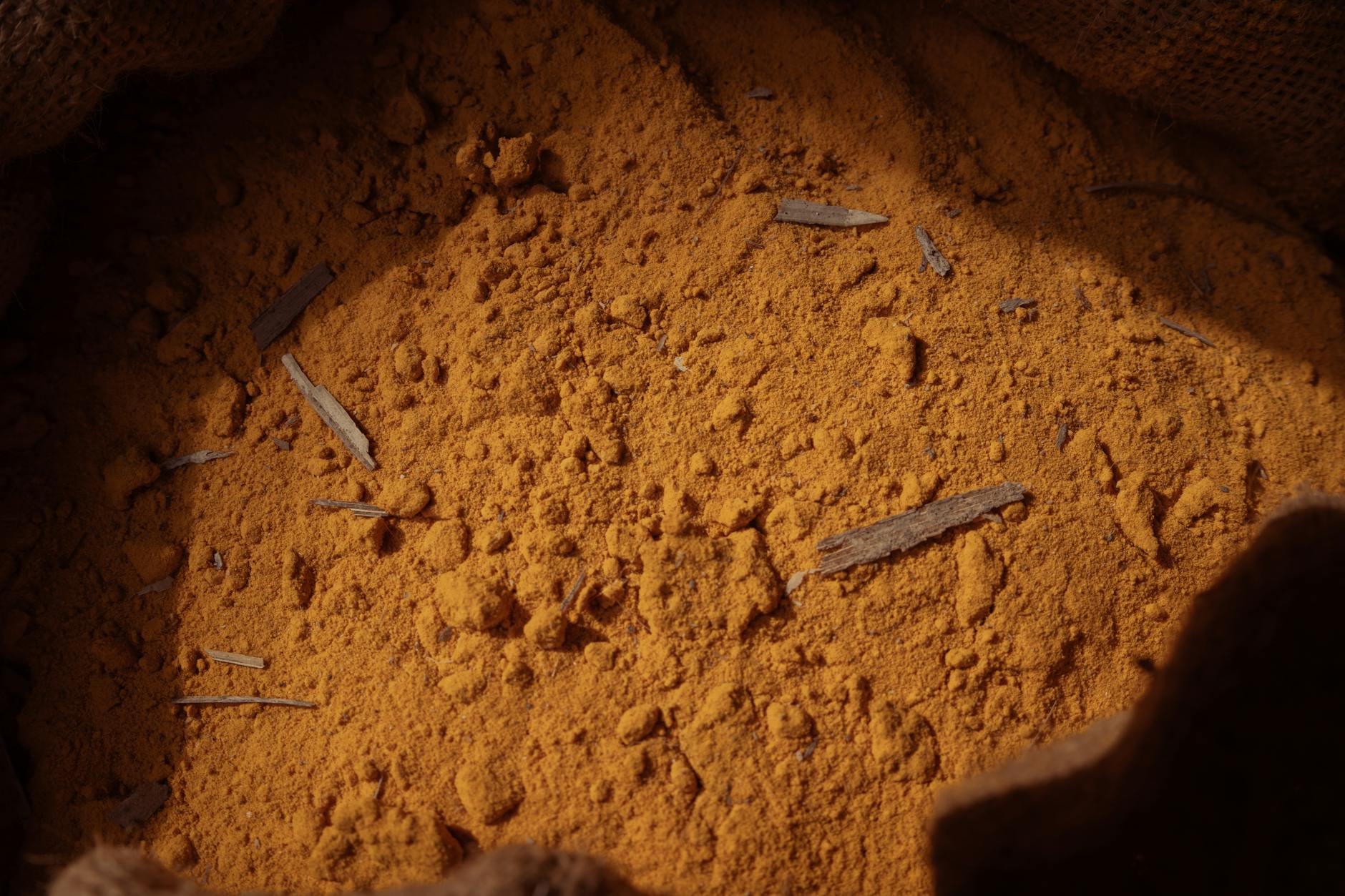
Turmeric is the rhizome of Curcuma longa, the spice that turns curry yellow. Its biologically active fraction is a small group of polyphenols called curcuminoids — curcumin itself plus demethoxycurcumin and bisdemethoxycurcumin. When researchers study “turmeric for joints,” they are almost always studying a standardized extract concentrated to roughly 95% curcuminoids, not the culinary spice, which is only a few percent curcumin by weight. That distinction matters before we even get to the data: a teaspoon of cooking turmeric and a clinical-trial curcumin capsule are different things by an order of magnitude.
Curcumin has been studied for decades across inflammatory conditions, and osteoarthritis is one of the few where the human evidence is actually decent rather than aspirational. Osteoarthritis was long described as simple “wear and tear,” but it is now understood to involve a genuine low-grade inflammatory component in the joint — which is precisely the kind of target a broad anti-inflammatory polyphenol might plausibly hit. That is the mechanistic premise. The question is whether it survives contact with randomized trials. Mostly, it does — with caveats.
Why it might work: quieting the inflammatory signal
The mechanistic spine of every result below is curcumin’s effect on inflammatory signaling, and the central player is a transcription factor called NF-κB (nuclear factor kappa-B) — essentially a master switch that, when activated inside joint cells, turns on the genes for inflammatory mediators. In osteoarthritis, NF-κB activation in chondrocytes (the cartilage-maintaining cells) drives the production of enzymes that degrade cartilage and the cytokines that produce pain and swelling. Curcumin, in laboratory and animal work, blunts that switch: it suppresses NF-κB activation, lowers downstream inflammatory and cartilage-degrading signals, and reduces chondrocyte death.11
It is important to label this honestly: that NF-κB mechanism is established in cell-culture and rodent models, not in human joints directly.11 The signal it pulls in a petri dish is real and coherent, but mechanism is a hypothesis-generator, not proof of benefit. What gives the mechanism credibility in people is that the human trials, where they measured it, point the same direction: a 2025 meta-analysis of 21 RCTs in knee OA found that curcumin significantly lowered circulating C-reactive protein and TNF-α — two markers of the same inflammatory cascade — though it did not move every inflammatory marker (ESR, IL-6 and PGE-2 changes were not significant).12 So the story hangs together: plausible mechanism, partial confirmation in human blood, and — as we’ll see — a real effect on what patients actually feel.
The evidence, in numbers
Start with the anchor. The Daily et al. 2016 meta-analysis in the Journal of Medicinal Food pooled eight randomized trials of turmeric/curcumin for arthritis. Against placebo, three trials showed a pain reduction on the visual analogue scale with a mean difference of −2.04 points, and four trials showed a reduction in the WOMAC arthritis score (mean difference −15.36).1 The authors landed on a dose of roughly 1,000 mg/day of curcumin as the working figure — while explicitly cautioning that the trials were small and not yet enough for a definitive conclusion.1 That honesty is the right posture, and we’ll keep it.
The larger and more recent picture reinforces it. Wang et al. 2021, in Current Rheumatology Reports, pooled 16 RCTs covering 1,810 adults with knee OA. Turmeric extracts significantly reduced knee pain, with a standardized mean difference of −0.82 (95% CI −1.17 to −0.47) and improved physical function (SMD −0.75).2 An SMD around −0.8 is, by convention, a large effect — though the heterogeneity between trials was high (I² > 85%), meaning the studies disagreed with each other more than you’d like, which is a reason to read the headline number as encouraging rather than precise.2
Other syntheses converge. Onakpoya et al. 2017 pooled seven curcuminoid trials (797 participants) and found significant pain and function benefit versus placebo, again flagging moderate risk of bias.3 Dai et al. 2021 pooled 10 RCTs of Curcuma longa extract versus placebo (783 patients) and reported significant improvements in pain and function.6 A 2024 umbrella meta-analysis — a meta-analysis of meta-analyses — concluded that curcumin improves VAS pain, WOMAC pain, function and stiffness in knee OA, while noting the underlying evidence base remains limited in size and quality.5 And in a broad British Journal of Sports Medicine review of OA supplements, curcumin was one of only a handful (alongside collagen hydrolysate and a few others) to show a large, clinically relevant short-term effect on pain.7
vs placebo
16 RCTs, n=1,810
the trial-level dose
Daily 2016 meta-analysis
for pain
fewer GI events, n=367
Note what these numbers are and are not. They are consistent, statistically significant pain reductions across multiple independent syntheses — that consistency is what separates curcumin from the long list of joint supplements that fail when pooled. They are also drawn from small, short trials (typically a few weeks to four months) with notable heterogeneity and frequent moderate risk of bias. Both things are true at once. The effect is real; the confidence around its exact size is not as tight as the clean numbers suggest.
Curcumin vs NSAIDs: the head-to-head trials
This is the part that makes curcumin genuinely interesting rather than just another “better than placebo” supplement. Several trials didn’t compare it to a sugar pill — they compared it to the drugs people actually take.
The cleanest example is Kuptniratsaikul et al. 2014, a multicenter trial in Clinical Interventions in Aging that randomized 367 patients with primary knee OA to either ibuprofen 1,200 mg/day or Curcuma domestica (turmeric) extract 1,500 mg/day for four weeks. The result: WOMAC pain, stiffness and function improved in both groups with no significant difference between them — the turmeric extract was non-inferior to ibuprofen — and the turmeric group reported fewer gastrointestinal adverse events (notably abdominal pain/discomfort) than the ibuprofen group.4 For a population that often can’t tolerate chronic NSAIDs precisely because of gut and cardiovascular risk, “works about as well, easier on the stomach” is a meaningful proposition.
That single trial isn’t alone. The Wang 2021 synthesis included five RCTs using active comparators (NSAIDs) alongside the placebo-controlled ones, and found turmeric extracts broadly comparable in efficacy to the NSAID arms while being better tolerated.2 Daily’s 2016 meta-analysis reached the same conclusion from a different angle: pooling five studies, it found no significant difference in pain relief between turmeric/curcumin and pain medication.1 Three independent lines, same direction: comparable pain relief, fewer GI events.
The honest headline isn’t “curcumin beats ibuprofen.” It’s “curcumin matched it for knee-OA pain, with a gentler side-effect profile” — and that comparability, in small trials, is already a stronger claim than almost any supplement can make.
Keep the caveat in frame. These are short trials (often four to twelve weeks), powered to detect symptom change over weeks, not to settle whether curcumin matches NSAIDs over the years that osteoarthritis actually lasts. “Comparable at four weeks” is real and useful; “comparable indefinitely” is an extrapolation the data don’t yet support. And none of this speaks to slowing structural joint damage — the trials measured how joints feel, not whether cartilage is preserved.
The bioavailability problem nobody mentions
Here is the single most important practical fact in this entire article, and the one the spice-rack health crowd most reliably gets wrong: plain curcumin is terribly absorbed. Taken orally as ordinary powder, it suffers from poor intestinal uptake, rapid metabolism, and fast elimination, so very little intact curcumin ever reaches the bloodstream — and a joint can only respond to what reaches it.10 This is why “just add more turmeric to your food” is, pharmacologically, close to doing nothing for an arthritic knee.
The trials that worked did not use raw powder. They used formulations engineered to beat that absorption problem, and the differences are large. Adding piperine — the active alkaloid in black pepper — slows curcumin’s breakdown in the liver and gut and sharply raises its bioavailability; the Panahi 2014 trial that showed clear knee-OA benefit used a curcuminoid complex (C3 Complex) co-administered with piperine.8 Other approaches package curcumin differently: phospholipid complexes (the Meriva phytosome), micronized particles blended with turmeric essential oils (BCM-95), and colloidal submicron-particle dispersions (Theracurmin). In a head-to-head crossover study in healthy volunteers, these delivery systems produced dramatically different plasma curcumin levels — the submicron-particle form reached peak concentrations several-fold higher than the phospholipid and micronized forms, which in turn vastly outperform unformulated powder.9 A 2025 review reached the same practical conclusion: piperine co-administration, phospholipid and liposomal complexes are the strategies that meaningfully raise systemic curcumin exposure.10
The takeaway is blunt: the formulation is not marketing fluff, it is the active variable. A “1,000 mg curcumin” label on poorly absorbed powder and the same number on a piperine-enhanced or phospholipid-delivered product are not the same dose in any way that matters to your joint. When trials “work,” it is almost always a delivery-optimized product doing the work — which also means you cannot straightforwardly read across results from one formulation to another, because they don’t deliver the same exposure.
Evidence Radar: how strong is each claim?
Wellness Radar grades the specific claims, not the headline. These grades are provisional and verified by our editorial team against current literature; here is the honest read on curcumin for osteoarthritis.
MODERATE — Curcumin reduces knee-OA pain versus placebo. Consistent, significant pain and function benefit across multiple meta-analyses of RCTs (pooled SMD around −0.8 in the largest), held back from STRONG only by small trials, high heterogeneity, and moderate risk of bias.123
EMERGING — Curcumin is comparable to NSAIDs for knee-OA pain, with fewer GI events. Supported by a 367-patient non-inferiority trial vs ibuprofen and several active-comparator RCTs — but the trials are short (weeks), so long-term comparability is unproven.24
MODERATE — Plain curcumin is poorly absorbed; formulation (piperine/phospholipid/particle) raises bioavailability. Well established in pharmacokinetic studies; the magnitude differs by product and most data are in small healthy-volunteer crossovers.910
WEAK — Curcumin slows structural joint damage or modifies disease. Trials measured symptoms, not cartilage preservation. The disease-modifying claim is not established in humans; the NF-κB/chondroprotection story remains preclinical.11
A tiered way to think about it
This is a framework for understanding the evidence, not a prescription. Dosing and product choice for a medical condition belong with your clinician.
Foundational (well-supported, low-risk). For mild-to-moderate knee OA, a standardized, bioavailability-enhanced curcumin extract is one of the better-evidenced supplement options to add to the things that actually move osteoarthritis outcomes: regular movement, lower-limb strength work, and weight management if relevant. The trial-level intake clusters around the equivalent of roughly 1,000 mg/day of curcumin from a formulated product — but the form matters more than the milligram number on the front of the bottle.1
Research-curious. If you tolerate NSAIDs poorly or want to reduce how often you reach for them, the head-to-head trials make curcumin a reasonable thing to discuss with a clinician as a partial substitute — not because it’s proven superior, but because “comparable relief, fewer GI events” is a sensible trade for the right person.4 This is a conversation to have, not a swap to make unilaterally, especially if you’re managing other medications.
Experimental. Treating curcumin as disease-modifying — expecting it to protect cartilage or reverse joint damage — runs ahead of the human evidence, which is symptomatic only. High doses, exotic novel formulations, and stacking it with multiple other anti-inflammatory agents all push past where the trials can vouch for safety or benefit. Interesting territory; thinner ground.
Grey areas and honest limits
The trials are small and short. Most are dozens to low-hundreds of patients over four to sixteen weeks. That is enough to detect a symptomatic effect and not enough to characterize long-term efficacy, durability, or rare harms. The pooled effect sizes look crisp; the underlying evidence base is thinner than the decimal points imply.
Formulation makes cross-study comparison hard. Because different products deliver wildly different curcumin exposure, the literature is partly a patchwork of different drugs wearing the same name. A meta-analysis that blends them is averaging across formulations that aren’t equivalent — another reason to hold the headline number loosely.
Heterogeneity and bias. The high between-trial heterogeneity and the recurring “moderate risk of bias” verdicts mean some of the apparent effect may be inflated by smaller, lower-quality studies — a known pattern in supplement research.23 The consistency across syntheses is reassuring, but it isn’t the same as a single large, rigorous, independently funded trial, which curcumin still lacks.
Safety is good, not nonexistent. Curcumin is well tolerated in trials, but it isn’t inert: it can potentiate anticoagulant/antiplatelet drugs, stimulate bile flow (a problem with gallstones or bile-duct obstruction), and high-dose products have rarely been linked to liver enzyme elevations. “Natural” is not “consequence-free.”
Open questions
The honest gaps are specific. Does curcumin actually slow the structural progression of osteoarthritis, or only quiet the symptoms? No human trial has shown disease modification. Which formulation, at which exposure, is optimal — and does higher plasma curcumin translate into proportionally better joint outcomes, or does benefit plateau? Unknown. How does it perform over years rather than weeks, and does the NSAID-comparable relief persist? Untested. And does it work as well in hip and hand OA, where most trials haven’t looked, as it does in the knee? Largely unstudied. None of these gaps erase the existing pain benefit — but they mark exactly where the evidence stops and hope begins.
Curcumin is one of the more evidence-backed entries in the joint-and-recovery toolkit — but it is one tool, and the right question is rarely “curcumin: yes or no,” it’s “which anti-inflammatory and recovery approaches fit this joint, this goal, and this risk profile.” The Manual maps curcumin against the rest of the recovery stack — what each compound’s evidence actually supports, how formulation changes the real dose, where the interactions and screening lines are, and how to layer the foundational work (load, strength, weight) that does the heavy lifting in osteoarthritis. See the Manual →
What this article is not saying
This is not “turmeric in your food fixes arthritis.” Culinary turmeric is a few percent curcumin and barely absorbed; the trials used concentrated, bioavailability-enhanced extracts at clinical doses. The spice is delicious and the supplement is a different thing.
This is not “curcumin beats NSAIDs” or “stop your prescribed medication.” The head-to-head trials show comparable short-term pain relief with fewer GI events — a reason to discuss it with a clinician, not to make a unilateral swap, especially if you’re on other drugs.
And this is not a claim that curcumin protects your joints structurally. Every benefit here is symptomatic. We’d rather tell you exactly where the randomized evidence ends — at how the joint feels, over weeks, in small trials — than pretend the line extends to cartilage preservation, disease modification, or the long term. The point of this piece is to let an informed conversation with your clinician start from what’s actually known.
References
- Daily JW, Yang M, Park S. Efficacy of turmeric extracts and curcumin for alleviating the symptoms of joint arthritis: a systematic review and meta-analysis of randomized clinical trials. J Med Food. 2016;19(8):717-729. DOI: 10.1089/jmf.2016.3705. PMID: 27533649.
- Wang Z, Singh A, Jones G, Winzenberg T, et al. Efficacy and safety of turmeric extracts for the treatment of knee osteoarthritis: a systematic review and meta-analysis of randomised controlled trials. Curr Rheumatol Rep. 2021;23(2):11. DOI: 10.1007/s11926-020-00975-8. PMID: 33511486.
- Onakpoya IJ, Spencer EA, Perera R, Heneghan CJ. Effectiveness of curcuminoids in the treatment of knee osteoarthritis: a systematic review and meta-analysis of randomized clinical trials. Int J Rheum Dis. 2017;20(4):420-433. DOI: 10.1111/1756-185X.13069. PMID: 28470851.
- Kuptniratsaikul V, Dajpratham P, Taechaarpornkul W, et al. Efficacy and safety of Curcuma domestica extracts compared with ibuprofen in patients with knee osteoarthritis: a multicenter study. Clin Interv Aging. 2014;9:451-458. DOI: 10.2147/CIA.S58535. PMID: 24672232.
- Bideshki MV, Jourabchi-Ghadim N, Radkhah N, et al. The efficacy of curcumin in relieving osteoarthritis: a meta-analysis of meta-analyses. Phytother Res. 2024;38(6):2875-2891. DOI: 10.1002/ptr.8153. PMID: 38576215.
- Dai WL, Yan B, Leng XB, Chen J, et al. Effectiveness of Curcuma longa extract versus placebo for the treatment of knee osteoarthritis: a systematic review and meta-analysis of randomized controlled trials. Phytother Res. 2021;35(11):5921-5935. DOI: 10.1002/ptr.7204. PMID: 34216044.
- Liu X, Machado GC, Eyles JP, Ravi V, Hunter DJ. Dietary supplements for treating osteoarthritis: a systematic review and meta-analysis. Br J Sports Med. 2018;52(3):167-175. DOI: 10.1136/bjsports-2016-097333. PMID: 29018060.
- Panahi Y, Rahimnia AR, Sharafi M, Alishiri G, et al. Curcuminoid treatment for knee osteoarthritis: a randomized double-blind placebo-controlled trial. Phytother Res. 2014;28(11):1625-1631. DOI: 10.1002/ptr.5174. PMID: 24853120.
- Sunagawa Y, Hirano S, Katanasaka Y, et al. Colloidal submicron-particle curcumin exhibits high absorption efficiency — a double-blind, 3-way crossover study. J Nutr Sci Vitaminol (Tokyo). 2015;61(1):37-44. DOI: 10.3177/jnsv.61.37. PMID: 25994138.
- Montanino C, Farinella F, De Felice B, Del Buono A, D’Orta A. The potential systemic anti-inflammatory effect of turmeric dried extract. Endocr Metab Immune Disord Drug Targets. 2025;25(14):1191-1198. DOI: 10.2174/0118715303329562241116045410. PMID: 39791174.
- Zhou Y, Ming J, Deng M, et al. Chemically modified curcumin (CMC2.24) alleviates osteoarthritis progression by restoring cartilage homeostasis and inhibiting chondrocyte apoptosis via the NF-κB/HIF-2α axis. J Mol Med (Berl). 2020;98(10):1479-1491. DOI: 10.1007/s00109-020-01972-1. PMID: 32860098. (Preclinical: animal and in-vitro model.)
- Hsueh HC, Ho GR, Tzeng SI, Liang KH, Horng YS. Effects of curcumin on serum inflammatory biomarkers in patients with knee osteoarthritis: a systematic review and meta-analysis of randomized controlled trials. BMC Complement Med Ther. 2025;25(1):237. DOI: 10.1186/s12906-025-04951-6. PMID: 40615851.