“Microdosing” Ozempic: the 2026 trend that mixes one real idea with a lot of wishful thinking
Take a sliver of a GLP-1 drug — a fraction of the label dose — and you are supposed to get gentle fat loss, sharper metabolism, fewer side effects, even a longer life, all for less money. The pitch is everywhere this year. Some of it rests on a genuine pharmacological truth. Most of the loudest promises do not. Here is the honest, graded line between the part that holds up and the part that is being sold to you.
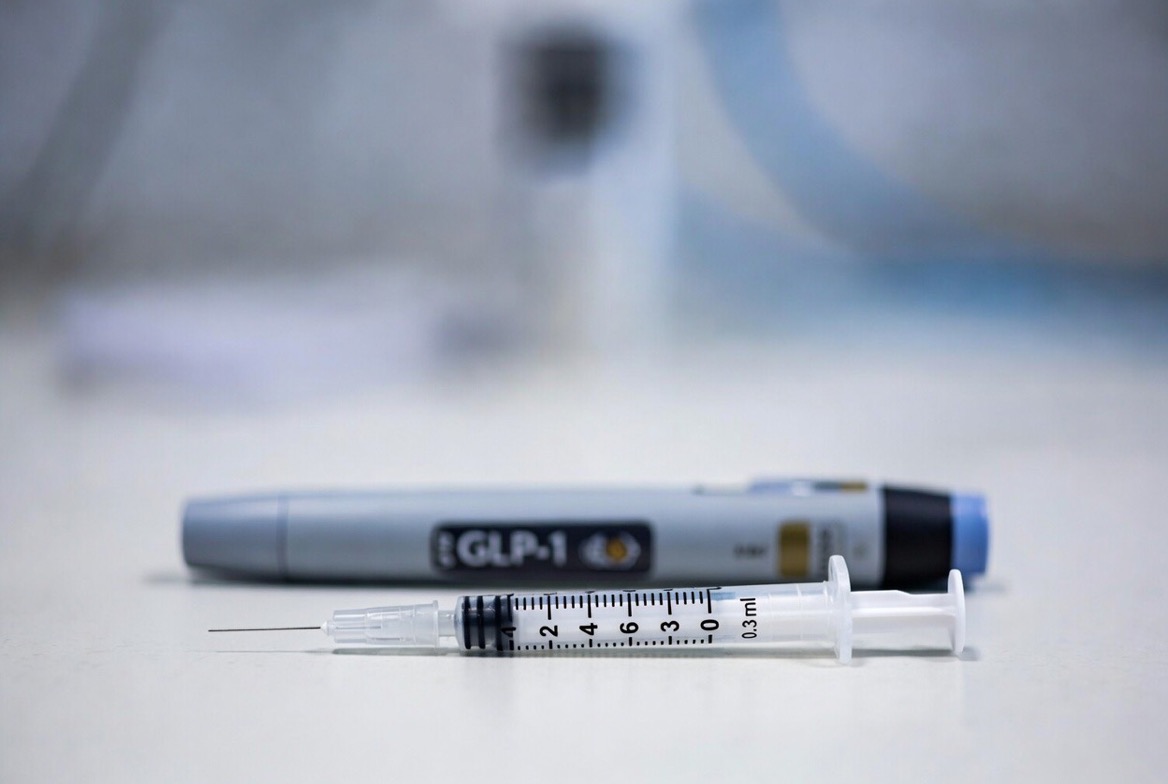
- The one real idea: dose-response is genuine. GLP-1 effects scale with dose, the lowest label steps exist mostly for adaptation, and not everyone needs the full 2.4 mg. A lower dose doing something is pharmacologically sound.
- The leap that breaks: a sliver is not the trial. STEP and SURMOUNT got their famous numbers by titrating to full doses. “Microdose and get those results” is the claim the data does not support.
- The longevity pitch is pure hype. Not one human trial has tested sub-therapeutic GLP-1 dosing for lifespan or “optimization.” That column is empty.
- The honest bottom line: the real drivers are cost, side-effect avoidance, and a messy compounded-supply market — not a longevity breakthrough. And a deficit still taxes your muscle, even at a small dose.
- The trend, and where I actually land
- Mechanism: why dose-response is the one real idea here
- What the trials actually dosed — versus what people do
- The real drivers nobody puts on the label
- Trial doses vs. “microdose” doses — not a prescription
- The grey areas: lean mass, supply quality, and the longevity void
- What we still don’t know
- References
The trend, and where I actually land
Let me put my position down before I defend it, because this one gets sold with a lot of confidence and very little evidence. “Microdosing” GLP-1 drugs — taking a fraction of the labeled semaglutide or tirzepatide dose for gentle fat loss, “metabolic optimization,” fewer side effects, or some vague longevity benefit — is a mixed bag built on top of one genuinely true idea. The true idea is that these drugs are dose-responsive: a smaller dose really does produce a smaller-but-real effect, and not everyone needs the maximum. That is sound. Everything stacked on top of it — that a sliver delivers trial-grade results, that it extends your life, that it “resets” your metabolism — runs well past what anyone has actually measured.
Here is the shape of the thing in 2026. People are drawing tiny amounts — sometimes well below the lowest label step — from vials, often compounded ones, and running them weekly for appetite control, blood-sugar steadiness, or simply to feel like they are doing something for their metabolism without the nausea or the price tag of a full prescription. The mainstream reporting on this has been blunt: the practice is widely promoted and lightly evidenced, sitting in an awkward middle ground that is tangled up in a regulatory fight over compounded supply5. That is not me being a skeptic for sport. That is the state of the file.
This belongs squarely in the pharmaceuticals hub, and it is the natural sequel to our flagship read on the GLP-1 era, where I argued these are cardiometabolic drugs that happen to drive weight loss. Microdosing takes that same molecule and asks a different question: how little can you take and still get a benefit worth having? It is a fair question. The answer the market is selling is far more generous than the answer the evidence will sign off on. So let me separate them.
Mechanism: why dose-response is the one real idea here
Start with the part that holds up, because dismissing this trend wholesale would be as lazy as buying it whole. GLP-1 (glucagon-like peptide-1) is an incretin — a gut hormone released when you eat that boosts glucose-dependent insulin secretion, slows gastric emptying, and acts on satiety circuits in the brain4. Semaglutide and tirzepatide are engineered versions that hit the GLP-1 receptor (tirzepatide also hits the GIP, glucose-dependent insulinotropic polypeptide, receptor). The pharmacology that matters for microdosing is simple: the signal these drugs pull is graded. More drug means more receptor occupancy means more effect — up to a point — and that relationship is what “microdosing” is quietly leaning on.
The dose-ranging data is real and it is in the drug’s favor here. The phase-2 trial that put semaglutide on the obesity map tested a ladder of daily doses and found a clean, monotone dose-response: weight loss climbed as the dose climbed, and even the lower rungs of the ladder beat placebo by a clear margin1. That is the kernel of truth. A lower dose is not nothing. The lowest steps on the approved titration schedule — the 0.25 mg semaglutide start, for instance — exist mainly so the gut can adapt before the dose climbs to where most of the weight loss actually happens, which is the higher end2. In other words, the drug already is low-dosed at the start of every standard course. The titration ramp itself is, technically, a few weeks of microdosing on the way up.
Dose-response is the kernel of truth the whole trend leans on. The error is treating “a lower dose does something” as if it meant “a sliver does what the full dose did.”
So the mechanistic floor under microdosing is legitimate: a smaller dose engages the same receptors and produces a smaller, real effect, with a gentler side-effect profile because the brainstem circuits that drive nausea are also dose-sensitive. Where the logic quietly fails is in assuming the relationship is generous at the bottom of the curve — that a tiny fraction of the label dose buys most of the benefit. The dose-response curve says the opposite. The big effects live at the doses the trials titrated up to, not at the doses people are drawing to stay comfortable and save money. That is the gap the rest of this article is about.
What the trials actually dosed — versus what people do
Here is the number that should anchor everything. The famous results — the ones that made these drugs a cultural event — came from full, titrated doses. STEP 1 reported a mean weight change of roughly −14.9% on semaglutide titrated to 2.4 mg weekly over 68 weeks, against −2.4% on placebo2. SURMOUNT-1 reported up to about −20.9% on tirzepatide at the 15 mg dose over 72 weeks3. Those are the headline figures every microdosing pitch borrows its credibility from. And every one of them was generated by climbing to a full maintenance dose and staying there for more than a year.
“Microdosing,” as actually practiced, is a different intervention. It uses amounts often below the lowest label step, held there deliberately rather than titrated up. No published randomized trial has tested those amounts, held at that level, for the weight-loss or “optimization” endpoints people expect from them5. The dose-response curve tells you to expect a smaller effect; it does not promise the effect is worth the trouble, and it certainly does not transplant the STEP or SURMOUNT percentages onto a fraction of the dose. Treating the trial numbers as if they apply to a sliver is the central sleight of hand of the entire trend.
| What the trials dosed | What “microdosing” does | The honest read |
|---|---|---|
| Semaglutide titrated to 2.4 mg/week, 68 wk → ≈−15%2 | A fraction of the lowest label step, held low | Trial result does not transfer |
| Tirzepatide to 15 mg/week, 72 wk → ≈−21%3 | Sub-label amounts for “gentle” loss | Trial result does not transfer |
| Phase-2 ladder: lower doses beat placebo, less than higher1 | Betting the low end is “enough” | A real but smaller effect |
| Low starting dose for gut adaptation, then climb2 | Staying low to avoid nausea | Plausible comfort, unproven as a regimen |
| No trial tested sub-label dosing for longevity | Marketed as a longevity / optimization tool | No evidence exists |
The real drivers nobody puts on the label
Now the part the wellness framing skips. Microdosing did not arise from a longevity discovery. It arose from three very practical pressures, and naming them honestly tells you more than any “metabolic reset” copy ever will.
First, cost. Brand-name GLP-1s are expensive, and stretching a vial across many small doses is, plainly, a way to make the drug last longer and cost less per week. A lot of “microdosing protocols” are cost-rationing dressed up as a wellness strategy. There is nothing shameful about wanting the drug to be affordable — but calling a budget decision a metabolic breakthrough is where the honesty breaks down.
Second, side-effect avoidance. The dose-limiting problem with these drugs is gastrointestinal — nausea, and at higher doses worse. Because the nausea pathway is dose-sensitive, a lower dose plausibly means fewer GI complaints, which is exactly why the standard label starts low and climbs slowly. That logic is sound enough that I grade it Emerging rather than dismissing it: it lines up with how the drugs are titrated and with the dose-response biology. What it lacks is a dedicated trial testing “stay low on purpose” as its own regimen, with its own efficacy and safety readout. Plausible mechanism, missing dataset.
Third, and least discussed, the compounded-supply market. Much of the microdosing wave rode the era of compounded semaglutide and tirzepatide that flourished during the shortages. That window is closing hard. The FDA declared the semaglutide shortage resolved in early 2025 and set deadlines after which mass compounding of these agents should stop, citing hundreds of adverse-event reports — many of them dosing errors from people self-measuring from multidose vials, some serious enough to require hospitalization6. That is the uncomfortable core of the practice: drawing your own “micro” amount from a vial is precisely the maneuver that has generated dosing-error reports. The supply that made microdosing cheap and easy is also the supply with the least oversight.
Trial doses vs. “microdose” doses — not a prescription
We do not write dosing protocols on this site, and I am not about to start with a drug whose self-measured use is generating hospitalizations. What I can do is frame the distance between what trials established and what people are doing, sorted by how much the evidence has your back. This is a way to think, not a regimen — and every tier assumes a clinician, not a vial and a forum screenshot. If you want to see how label titration actually steps, that is what our dose planner lays out.
The STEP and SURMOUNT results — the numbers everyone quotes — come from climbing to a full maintenance dose under medical supervision and holding it for a year or more23. This is the only column with hard outcome data behind it. If the trial result is what you want, the trial dose is what produced it.
A lower-than-maximum dose, chosen with a prescriber for someone who does not need or tolerate the full amount, rests on genuine dose-response logic1. Expect a smaller effect for a gentler side-effect profile. That is a legitimate clinical conversation — the opposite of self-measuring a mystery fraction from a compounded vial.
Sub-label “microdoses” sold for longevity, “metabolic optimization,” or trial-grade fat loss have no human trial behind them at those amounts5. This is where cost-cutting and marketing wear the costume of science. Reading “microdose for a longer life” and reaching for a vial is the exact error this article exists to prevent.
The grey areas: lean mass, supply quality, and the longevity void
Three things the “gentle and safe” framing glosses over. First, the lean-mass tax does not disappear at a low dose. Any GLP-1-driven weight loss happens in a calorie deficit, and a deficit costs you muscle as well as fat — roughly 25–40% of the lost mass on these drugs is fat-free mass, including skeletal muscle, with facial volume among the visible casualties2. A smaller dose means slower, smaller loss, so the absolute muscle loss in any given month is smaller too — but the fraction of loss that comes from lean tissue is set by the deficit and your protein and training, not by how little drug you took. People microdose precisely because they think the low dose makes it consequence-free. It does not. We pull this thread apart in our reads on the lean-mass cost and how people try to clean it up and on what happens to weight when the drug stops.
Second, supply quality and self-measurement. The cheap, flexible supply that made microdosing possible is largely compounded, and that is the segment now under the heaviest regulatory pressure, with hundreds of adverse-event and dosing-error reports attached to it6. Drawing a precise sub-label amount from a multidose vial is fiddly, and getting it wrong is exactly the failure mode the agency flagged — measurement error climbs with the complexity of a self-administered regimen7. “Gentle” is doing a lot of work in the marketing for a practice whose signature risk is a measuring error.
Third, the longevity void. There is genuine scientific interest in whether GLP-1 pathways touch aging biology — the cardio-renal outcome data is real, and the receptor reaches a lot of tissues. But interest is not evidence, and there is no human trial testing sub-therapeutic GLP-1 dosing for a lifespan or “optimization” endpoint5. Borrowing the cardiometabolic outcome trials — which used full doses in sick populations — to justify a longevity microdose in a healthy person is a category error. That is why the longevity claim grades Hype and not merely Weak: it is not an overstated finding, it is a finding that does not exist.
What we still don’t know
- Whether a defined “microdose” regimen does anything worth having. No randomized trial has tested sub-label dosing, held low on purpose, for efficacy or safety. The dose-response curve predicts a smaller effect — how much smaller, and whether it justifies the practice, is unmeasured5.
- The real-world side-effect trade at low doses. Fewer GI effects is plausible from the biology, but there is no dedicated readout comparing a deliberate low-dose regimen against standard titration for both comfort and result.
- The lean-mass math at small doses over time. The fraction of loss that is muscle is driven by the deficit, protein, and training — but how that plays out over months of low-dose use, especially in older or female users, has not been cleanly studied.
- Anything about longevity. There is no human outcome data for sub-therapeutic GLP-1 dosing and aging. The longevity pitch is a hypothesis wearing a lab coat, not a result.
Where this lands for me: the one true thing — that GLP-1 effects are dose-responsive and not everyone needs the maximum — is real, and it makes a clinician-led lower dose a legitimate conversation. Everything the trend stacks on top of that, from trial-grade results on a sliver to a longer life, is either unproven or simply absent from the literature, and the actual engines are cost, comfort, and a compounded-supply market on its way out. Respect the pharmacology, take the lower-dose question to a prescriber, and walk past the longevity copy. Both halves of that are true at once, and anyone selling you only the optimistic half is selling you something.
References
- O’Neil PM, Birkenfeld AL, McGowan B, Mosenzon O, Pedersen SD, Wharton S, et al. Efficacy and safety of semaglutide compared with liraglutide and placebo for weight loss in patients with obesity: a randomised, double-blind, placebo and active controlled, dose-ranging, phase 2 trial. Lancet. 2018;392(10148):637-649. DOI · PMID 30122305. (The dose-ranging trial showing a clean, monotone dose-response — weight loss rose with dose, and lower rungs beat placebo by a smaller margin — the pharmacological kernel of truth under low-dosing.)
- Wilding JPH, Batterham RL, Calanna S, Davies M, Van Gaal LF, Lingvay I, et al. Once-Weekly Semaglutide in Adults with Overweight or Obesity (STEP 1). N Engl J Med. 2021;384(11):989-1002. DOI · PMID 33567185. (The pivotal trial: semaglutide titrated to 2.4 mg weekly produced roughly −15% weight loss over 68 weeks — a full, climbed-to dose, and the source of the lean-mass fraction of 25–40% fat-free mass lost.)
- Jastreboff AM, Aronne LJ, Ahmad NN, Wharton S, Connery L, Alves B, et al. Tirzepatide Once Weekly for the Treatment of Obesity (SURMOUNT-1). N Engl J Med. 2022;387(3):205-216. DOI · PMID 35658024. (Up to roughly −21% weight loss at the 15 mg dose over 72 weeks — again a full, titrated maintenance dose, not a fraction of one.)
- Drucker DJ. Mechanisms of Action and Therapeutic Application of Glucagon-like Peptide-1. Cell Metab. 2018;27(4):740-756. DOI · PMID 29617641. (The incretin biology — glucose-dependent insulin secretion, delayed gastric emptying, central satiety and the dose-sensitive brainstem nausea circuit — that makes the effect graded with dose.)
- Lawrence L. GLP-1 microdosing is popular, but there’s little evidence it works. STAT. May 29, 2026. (Reporting and expert commentary that microdosing is widely promoted, lightly evidenced, off-label, and tangled in the compounding fight — with no trials testing sub-label dosing for the optimization or longevity claims attached to it.)
- U.S. Food and Drug Administration. FDA clarifies policies for compounders as national GLP-1 supply begins to stabilize. 2025. (The semaglutide shortage declared resolved and compounding wind-down deadlines set, alongside hundreds of adverse-event reports — many dosing errors from self-measured multidose vials, some requiring hospitalization — the regulatory and safety backdrop to the microdosing supply.)
- Davies EA, O’Mahony MS. Adverse drug reactions in special populations — the elderly. Br J Clin Pharmacol. 2015;80(4):796-807. DOI · PMID 25735839. (Self-administration and measurement error rise with the complexity of a regimen — the structural reason that drawing a precise sub-label amount from a vial is the practice’s signature risk.)