Exogenous ketones and keto gummies: do BHB supplements actually do anything?
BHB salts, ketone esters, and the new wave of apple-cider-vinegar “keto gummies” are sold as a shortcut into fat-burning ketosis — weight loss in a drink, no diet required. Here is the part nobody selling them wants to say out loud: they do raise your blood ketones, but that is not the same thing as burning your fat, and the gummy category is built almost entirely on confusing the two. The honest, graded read.
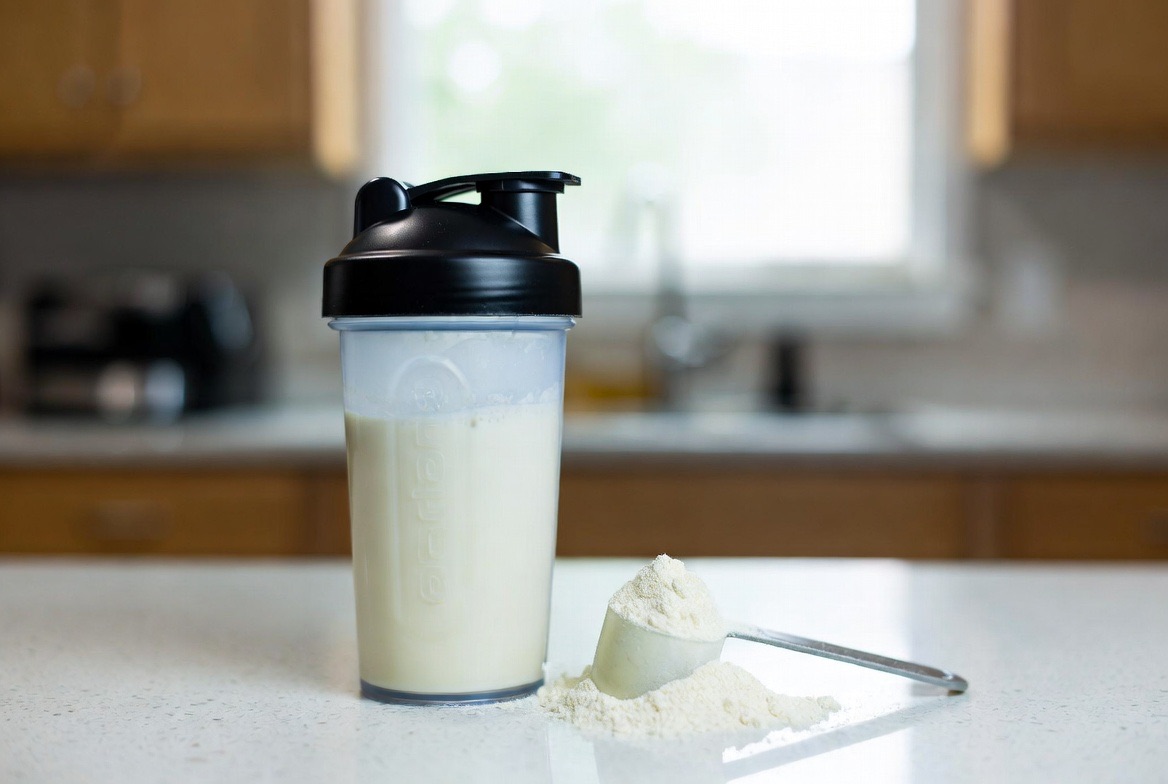
- The ketone bump is real. A ketone ester drink pushed blood beta-hydroxybutyrate (BHB) to roughly 2.8 mM in healthy adults — genuine ketosis, no diet required. Salts and gummies do far less, but they do something.
- The fat-loss story is the lie. “In ketosis” is not “burning fat.” The best trial of BHB salts plus calorie restriction found no significant between-group difference in fat loss versus placebo.
- It may work against you. Flooding your blood with ketones pulls the same brake that puts the lid back on your own fat breakdown — the signal that tells fat cells to stop releasing fat.
- Who it’s actually for: a narrow group supporting a real ketogenic diet, and a separate clinical-research lane for ketone esters — not the gummy buyer chasing weight loss.
- The bait-and-switch at the center of the pitch
- What BHB is, and what it actually signals
- Weight loss: the claim that falls apart
- Performance: mixed at best, gut-wrecking at worst
- The legitimate lane nobody’s selling you
- The practical catches: sodium, taste, and the gummy con
- What we still don’t know
- References
The bait-and-switch at the center of the pitch
Let me be blunt, because this is one of the few supplement stories where being polite about it does the reader a disservice. Exogenous ketones — beta-hydroxybutyrate (BHB) salts, ketone esters, and now the apple-cider-vinegar “keto gummies” clogging every feed — are marketed on a sleight of hand. The ad shows you a graph of your blood ketones going up after you take the product. That part is true. Then it lets you assume that ketones going up means fat coming off. That part is not true, and the gap between those two sentences is where the entire category makes its money.
“Ketosis” just means you have ketones circulating in your blood. On a real ketogenic diet, you have ketones because you have starved your body of carbohydrate, so it has switched to breaking down fat for fuel — the ketones are the smoke, the fat-burning is the fire. When you drink or chew exogenous ketones, you get the smoke without the fire. You have handed your body the end-product directly. Your fat stores are not being touched; you have simply added a fuel from outside. Calling that “putting yourself in fat-burning mode” is the foundational con of the whole shelf.
So this is a hype-check, done fairly. There is genuine biology here, and I will give it full credit where it earns it. But the headline use — weight loss from a gummy — is the weakest part of the whole story, and I am not going to soften that to be diplomatic. For the wider category of self-experiment supplements graded the same way, see the Biohacking hub.
What BHB is, and what it actually signals
This is the mechanism section, so the precise terms earn their place. Beta-hydroxybutyrate is one of the three ketone bodies your liver makes from fat when glucose is scarce. It is a real, usable fuel — your brain, heart, and muscle can burn it. Exogenous ketone products deliver it from outside in one of two forms. Ketone salts bind BHB to minerals like sodium, potassium, or calcium; these are what most powders and nearly all gummies use, and they are cheap, mild, and weak. Ketone esters bind BHB to a precursor alcohol; they are far more potent at raising blood ketones, far more expensive, and taste genuinely awful.
How high do they actually go? In a controlled human study, a ketone ester drink raised blood D-beta-hydroxybutyrate to a peak of about 2.8 mM — comfortably inside the range a strict ketogenic diet produces — and ester drinks pushed blood ketones substantially higher than salt drinks did1. So the first claim on the marketing graph is real: these products raise your ketones, esters more than salts. If you want to understand how blood ketones move against blood sugar in general, our read on glucose spikes and anti-spike hacks covers the other side of the same metabolic coin.
Here is the part the graph leaves off, and it is the most important sentence in this article. BHB is not just a fuel — it is also a messenger, and the signal it pulls works directly against fat loss. The same study that raised ketones to 2.8 mM also recorded that the ketone drinks lowered blood free fatty acids and triglycerides1. Translated: the moment your blood is full of ketones from a drink, your own fat stores stop pouring fatty acids into the bloodstream. That is not an accident. It is a feedback loop, and the next section is where it becomes the whole problem.
Exogenous ketones reliably raise the ketone number on the meter. The thing they do to the fat-burning behind that number is the opposite of what the label implies.
Weight loss: the claim that falls apart
Start with the mechanism, because it sets up everything else. The signal BHB pulls on fat tissue is the brake. Decades ago, researchers showed that D-beta-hydroxybutyrate switches off fat breakdown by activating the very same receptor that the cholesterol drug niacin uses to do the same thing — a nicotinic-acid receptor sitting on the surface of your fat cells2. When that receptor is switched on, fat cells stop releasing their stored fat. This is a normal, smart feedback loop: when ketones are abundant, the body assumes it does not need to liberate more fat, so it tells the fat cells to hold. The trouble is that exogenous ketones switch this brake on artificially, while your fat stores are still completely full. You have told your body to stop breaking down fat — the exact opposite of the goal.
Now the trial that tested it most directly. In an 8-week randomized, double-blind, placebo-controlled study, 51 adults on a modest calorie deficit took either BHB mineral salts twice daily or a placebo, with body composition measured by DXA scan3. The BHB group did lose fat — about 2 kg — and the headlines write themselves there. But read the line that matters: the group-by-time interaction was not statistically significant for any body-composition measure3. In plain English, the BHB group did not lose significantly more fat than the placebo group. Both groups were dieting; the supplement did not beat sugar pills. That is the strongest weight-loss trial the category has, and it is a null result dressed up in within-group window dressing.
It gets worse for the gummy buyer specifically. A 6-week, randomized, double-blind, controlled-feeding trial put people on a calorie-restricted ketogenic diet and added either a BHB salt or a placebo. The verdict was clean: the ketogenic diet improved body composition, but that improvement was “not further impacted by administration of an exogenous BHB-salt”4. So even on top of a real keto diet that was doing the actual work, the salt added nothing to fat loss. And remember — the keto gummies are the weakest delivery form there is, salt-based and lightly dosed. If a properly dosed salt does nothing extra on top of a keto diet, a gummy taken alongside a normal high-carb diet is selling you a flavor, not a result.
Put the mechanism and the trials together and the conclusion is hard to dodge: there is essentially no good evidence that BHB supplements or keto gummies drive weight or fat loss, and a real mechanism — the lipolysis brake — by which they could actively work against it. The viral pitch survives entirely on the reader not knowing that “in ketosis” and “losing fat” are different things. For the supplements that do have a defensible, if narrow, metabolic story, our read on MCT oil for energy and ketones is the closer comparison — MCTs at least make your body produce its own ketones rather than spoon-feeding the end product.
Performance: mixed at best, gut-wrecking at worst
The second-most-common pitch is performance: ketones as a fourth fuel for the endurance athlete, sparing glycogen and pushing the wall back. It is a seductive idea with real physiology behind it — an early, much-cited proof-of-concept study in trained cyclists reported that a ketone-ester drink shifted fuel preference and improved performance6, and that single result is most of what the marketing still leans on. But it has since been tested properly and at scale. A 2022 systematic review and meta-analysis pooled eight randomized controlled trials of acute ketone monoesters and precursors in endurance exercise, and the result was flat: no significant effect on endurance performance versus control, whether the test was time-to-exhaustion or a time trial5. The ketones reliably raised blood ketone levels; they did not reliably make anyone faster.
And there is a cost that the “clean fuel” framing hides. Across this literature, gastrointestinal distress — nausea, cramping, the urgent kind of trouble — is a recurring complaint with ketone supplements, especially the esters, and it shows up often enough that for some athletes the drink actively impairs performance rather than helping it. A fuel that does not improve your time and might send you looking for a bathroom mid-race is not an edge. The honest grade here is weak: the average endurance athlete gets no reliable benefit, and a real risk of feeling worse.
The legitimate lane nobody’s selling you
Now the fair part, because dismissing the whole molecule would be as dishonest as the gummy ads. There is a genuine, serious research interest in ketone esters — not salts, not gummies — for specific clinical and cognitive contexts, and it is real science. The logic is the same fuel-deficit logic that makes ketones interesting in some forms of cognitive decline: when a tissue can no longer use glucose well, an alternative fuel that bypasses the broken step may help. Ketone esters can raise blood BHB high enough and long enough to test that idea seriously — one ester protocol held blood ketones above 1 mM for nine hours1.
But notice what that lane is and is not. It is a narrow, high-dose, often clinical use of the potent ester form, studied for things like brain fuelling and specific metabolic conditions — an emerging signal, not settled practice. It is not the consumer weight-loss pitch, and it is not a gummy. The clearest version of this distinction lives in our read on ketone esters and brain cognition, where the same molecule plays a completely different, far more credible role. Conflating that research with a fat-loss gummy is the category’s favorite trick: borrow the credibility of the serious work to sell the unserious product.
The practical catches: sodium, taste, and the gummy con
Three things the label never leads with. First, the sodium load. Ketone salts bind BHB to minerals, and the most common is sodium — a full dose of a salt-based product can deliver a serious slug of sodium per serving, which matters for anyone watching blood pressure, and means the “dose” you can comfortably take is capped by your salt tolerance before it is capped by anything useful. Second, esters taste like solvent and upset the gut. The form that actually raises ketones meaningfully is the one most people cannot stand to drink and that most reliably causes nausea and cramping. Third, and most relevant to the viral product, the gummies often contain very little actual BHB. A gummy is a tiny vehicle; pair the weakest delivery form (a salt) with a tiny serving size, sweeten it with sugar or sugar alcohols, bolt on apple cider vinegar for an unrelated trend halo, and you have a product whose ketone content is frequently trivial. You are paying for the word “keto” on the label.
So here is my verdict, plainly. Exogenous ketones do one thing the marketing claims: they raise your blood ketones, esters far more than salts. Everything past that is where it falls down. They do not replicate a ketogenic diet’s fat loss; the best trial shows no significant edge over placebo, and the mechanism gives a real reason they could blunt your own fat-burning. They do not reliably improve endurance, and they frequently wreck your gut trying. There is a legitimate, narrow research lane for the ester form in clinical and cognitive contexts — but that has nothing to do with the gummy in your cart. If your goal is fat loss, save your money: the viral keto-gummy category is mostly hype shading into outright scam.
What we still don’t know
Three honest gaps. First, the long-term, well-powered weight trial does not exist. The strongest study to date found no significant between-group fat-loss advantage over 8 weeks3, but a properly powered, independent trial designed specifically to detect a small effect — if there is one — has not been run. Second, the net direction of the lipolysis brake in a dieting human is unsettled: we know BHB suppresses fat release acutely2, but how much that matters across a full day of repeated dosing, and whether it meaningfully offsets a calorie deficit, has not been cleanly measured. Third, the ester clinical lane is promising but early — the high-dose cognitive and metabolic uses are an emerging research signal, not established therapy, and the doses studied bear no resemblance to anything on a supplement shelf. None of that makes exogenous ketones fake biology. It makes them a real, narrow tool sold as a broad, magic one.
References
- Stubbs BJ, Cox PJ, Evans RD, Santer P, Miller JJ, Faull OK, Magor-Elliott S, Hiyama S, Stirling M, Clarke K. On the metabolism of exogenous ketones in humans. Front Physiol. 2017;8:848. DOI. (Human PK study; ketone ester drink raised blood D-BHB to ~2.8 mM, higher than salts; all ketone drinks lowered blood glucose, free fatty acids, and triglycerides; ester held BHB above 1 mM for ~9 h after a fast.)
- Taggart AKP, Kero J, Gan X, Cai TQ, Cheng K, Ippolito M, et al. (D)-beta-Hydroxybutyrate inhibits adipocyte lipolysis via the nicotinic acid receptor PUMA-G. J Biol Chem. 2005;280(29):26649-26652. DOI · PMID 15929991. (BHB is an endogenous ligand for the niacin/PUMA-G (HCA2) receptor on adipocytes at physiological concentrations, suppressing fat breakdown — the antilipolytic feedback brake.)
- Roeth EJ, Parker G, Cooper-Leavitt EF, Beus CG, Braithwaite CR, Morris MD, et al. Effect of exogenous ketones as an adjunct to low-calorie diet on metabolic markers. Nutrients. 2025;17(22):3582. DOI · PMID 41305632. (RCT, double-blind, n=51, 8 weeks, BHB salts vs placebo with calorie restriction; within-group fat loss in the BHB arm, but group-by-time interactions for body composition were not significant — no significant between-group fat-loss advantage.)
- Buga A, Kackley ML, Crabtree CD, Sapper TN, McCabe L, Fell B, et al. The effects of a 6-week controlled, hypocaloric ketogenic diet, with and without exogenous ketone salts, on body composition responses. Front Nutr. 2021;8:618520. DOI. (Randomized, double-blind, controlled-feeding trial; hypocaloric ketogenic diet improved body composition but was “not further impacted by administration of an exogenous BHB-salt.”)
- Brooks E, Lamothe G, Nagpal TS, Imbeault P, Adamo K, Kara J, Doucet E. Acute ingestion of ketone monoesters and precursors do not enhance endurance exercise performance: a systematic review and meta-analysis. Int J Sport Nutr Exerc Metab. 2022;32(3):214-225. DOI · PMID 35042186. (8 RCTs, 80 participants; no significant effect on endurance performance vs control (g=0.136); ketone monoesters raised blood ketones more than precursors. GI distress is a recurring complaint across this literature.)
- Cox PJ, Kirk T, Ashmore T, Willerton K, Evans R, Smith A, et al. Nutritional ketosis alters fuel preference and thereby endurance performance in athletes. Cell Metab. 2016;24(2):256-268. DOI · PMID 27475046. (Foundational ketone-ester human work establishing that exogenous ketones shift fuel preference; the proof-of-concept later tempered by null meta-analytic performance findings.)