CBD for pain: real relief, or an expensive placebo in a mislabeled bottle?
Cannabidiol is now in oils, gummies, roll-ons, and recovery balms, sold as the natural fix for arthritis, chronic pain, sore muscles, and post-workout inflammation. The marketing is everywhere. The rigorous evidence for those exact claims is surprisingly thin — when CBD is tested properly against placebo for general pain, it usually loses. CBD is a real molecule with real pharmacology and one genuine approved use, but that use isn’t your sore knee. Here is the honest, graded line between the science and the spectacle.
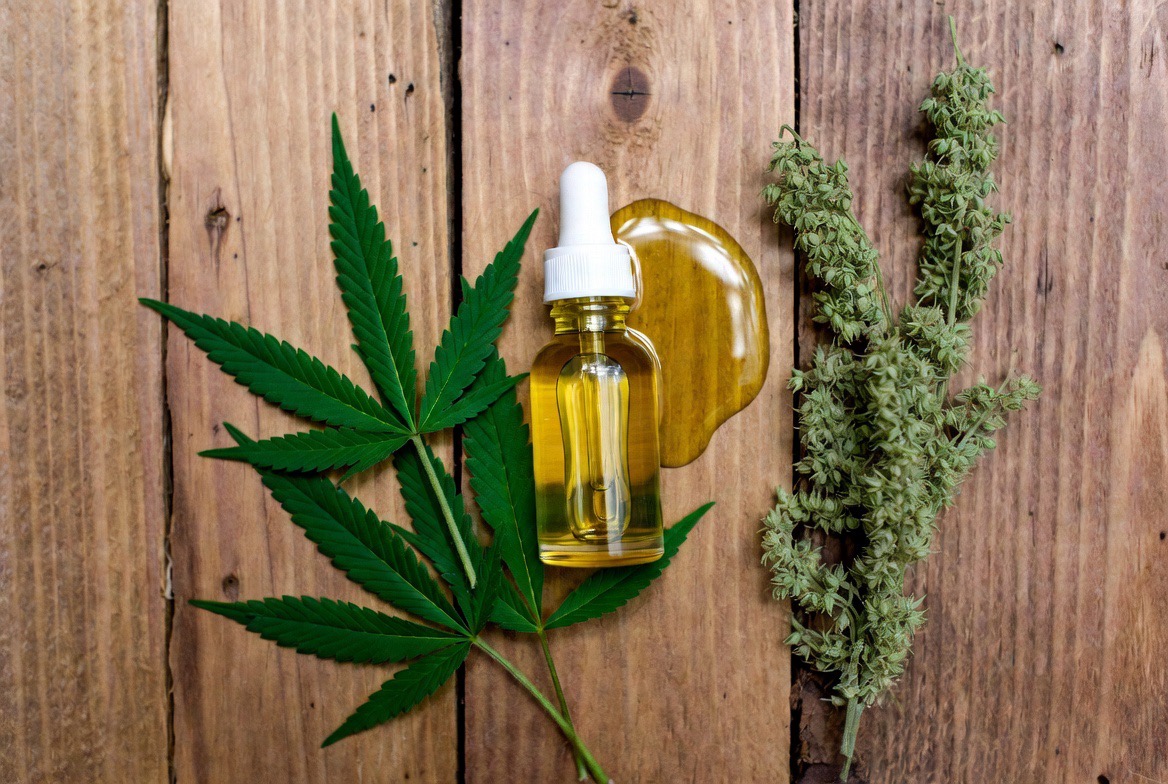
- The hype massively outruns the pain evidence. When CBD is tested in rigorous, placebo-controlled trials for general chronic pain, it mostly ties the sugar pill — one 2024 review found 15 of 16 trials showed no benefit over placebo.1
- The products are a quality minefield. In the most-cited labeling study, only about 26% of CBD products were accurately labeled — nearly 70% were mis-labeled — and roughly 1 in 5 contained THC that wasn’t disclosed.3
- A lot of the “it works for me” is placebo and expectation. In a controlled experiment, CBD did not lower pain intensity; the relief tracked what people were told they were taking.4
- CBD is real — just not for your knee. It has one genuine, FDA-approved use (a rare-epilepsy drug)5 and is relatively low-risk short term. For everyday pain and recovery, “CBD fixes it” is a story the data doesn’t back.
- The boom, and where I actually land
- The mechanism: the endocannabinoid system, and why systemic and topical differ
- The evidence: the null trials, and the one real win
- Evidence-based vs. marketed: a tiered read
- The grey areas: labeling, topicals, placebo, and interactions
- What we still don’t know
- References
The boom, and where I actually land
Let me state my position before I argue it, because CBD gets sold with the conviction of a miracle and dismissed with the sneer of a scam, and neither is right. CBD — cannabidiol, the non-intoxicating compound pulled from cannabis and hemp — is a legitimate molecule with real pharmacology and one genuinely approved medical use. It is also, for the everyday pain and recovery claims that built a multi-billion-dollar aisle, badly oversold. When you test it the way you’d test any drug — properly, against placebo, for the actual condition — the signal it pulls for general chronic pain is weak to absent. The gap between what the bottle promises and what the trials deliver is the whole story.
Here is the shape of the boom. CBD went from a fringe extract to a fixture in oils, gummies, capsules, vapes, and a wall of topical balms and roll-ons aimed squarely at arthritis, back pain, sore muscles, and post-workout recovery. The pitch is seductive: a plant-derived, low-buzz compound that calms inflammation and quiets pain without the baggage of opioids or the stomach risk of NSAIDs. If that were demonstrated, it would be a genuinely useful tool. The problem is the demonstrating. Most of what people “know” about CBD and pain comes from marketing, testimonials, and small or biased studies — not from the rigorous trials that are supposed to separate a real drug effect from a hopeful one.
This is the same job I keep coming back to across the recovery and pain hub: take a viral wellness product and separate the lever that actually moves the body from the expensive theater built around it. CBD is one of the purest test cases there is, because it bundles a small kernel of real science inside an enormous cloud of unproven claims and sells them as one inseparable product. They’re separable. So let me pull them apart.
The mechanism: the endocannabinoid system, and why systemic and topical differ
Start with what CBD plausibly does, because the mechanism is the part the marketing gets least wrong. The body runs an endocannabinoid system — a network of signaling molecules and receptors (chiefly CB1, concentrated in the nervous system, and CB2, concentrated in immune tissue) that helps regulate pain processing, inflammation, mood, and appetite. THC, CBD’s intoxicating cousin, binds CB1 directly, which is why it gets you high. CBD is different: it has only a weak, indirect grip on those receptors and instead nudges the system sideways — influencing how the body’s own cannabinoids are broken down and touching other targets involved in pain and inflammatory signaling. So there is a real, biologically coherent reason to think CBD might dampen a pain or inflammation signal. A plausible mechanism is a reason to run a trial. It is not a result.
The mechanism also explains why the delivery method matters far more than the ads admit. Swallow a CBD oil or gummy and you’re asking for a systemic effect: the compound has to be absorbed through the gut, survive first-pass metabolism in the liver, and reach high-enough blood levels to act on pain pathways body-wide. CBD’s oral bioavailability is notoriously low and variable, which is part of why dosing in real-world products is such a guess. A topical — a balm, cream, or roll-on — is a different proposition entirely. CBD is highly lipophilic (fat-loving), which makes it slow and reluctant to cross the skin’s barrier into deeper tissue.6 The implicit claim on a recovery roll-on — that rubbing it on a joint delivers a meaningful dose to the inflamed tissue underneath — is a real pharmacological challenge the label simply skips.
The mechanism is biologically real. The leap from “CBD touches pain-signaling pathways” to “this gummy fixes your arthritis” is the move to watch — and the move the trials keep refusing to confirm.
The evidence: the null trials, and the one real win
Now the part that decides it. When you line up the rigorous human evidence, two things become clear at once: CBD has a real, replicated drug effect in a very specific place — and that place is not general pain. Let me take the disappointing column first, because it’s the one the marketing buries.
General chronic pain: mostly placebo-level
The cleanest summary of the pain literature is blunt. A 2024 review in The Journal of Pain examined the randomized controlled trials of CBD for pain and found that 15 of 16 were negative — no greater pain relief than placebo — and concluded, in the authors’ own framing, that CBD for pain is expensive, ineffective, and potentially harmful.1 That is not a fringe skeptic’s blog post. That is a peer-reviewed synthesis in a pain journal, and it is about as direct as the field gets.
Even the most generous official read lands soft. The 2021 BMJ clinical practice guideline on cannabis and cannabinoids for chronic pain — a careful, GRADE-based panel — could only muster a weak recommendation to trial non-inhaled cannabinoids when standard care falls short, and it was candid about the size of the effect: roughly ten people treated to get one person a one-point improvement on their pain score, with similarly small gains in sleep and physical function.2 A one-in-ten chance at one point of relief is not nothing — but it is a world away from “CBD cures pain,” and that guideline covers cannabinoids broadly, not CBD-alone gummies. The individual disease trials echo it: well-run studies of oral CBD in conditions like knee osteoarthritis have repeatedly failed to beat placebo on pain.
The real win: a rare-epilepsy drug
Here is where CBD earns genuine respect, and it’s worth stating plainly so the skepticism stays honest. Purified pharmaceutical CBD — sold as Epidiolex — is FDA-approved for seizures in rare, severe childhood epilepsies including Dravet and Lennox-Gastaut syndromes. That approval rests on real randomized evidence: in the landmark Dravet trial, CBD cut the frequency of convulsive seizures significantly more than placebo.5 This matters for two reasons. First, it proves CBD is a real drug with a real, dose-dependent biological effect — not an inert oil. Second, it sets the standard. That is what convincing CBD evidence looks like: a purified, known dose, tested in a blinded trial, hitting a hard endpoint. The consumer pain claims have nothing remotely like it.
| CBD claim / use | What the rigorous evidence says | Verdict |
|---|---|---|
| Rare-epilepsy seizures (Epidiolex) | Approved; replicated RCTs vs. placebo5 | Evidence-based |
| General chronic pain | 15 of 16 RCTs no better than placebo1 | Largely unsupported |
| Cannabinoids for chronic pain (broad) | Small effect; weak guideline recommendation2 | Small, uncertain |
| Topical CBD for joints / soreness | Thin, high-bias trials; poor skin penetration6 | Unproven |
| Experimental pain intensity | No reduction; relief tracked expectation4 | Mostly placebo |
So the honest summary is a split, not a verdict: a genuine, approved drug effect in rare epilepsy, sitting right next to a near-empty file for the everyday pain and recovery claims that actually sell the product. The same molecule, two completely different evidence pictures — and the marketing borrows the credibility of the first to sell the second.
Evidence-based vs. marketed: a tiered read
We don’t write protocols on this site, and I’m not going to hand you a dose. What I will do is sort the CBD landscape by how much the evidence has your back, so you can see where the real signal stops and the marketing takes over. Three tiers.
Purified, prescription CBD for the specific rare epilepsies it’s approved for, under a neurologist. This is the tier with replicated, blinded, placebo-controlled data behind it5. It is also the tier that has nothing to do with the pain aisle — which is exactly the point.
If you want to try a verified, third-party-tested CBD product for pain, anxiety-adjacent tension, or sleep, the downside is relatively low and a minority of people may genuinely respond. Just price it honestly: you are likely buying a small effect that may be mostly expectation4, not a proven analgesic. Talk to a clinician first if you take other medications.
“Dissolves inflammation,” “heals your joints,” “the natural opioid replacement,” the recovery roll-on that supposedly soaks a therapeutic dose through your skin. These are the claims with the weakest evidence and the highest prices. Reading “anti-inflammatory miracle” and reaching for a $60 balm is the exact error this article exists to prevent.
The grey areas: labeling, topicals, placebo, and interactions
Four things the highlight reels skip — and they’re where the real risk lives.
First, the product is a quality minefield. The consumer CBD market is wildly under-regulated, and it shows in the bottle. In the most-cited analysis, researchers tested 84 CBD products bought online and found only about 26% were accurately labeled within a reasonable margin — nearly 70% were over- or under-labeled, contained meaningfully more or less CBD than claimed — and roughly 21% contained THC that the label didn’t advertise.3 Read that twice. Even if CBD did help your pain, you frequently can’t know how much you’re taking, and you might be getting an intoxicant you didn’t sign up for — a genuine problem if you’re drug-tested for work. The signal a product pulls is meaningless if you can’t trust the dose in the bottle.
Second, topical absorption is mostly unproven. The balms and roll-ons rest on an assumption the science doesn’t support: that rubbing CBD on skin delivers a useful dose to the tissue beneath. A 2023 systematic review of transdermal and topical CBD trials found only a handful of human studies, judged the data on pain and other outcomes unreliable with a high risk of bias, and flagged the fundamental problem — CBD’s fat-loving chemistry makes it hard to push across the skin barrier in the first place.6 A topical might do something locally; it has not been shown to, at the level the marketing implies.
Third, placebo and expectation are doing real work. This isn’t a dismissal — it’s mechanism. In a clever controlled experiment that separated the drug from the expectation of the drug, CBD did not reduce experimental pain intensity; what changed pain perception was largely what people were told they were getting.4 Pain is exquisitely sensitive to expectation, and CBD arrives wrapped in a powerful wellness narrative. That can produce a genuine subjective benefit for some people — relief is relief — but it means the “it works for me” testimonials can’t distinguish the compound from the story around it.
Fourth, it is not consequence-free. Verified CBD is reasonably well-tolerated short term, which is the honest basis for its MODERATE safety grade — but the FDA label for purified CBD documents real signals, including dose-related liver-enzyme elevations and clinically meaningful drug interactions: CBD inhibits CYP and related liver enzymes, which can raise blood levels of other drugs the same machinery clears.7 If you take a blood thinner, an anti-seizure drug, or anything with a narrow safety margin, casually stacking CBD on top is a conversation for your clinician, not a self-experiment — precisely because CBD is a real enough drug to interfere with your other ones.
When a product’s biggest claims — melts inflammation, heals joints, replaces painkillers — are justified by a plausible mechanism and a pile of testimonials, but not by blinded trials that beat placebo, you’re looking at mechanism dressed up as evidence. And when the bottle itself can’t reliably tell you what’s inside it, even a real effect becomes impossible to bank on.
What we still don’t know
- Whether a specific subgroup genuinely responds. The trials are mostly null on average, but averages hide responders. It’s plausible a minority benefits pharmacologically — we just can’t yet predict who, or separate them cleanly from placebo responders.
- Whether dose is the problem. Many consumer products deliver far less CBD than the doses used in trials, and oral absorption is poor and erratic. It remains open whether higher, verified, standardized doses would change the pain picture — or just the side-effect picture.
- Whether any topical formulation actually works. The skin-penetration problem is real; whether a future formulation reliably delivers a therapeutic local dose is unsettled, and the current evidence is too thin and biased to call6.
- The long-term safety of daily use. Short-term tolerability looks acceptable, but the liver-enzyme and drug-interaction signals on the purified-drug label7 mean chronic, unsupervised consumer use is not a settled question.
Where this lands for me: CBD is a real molecule with one real, approved use — and a pain-and-recovery reputation it has not earned in any rigorous trial. If you want to try a verified product as a low-stakes experiment, knowing most of the benefit may be expectation, that’s a defensible, eyes-open choice. If you’re buying it convinced it dissolves your inflammation or replaces your painkillers, you’re buying a story the evidence doesn’t support — from a bottle that often can’t even tell you what’s inside it. For recovery and pain, the foundational levers mapped across our read on curcumin for osteoarthritis and the broader boswellia evidence will do more for most people than a capsule the rigorous trials keep tying with placebo.
References
- Moore RA, Fisher E, Finn DP, Finnerup NB, Gilron I, Haroutounian S, et al. Cannabidiol (CBD) Products for Pain: Ineffective, Expensive, and With Potential Harms. J Pain. 2024;25(4):833-842. DOI. (Review of the CBD-for-pain RCTs; 15 of 16 trials showed no greater pain relief than placebo, products vary widely from label, and the authors conclude CBD for pain is expensive, ineffective, and potentially harmful.)
- Busse JW, Vankrunkelsven P, Zeng L, Heen AF, Merglen A, Campbell F, et al. Medical cannabis or cannabinoids for chronic pain: a clinical practice guideline. BMJ. 2021;374:n2040. PMID: 34497062. (GRADE-based guideline; only a weak recommendation to trial non-inhaled cannabinoids, reflecting small-to-very-small improvements in pain, sleep, and function — roughly ten treated for one to gain a one-point pain improvement.)
- Bonn-Miller MO, Loflin MJE, Thomas BF, Marcu JP, Hyke T, Vandrey R. Labeling Accuracy of Cannabidiol Extracts Sold Online. JAMA. 2017;318(17):1708-1709. PMID: 29114823. (Of 84 online CBD products tested, only ~26% were accurately labeled within 10% of claim (nearly 70% over- or under-labeled), and THC was detected in ~21% of samples — the basis for the product-mislabeling grade.)
- De Vita MJ, Maisto SA, Gilmour CE, McGuire L, Tarvin E, Moskal D. The effects of cannabidiol and analgesic expectancies on experimental pain reactivity in healthy adults: a balanced placebo design trial. Exp Clin Psychopharmacol. 2022;30(5):536-546. PMID: 34251840. (Balanced placebo design separating drug from expectancy; CBD did not reduce experimental pain intensity, and changes in pain perception tracked what participants were told they were taking — the basis for the placebo/expectation framing.)
- Devinsky O, Cross JH, Laux L, Marsh E, Miller I, Nabbout R, et al. Trial of Cannabidiol for Drug-Resistant Seizures in the Dravet Syndrome. N Engl J Med. 2017;376(21):2011-2020. PMID: 28813226. (Randomized, double-blind, placebo-controlled trial; purified CBD significantly reduced convulsive-seizure frequency in Dravet syndrome — the replicated, blinded evidence behind CBD’s one genuine FDA-approved use.)
- Scholfield CN, Waranuch N, Kongkaew C. Systematic Review on Transdermal/Topical Cannabidiol Trials: A Reconsidered Way Forward. Cannabis Cannabinoid Res. 2023;8(4):589-602. DOI. (Few human topical/transdermal CBD trials; pain and other outcome data judged unreliable with high risk of bias, and CBD’s lipophilicity limits skin penetration — the basis for grading topical claims Weak.)
- US Food and Drug Administration. EPIDIOLEX (cannabidiol) oral solution — US Prescribing Information. FDA; 2025. (Approved purified-CBD label; documents dose-related hepatic transaminase elevations and clinically relevant CYP/UGT-mediated drug interactions — the basis for the MODERATE safety grade and the interaction caveat.)