Sunscreen, vitamin D, and the trade we're not measuring.
Dermatology says block as much UV as you can. Longevity epidemiology says people who avoid the sun die younger. The two communities have been talking past each other for a decade, and the part of the conversation that matters most — the trade-off itself — does not survive contact with either orthodoxy intact. The honest read is that the optimal sun behavior is neither maximum exposure nor maximum avoidance, and the two communities are each missing what the other gets right.
How this article was built: Primary sources: the Lindqvist Swedish Women's Health and Sun Exposure cohort (~29,000 women, 20-year follow-up), the VITAL randomized vitamin D trial (Manson et al. NEJM 2019), the published literature on solar UV-induced nitric oxide release (Liu et al. 2014), the AAD photoprotection guidance, and the Global Burden of Disease melanoma incidence data.
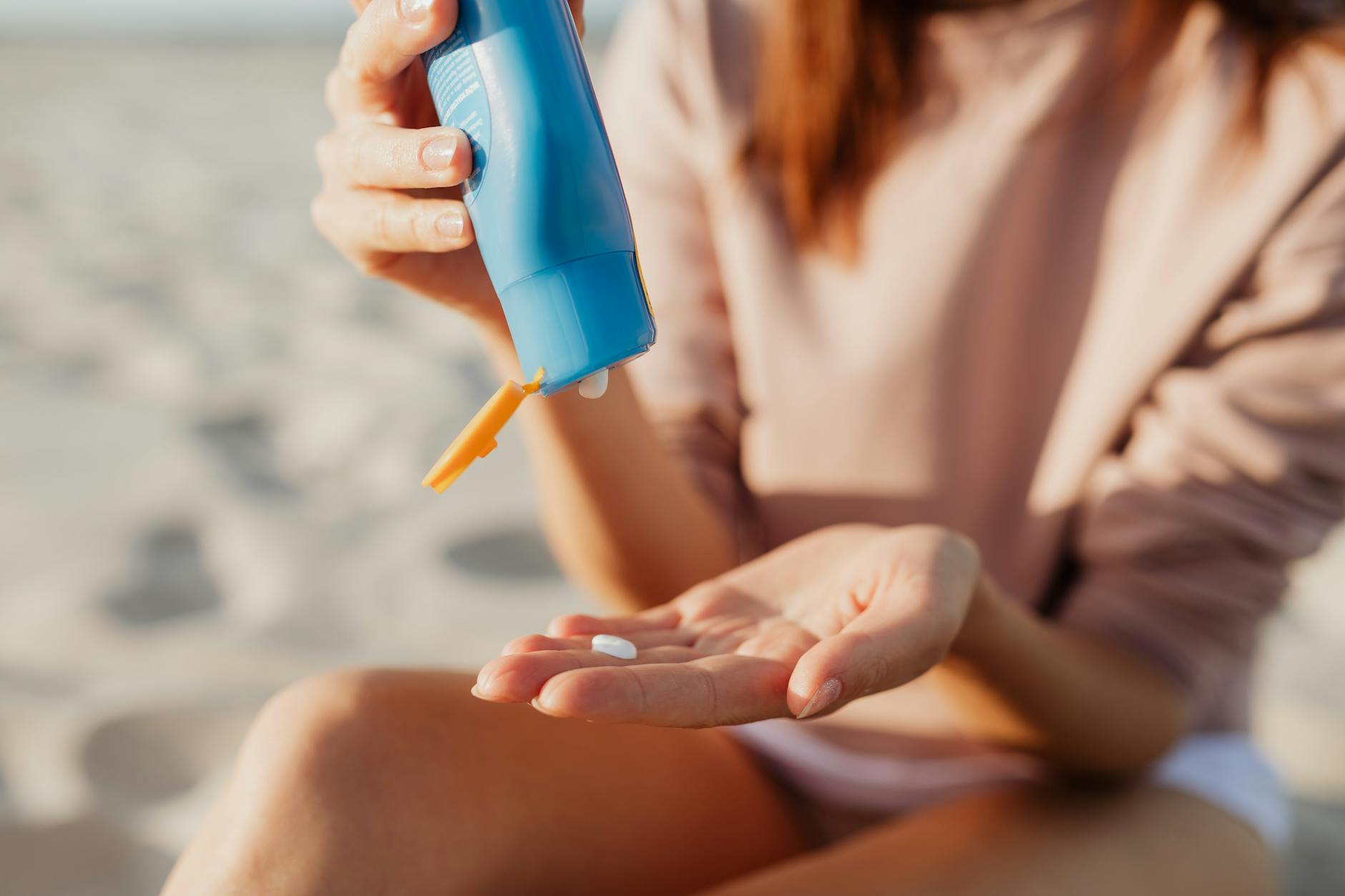
- Where the two communities actually disagree
- The Swedish cohort that does not go away
- VITAL: when the vitamin D supplement hypothesis ran into a trial
- Why sunlight is not just a vitamin D delivery system
- The melanoma risk, honestly
- The face-versus-body distinction nobody makes cleanly
- A defensible practical position
- What this article is not saying
- References
Where the two communities actually disagree
Dermatology's position, stated in its strongest form: ultraviolet radiation is a Class 1 carcinogen, cumulative lifetime UV exposure is the dominant modifiable risk factor for melanoma and the only modifiable risk factor for the more common non-melanoma skin cancers, photoaging is a clinically meaningful cosmetic and structural outcome, and the optimal exposure is therefore as little as practically achievable across all skin types. Daily broad-spectrum SPF, every day, regardless of season. The American Academy of Dermatology has held this line consistently.
Longevity epidemiology's position, stated in its strongest form: serum 25-hydroxyvitamin D status is associated with all-cause mortality in dose-response curves across multiple large cohorts, sun behavior (independent of supplementation) is associated with all-cause mortality even after adjustment for confounders, the magnitude of the sun-avoidance mortality association is comparable to that of smoking in some datasets, and the dermatology community has been treating the photo-aging and skin-cancer endpoints as if they were the only endpoints that matter. Avoid the sun and you live longer with better skin; avoid the sun and you die earlier with better skin are both possible readings of the same data.
Neither position is wrong on its own terms. Both are partial. The honest synthesis requires holding both data sets in the same conversation, which is something dermatology journals and longevity journals do badly because they almost never talk to each other directly.
The Swedish cohort that does not go away
The cleanest piece of the longevity argument is the Lindqvist et al. Swedish Women's Health and Sun Exposure cohort. The study followed roughly 29,000 Swedish women for 20 years, with sun-exposure habits collected by structured questionnaire at baseline. After adjusting for socioeconomic status, smoking, exercise, BMI, alcohol, and education, women in the lowest sun-exposure quartile had all-cause mortality rates that were approximately double those of women in the highest sun-exposure quartile. The reduction in life expectancy in the sun-avoiding group was estimated at 0.6 to 2.1 years.
The authors' provocative framing — that the magnitude of the sun-avoidance mortality association in this cohort was comparable to that of smoking — generated the predictable backlash. The standard critiques apply: this is observational, residual confounding is possible, and a Swedish cohort at high latitude may not generalize cleanly to low-latitude populations with year-round high UV index. All of those caveats are real.
What does not survive the critiques is the magnitude. Even cutting the effect size in half to account for residual confounding leaves an all-cause mortality association that is meaningful at a population level. The cohort has been re-analyzed multiple times since the original 2016 publication, including a 2020 re-analysis in which the all-cause mortality gradient persisted with longer follow-up — driven partly by cardiovascular and other non-cancer deaths, not by less skin cancer in the sun-exposed group. The story is more complex than "more sun, longer life" — but it is also more complex than "more sun, more cancer."
VITAL: when the vitamin D supplement hypothesis ran into a trial
For a decade, the dominant explanation for the sun-exposure-mortality association was vitamin D. People who get more sun synthesize more vitamin D, vitamin D status is associated with cardiovascular disease, cancer, immune function, and all-cause mortality, so the sun benefit is the vitamin D benefit and the cleanest way to capture it would be vitamin D supplementation without any UV exposure.
The VITAL randomized trial published in NEJM in 2019 tested that hypothesis cleanly. Roughly 26,000 US adults, randomized to vitamin D3 2000 IU daily versus placebo for a median of 5.3 years. The primary endpoints were invasive cancer and major cardiovascular events. The result, in the generally vitamin D-replete US population studied, was null on both primary endpoints. Subsequent secondary and exploratory analyses produced signals in narrow subgroups (advanced cancer mortality, autoimmune disease) but the headline conclusion was clear: supplementing vitamin D in an already-replete population did not reproduce the cardiovascular or oncologic mortality reduction that the observational sun-exposure literature would have predicted if vitamin D were the dominant mechanism.
The honest interpretation is uncomfortable for both camps. For the dermatology side, it does not rescue sun avoidance — VITAL did not study sun behavior, only oral supplementation. For the longevity side, it strongly suggests that the sun-exposure mortality association is not, or not entirely, mediated by serum 25-OH vitamin D. The supplement substitution does not work. The biological mechanism is something else, or something more.
Skin is one of the body's largest endocrine surfaces. Treating sunlight as a single-variable cancer risk misses most of what UV is doing to human physiology.
Why sunlight is not just a vitamin D delivery system
The non-vitamin D effects of solar UV exposure are the part the public conversation rarely covers, and they are the part that explains why supplements have not been a clean substitute. Three mechanisms are particularly well-characterized.
Cutaneous nitric oxide release. UVA exposure causes the skin to release nitric oxide stored in cutaneous nitrate pools. Nitric oxide is a potent vasodilator. The Liu et al. 2014 work demonstrated that UVA exposure produces measurable reductions in systolic and diastolic blood pressure independent of any vitamin D pathway. The blood-pressure effect is acute, dose-dependent, and persists for hours after exposure. A daily sun behavior pattern delivers a low-grade, daily blood-pressure intervention that vitamin D supplementation cannot replicate.
Circadian entrainment. The suprachiasmatic nucleus is synchronized primarily by light, and morning bright-light exposure (which includes UV at non-burning intensities) is one of the strongest zeitgebers for the human circadian system. Circadian disruption is independently associated with metabolic, cardiovascular, and oncologic outcomes. People who avoid the sun broadly tend to also have reduced bright-light exposure, which compounds the metabolic signal. The avoidance behavior and the circadian disruption travel together in observational data, and disentangling them is hard.
Immune modulation. UV exposure has well-characterized effects on cutaneous immune cells, including modulation of regulatory T cells and dendritic cell behavior. The relationship between UV exposure and autoimmune disease has been documented for decades (multiple sclerosis incidence inversely correlates with latitude, controlling for other factors). The mechanism is not exclusively vitamin D-mediated. The VITAL autoimmune sub-finding — that supplemental vitamin D reduced autoimmune disease incidence — captured part of it but probably not all of it.
Together, these mechanisms produce a picture in which solar UV is delivering several distinct biological inputs simultaneously, of which vitamin D synthesis is only one. The supplement-as-substitute logic was always going to be incomplete. VITAL is the trial that demonstrated how incomplete.
The melanoma risk, honestly
Melanoma is the part of the dermatology argument that deserves to be taken seriously and is sometimes hand-waved by the longevity-side enthusiasm. Cumulative UV exposure, intermittent intense exposure (especially with childhood sunburns), and high lifetime UV dose are real risk factors for melanoma. Melanoma incidence has been rising in fair-skinned populations for decades. Once metastatic, the disease has a brutal natural history that modern immunotherapy has improved but not solved.
The honest qualifications are these. The dose-response curve for melanoma risk is steepest at the high end of UV exposure — sunburns and prolonged unprotected exposure at high UV index — and much flatter in the moderate-exposure middle. Avoiding burns is much higher-leverage than avoiding all exposure. Skin type matters: Fitzpatrick I-II skin (light, burns easily) is at substantially higher melanoma risk than darker skin types and warrants more aggressive photoprotection. The cohort that benefits most from aggressive sunscreen is a smaller subset of the population than the universal-daily-SPF messaging assumes.
The non-melanoma skin cancers (basal cell carcinoma, squamous cell carcinoma) are the more common pattern. They are cosmetically and surgically meaningful but have very low mortality. The face and back-of-hands — the chronically exposed areas — are where most of these tumors develop. Photoprotection of those specific areas captures most of the skin-cancer prevention benefit at very low cost to total UV exposure.
The face-versus-body distinction nobody makes cleanly
The most useful practical synthesis the two communities have not formally agreed on is the distinction between face and body. The face accumulates the largest share of lifetime UV exposure, is the most cosmetically and oncologically sensitive area, and gets very little of the body's vitamin D or nitric oxide production from sun exposure because of its small surface area relative to the rest of the skin. SPF on the face every day is a defensible position from both communities' data.
The body is the opposite case. Arms, legs, back, and torso represent the bulk of total skin surface area. UV exposure to those areas drives most of the vitamin D synthesis, most of the nitric oxide release, and a meaningful share of the immunomodulatory and circadian signals. Aggressively sunscreening the body for casual outdoor exposure short of burning blocks the longevity-relevant inputs without much oncologic benefit, because melanoma incidence in chronically-clothed body areas is much lower than face/back-of-hands incidence.
The practical synthesis: protect the face aggressively, give the body moderate sun exposure short of burning, and stop treating "sunscreen" as a single decision applied uniformly to all skin. This is closer to what the data actually supports than either the "block everything always" or the "embrace the sun" framings.
A defensible practical position
The honest position the data supports, recognizing that this is a place where personalization matters more than most:
Face and back-of-hands: daily broad-spectrum SPF, year-round. The cosmetic, skin-cancer, and photoaging case for protecting these specific areas is strong, and the metabolic/vitamin D case for exposing them is weak (the surface area is too small to drive meaningful synthesis). This is the part of the dermatology position that should stay.
Body, in moderate-UV conditions: regular exposure short of burning. Roughly 10-30 minutes of midday body exposure in spring-through-fall, scaled by skin type — shorter for Fitzpatrick I-II, longer for darker skin types. The longevity epidemiology and the non-vitamin D mechanism literature support this strongly. Sunscreen the body when prolonged exposure is unavoidable (a beach day, an outdoor sport for hours), but do not reflexively sunscreen the body for ordinary 15-minute outdoor activity.
High-UV-index conditions: protect more aggressively. Tropical sun, midday equatorial latitudes, high-altitude conditions, and the conditions that produce burns are where the melanoma dose-response curve steepens. The advice changes by context, not by calendar.
Vitamin D status: measure it. Serum 25-OH vitamin D is one of the cheapest and most informative tests in routine practice. Target a level in the range most associated with optimal mortality outcomes in the dose-response literature — commonly cited as approximately 30-50 ng/mL (75-125 nmol/L) — using a combination of sun behavior and, if needed, supplementation. Do not assume supplementation alone delivers the full benefit; VITAL is clear that it does not for cardiovascular and most cancer endpoints in already-replete populations.
Daily broad-spectrum SPF on face, ears, neck, and back of hands year-round. Body exposure encouraged in moderate-UV conditions short of burning. Vitamin D status checked annually with a target of 30-50 ng/mL maintained via sun behavior with supplementation as needed. This is the position the data most cleanly supports for the average healthy adult.
Face/hands SPF year-round; body SPF for prolonged exposure (more than ~30 min in moderate UV, less in high UV); deliberate body exposure 3-5 times per week in spring through fall for the non-vitamin D solar effects (blood pressure, circadian, immune). Sunburns treated as a clinically significant event, not a cosmetic inconvenience. Vitamin D and basic metabolic markers reviewed annually.
Daily whole-body broad-spectrum SPF, sun avoidance behavior, vitamin D supplementation to maintain target status without any meaningful UV exposure. This is the strict version of the dermatology orthodoxy. It captures the maximum skin-cancer and photoaging benefit at the cost of the documented non-vitamin D solar effects on blood pressure, circadian regulation, and immune function. We do not recommend this position for the average healthy adult; it is reserved for patients with a personal melanoma history, transplant immunosuppression, or other clinical indications where aggressive photoprotection is warranted.
What this article is not saying
This is not anti-sunscreen. Daily face SPF is one of the highest-leverage, lowest-cost interventions in dermatology, and the photoaging and skin-cancer prevention case for it is strong. The argument here is about whole-body, undifferentiated, universal-daily sunscreening — not about the targeted use that dermatology gets right.
This is also not an endorsement of intentional UV exposure for tanning, tanning beds, or unprotected high-UV-index sun behavior. Burns are not health. Tanning beds have a clear melanoma signal. The argument is for moderate, contextual sun behavior consistent with the Lindqvist cohort, not for the high-UV behavior patterns that the dermatology community correctly warns against.
It is also not generalizable to all skin types and clinical populations. Fitzpatrick I-II skin, personal or family melanoma history, immunosuppression after transplant, certain medications (some antibiotics, retinoids), and certain rare genetic conditions all shift the trade-off toward more aggressive photoprotection. Anyone in those categories should follow dermatology guidance, not internet-synthesis articles.
Finally, this is not a settled story. The non-vitamin D mechanism literature is younger and less complete than either the vitamin D or the melanoma literatures, the Lindqvist cohort is a single Swedish dataset however influential, and replication outside Scandinavia is still in progress — so the honest position five years from now may have moved. But the rule the data already supports is simpler than either orthodoxy leads with: protect the face aggressively, give the body moderate sun short of burning, and stop treating "sunscreen" as one decision applied uniformly to all your skin.
The Peptide Manual covers the longevity peptide framework — the bioregulators (Epitalon, Thymalin) that intersect with the immune and circadian pathways UV signals also touch, the regenerative peptides for skin and connective tissue, and the structured protocol for vitamin D and 25-OH-D status optimization across age decades. For readers thinking about the longevity trade-offs in this piece, the Manual is the deep-reference companion. See the Manual →
References
- Lindqvist PG, Epstein E, Nielsen K, et al. Avoidance of sun exposure as a risk factor for major causes of death: a competing risk analysis of the Melanoma in Southern Sweden cohort. J Intern Med. 2016;280(4):375-387. DOI: 10.1111/joim.12496. PMID: 26992108.
- Manson JE, Cook NR, Lee IM, et al. Vitamin D supplements and prevention of cancer and cardiovascular disease (VITAL). N Engl J Med. 2019;380(1):33-44. DOI: 10.1056/NEJMoa1809944. PMID: 30415629.
- Liu D, Fernandez BO, Hamilton A, et al. UVA irradiation of human skin vasodilates arterial vasculature and lowers blood pressure independently of nitric oxide synthase. J Invest Dermatol. 2014;134(7):1839-1846. DOI: 10.1038/jid.2014.27. PMID: 24445737.
- Lindqvist PG, Epstein E, Landin-Olsson M, et al. Women with fair phenotypes seem to confer a survival advantage in a low UV milieu — a nested matched case control study within the Melanoma in Southern Sweden cohort. PLoS One. 2020;15(1):e0228582. [Cohort update with longer follow-up.]
- Hossein-Nezhad A, Holick MF. Vitamin D for health: a global perspective. Mayo Clin Proc. 2013;88(7):720-755. DOI: 10.1016/j.mayocp.2013.05.011. PMID: 23790560. [Vitamin D status epidemiology context.]
- Hahn J, Cook NR, Alexander EK, et al. Vitamin D and marine omega-3 fatty acid supplementation and incident autoimmune disease (VITAL ancillary). BMJ. 2022;376:e066452. DOI: 10.1136/bmj-2021-066452. PMID: 35082139.
- American Academy of Dermatology Association. Position statement on vitamin D. Updated 2019. Available at: https://www.aad.org/. [Dermatology position reference.]
- Whiteman DC, Green AC, Olsen CM. The growing burden of invasive melanoma: projections of incidence rates and numbers of new cases in six susceptible populations through 2031. J Invest Dermatol. 2016;136(6):1161-1171.
- Holick MF. Sunlight and vitamin D for bone health and prevention of autoimmune diseases, cancers, and cardiovascular disease. Am J Clin Nutr. 2004;80(6 Suppl):1678S-1688S. [Foundational sun/vitamin D physiology reference.]