The peptide "wild west": what the 2026 FDA fight actually means for you.
A dozen-plus peptides got pushed off the legal compounding shelf, a gray market of unverified vials rushed in to fill the gap, and now the government is reversing course. Here's the honest read — without the fearmongering and without pretending the stuff in those vials is either a miracle or a poison.
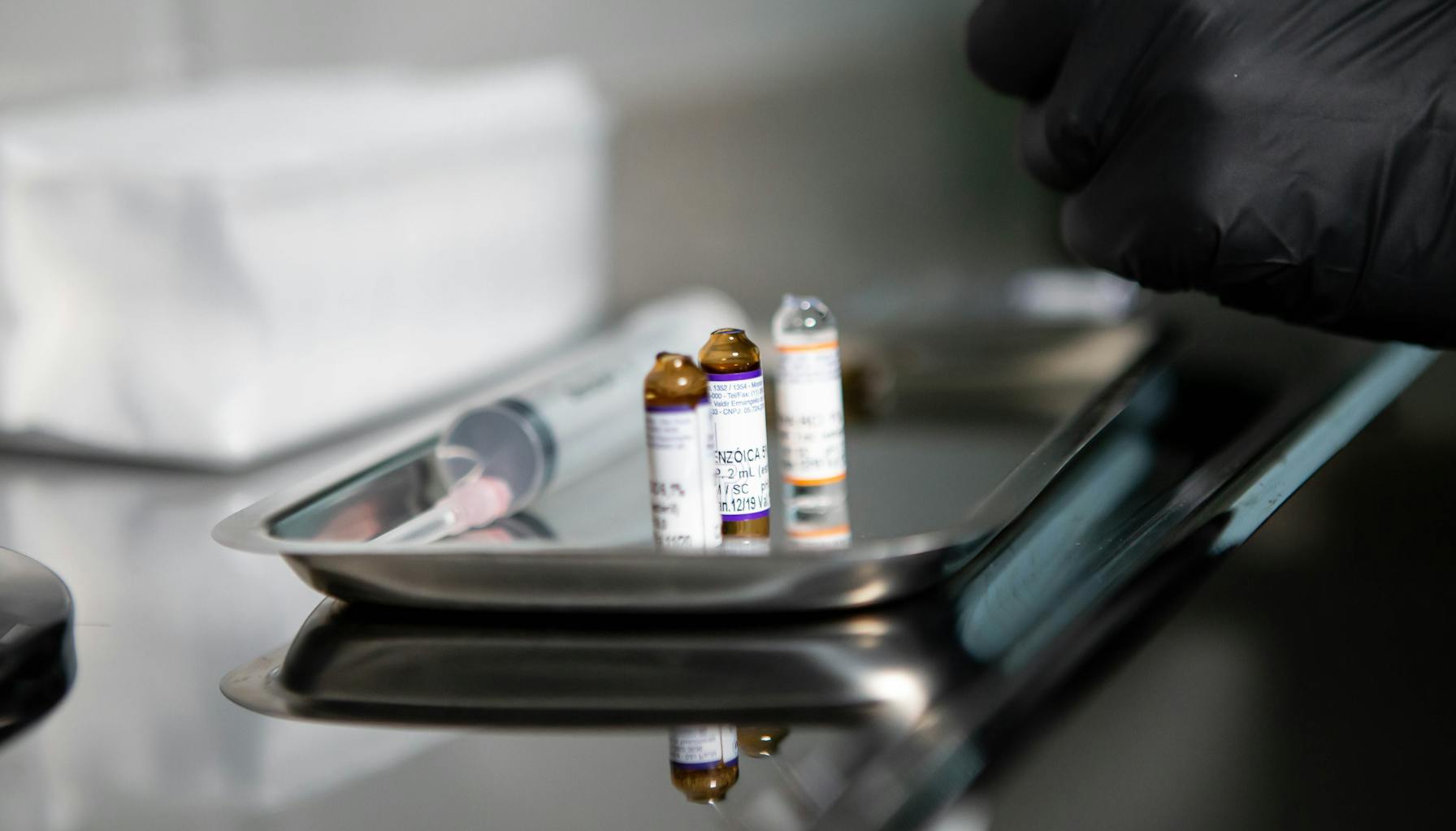
- Most peptides sold online — BPC-157, TB-500, ipamorelin and the rest — are not FDA-approved drugs; a handful (semaglutide, tesamorelin) are, and the gap between those two groups is the whole story.
- In 2023 the FDA pushed more than a dozen peptides into a restricted compounding category; community demand didn't disappear, it migrated to a gray market where lab tests have found heavy-metal contamination and purity as low as 5%.
- In 2026 the government reversed course — most of the restricted list is heading back for review, with an FDA advisory meeting set for July 23–24, 2026. Regulation has overshot the evidence in both directions.
- If you've already decided to act on this, the answer was never the gray market. It's a clinician and a third-party certificate of analysis — not blind faith in a vial.
- The headline, and the part the headline skips
- What the FDA actually did — and just undid
- FDA-approved vs. "research only": the line that matters
- The gray market: what's really in the vial
- The evidence gap cuts both ways
- If you've already decided: the only framework worth using
- What we still don't know
- References
The headline, and the part the headline skips
Search interest in longevity peptides has exploded — these compounds went from a niche corner of self-experimentation to millions of monthly U.S. searches and a permanent fixture on every wellness feed. Mainstream outlets started calling it the "wild west," and a former U.S. Food and Drug Administration (FDA) official put an even sharper point on it: the wild west, he warned, is "about to become wilder."1
He's not wrong. But the phrase gets used to mean two completely different things, and most coverage blurs them. One meaning is that the products are a wild west — unlabeled vials of unknown purity from sellers who dodge the rules by stamping "research use only" on the box. That's true, and it's the dangerous part. The other meaning is that the regulation is a wild west — rules lurching one direction in 2023 and the opposite direction in 2026, faster than the science underneath them has moved at all. That's also true. Hold both at once and you get the actual story, which is more useful than the panic version.
Here's my position up front, because I don't hedge on this site: the regulatory caution is partly legitimate and partly a structural accident, the gray market is genuinely risky, and the answer for anyone who's already made up their mind is neither "peptides are poison" nor "peptides are a miracle." It's a doctor and a lab report — though, as I cover in the piece on why there's no CPT code and most doctors aren't trained on peptides, finding that informed clinician is harder than the advice makes it sound. I'll show my work.
What the FDA actually did — and just undid
To follow this you need two acronyms, and I'll explain both. The FDA is the U.S. Food and Drug Administration. Compounding is when a licensed pharmacy mixes a drug to order rather than buying it pre-made from a manufacturer — it's governed by two sections of federal law: 503A (traditional pharmacies filling a specific prescription) and 503B (larger "outsourcing facilities" making batches). A peptide can only be legally compounded if it sits on an approved "bulk drug substances" list. That list has a Category 1 (allowed to compound) and a Category 2 (not allowed, pending review).2
In September 2023, the FDA pushed more than a dozen popular peptides into Category 2, citing safety concerns — immunogenicity risk, impurities, and thin human data.2 In plain terms: it told compounding pharmacies to stop making them. That single move is what created the shortage the gray market rushed to fill. It's worth being precise about one thing the coverage usually gets wrong — most of these peptides were never on Category 1 to begin with, so "ban" overstates it. They were never formally cleared for compounding; 2023 just made the prohibition explicit.2
Then the pendulum swung back. In early 2026 the federal health leadership signaled it would ease the restrictions, and the FDA scheduled its Pharmacy Compounding Advisory Committee (PCAC) to publicly review the marquee compounds on July 23–24, 2026 — BPC-157, TB-500, KPV and MOTS-c on the first day, with more to follow.3 I covered the politics of that reversal separately — why the ban happened and why fourteen of the nineteen got walked back — and the parallel GLP-1 compounding shake-up that ran on its own track. This piece is about what all of that churn means for the person actually holding the vial.
Regulation moved twice in three years. The underlying evidence on most of these peptides moved almost not at all. When the rules swing faster than the science, "what's legal" stops being a reliable proxy for "what's safe."
FDA-approved vs. "research only": the line that matters
The single most important distinction in this entire conversation — the one that separates a sober decision from a reckless one — is the line between an FDA-approved peptide drug and an unapproved "research" peptide. They are not the same category of thing, even when they're both peptides and both sold by people in white coats.
On the approved side you have compounds that ran the full gauntlet: large human trials, a manufacturing standard, a label, post-market surveillance. Semaglutide — the GLP-1 (glucagon-like peptide-1) drug behind the weight-loss wave — is a peptide, and it's approved. Tesamorelin, a growth-hormone-releasing peptide, is approved for a specific indication. When a peptide is FDA-approved, you know what's in the vial, you know the dose, and you know the safety database behind it.
On the unapproved side sits almost everything the influencer market is actually talking about: BPC-157 (Body Protection Compound-157), TB-500 (a fragment related to thymosin beta-4), ipamorelin, and the rest of the "research peptide" catalog. None of these has cleared FDA review as a drug. That doesn't automatically make them worthless — we'll get to the evidence — but it does mean nobody is checking the vial. The "research use only" label isn't a quality mark. It's a legal escape hatch that lets a seller ship an injectable to a human while formally claiming it's not for humans.5
The gray market: what's really in the vial
This is where I stop being neutral, because the data here is genuinely alarming and it's the part the hype merchants never mention.
When researchers in Belgium ran a systematic chemical screen on the ten most commonly falsified peptide drugs bought from illegal internet pharmacies, here's what they found: active-ingredient purity ranging from 5% to 75%, wildly inconsistent dosing per vial, and — this is the part that should stop you — toxic heavy metals. Multiple samples contained arsenic at up to ten times the international toxicity limit for injectable drugs, with the arsenic in its more toxic inorganic form, plus lead contamination on top.4 Arsenic is a carcinogen. Lead accumulates in human tissue. You are injecting this.
A separate UK analysis found these "novel synthetic peptide hormones" sitting openly on mainstream e-commerce platforms, sellers dodging restrictions with the same "not for human consumption" wording while advertising the products as wellbeing aids, and packaging that bore no reliable relationship to what was actually inside.5 This is the structural problem with a gray market: there's no certificate of analysis, no sterility validation, no standardized dose, and no one accountable when the label lies. The signal the seller is selling — "this is the same molecule the studies used" — is exactly the thing that's unverified.
This is the legitimate core of the FDA's caution. A regulator looking at a market where injectable products show 5% purity and carcinogen contamination is not being paranoid. That's a real signal, and anyone defending peptides has to account for it rather than wave it away.
The evidence gap cuts both ways
Now the other edge — because the same honesty that names the contamination risk also has to name what the regulation gets wrong.
Take BPC-157, the most hyped name on the list. A 2025 systematic review pulled every study it could find: 544 papers screened down to 36 included — and of those 36, thirty-five were preclinical (animal or cell) and exactly one was a human clinical study. The authors' own line: "No clinical safety data were found."6 A separate human pilot existed too, but it enrolled two people.6 So when someone tells you BPC-157 is "proven" to heal your tendons, that claim is running miles ahead of the human evidence. The animal signal is real and consistent; the human proof is barely a rounding error. That's why our Evidence Radar grades that specific claim WEAK — and grades the broader "peptides are an anti-aging miracle" framing HYPE outright. TB-500 sits in the same place: most of what's claimed for it rests on the parent molecule thymosin beta-4, not on human trials of TB-500 itself.6
But here's the structural twist, and it's the most important paragraph in this article. BPC-157 will probably never get a large human trial — not because it failed one, but because no one has a financial reason to run it. It's an old, unpatentable peptide. A trial that costs hundreds of millions only happens when a sponsor can own the result. So you get a permanent stalemate: regulation demands human data, and the economics guarantee the human data never gets generated. The compound is stuck in a gap between "healthy enough that no one will study a drug for you" and "sick enough to have a billable diagnosis." Regulation outpaces the evidence in both directions — too cautious on a peptide that may be fine, structurally incapable of ever finding out.
That's the part of the "wild west" story that isn't anyone's villainy. It's just the machine working as designed, on a class of molecules the machine was never built for.
If you've already decided: the only framework worth using
I'm not telling anyone to take these. That's not my job and it's not my place. But if you've read all of the above and decided you're going to act on it anyway, then the worst possible version of that decision is the one the gray market is built to sell you: a "research" vial, no oversight, no testing, faith that the label is honest. Everything in the toxicology section above is what that path actually buys.
The framework that survives scrutiny has two non-negotiable parts, and neither is exotic:
A physician who knows you're doing this, runs baseline and follow-up labs, and screens for the things that actually matter — family cancer history, existing metabolic or organ flags. This isn't a "consult your doctor" disclaimer. It's the difference between a monitored decision and a blind one. If you have a strong family cancer history, that conversation may end in "don't" — and that's a feature.
Demand a Certificate of Analysis (CoA) — independent lab verification of identity, purity, and heavy-metal content, ideally by High-Performance Liquid Chromatography (HPLC). No CoA, no deal. This is the single control that directly answers the 5%-purity, arsenic-contamination problem. If a seller can't or won't produce one, they've told you everything you need to know.
If a peptide is being prepared, the dosing math has to be right — getting from a milligram figure on a vial to an actual microgram dose is where a lot of harm happens. The reconstitution calculator and half-life tool exist for exactly this. We publish the math; we don't publish a protocol telling you what to put in your body.
The preservation case for peptides — using them to protect organ and tissue function before age-related decline becomes irreversible, with a doctor watching the labs — is a legitimate idea worth taking seriously. The gray-market version of that idea, with no doctor and no lab report, is just gambling with an injectable. Same compound, completely different risk.
What we still don't know
Three honest gaps, because pretending they're closed is how this whole field lost credibility in the first place:
- Long-term safety. Community-scale peptide use is at most about fifteen years old. Cancer latency runs ten to twenty. "No obvious signal yet" is consistent with both "these are safe" and "we haven't caught it yet." That uncertainty is real, and it's the strongest argument for aggressive screening in anyone using these chronically.
- What the July 2026 review concludes. The PCAC meeting on July 23–24, 2026 will weigh several of these peptides for a legal compounding pathway.3 A favorable vote restores oversight; an unfavorable one keeps demand in the gray market. Neither outcome generates the human efficacy trials that are actually missing.
- Whether the evidence ever catches up. Until someone solves the economics problem — who pays for a trial on an unpatentable molecule — the most-used peptides may stay permanently stuck at "mechanism-plausible, animal-supported, humanly unproven." That's not a temporary state. It might be the permanent one.
References
- PBS NewsHour. FDA to weigh easing limits on unproven peptides favored by RFK Jr. and MAHA supporters. 2026. pbs.org
- U.S. Food and Drug Administration. Bulk Drug Substances Used in Compounding Under Section 503A of the FD&C Act. FDA, accessed 2026. fda.gov
- Hyman, Phelps & McNamara (FDA Law Blog). FDA's Pep(tide) Rally! What Compounders and Industry Need to Know. 2026. thefdalawblog.com
- Janvier S, et al. Impurity profiling of the most frequently encountered falsified polypeptide drugs on the Belgian market. Talanta. 2018;188:795-807. DOI
- Turnock LA. Click, click, buy: The market for novel synthetic peptide hormones on mainstream e-commerce platforms in the UK. Performance Enhancement & Health. 2023;11(2):100241. DOI
- Vasireddi N, et al. Emerging Use of BPC-157 in Orthopaedic Sports Medicine: A Systematic Review. HSS Journal. 2025. DOI