Magnesium L-threonate and the 2026 trial: does the "brain magnesium" actually reach your brain?
A new single-ingredient Magtein trial moved cognition and an estimated "brain age" score — but left objective sleep untouched. Here is what the brain-magnesium story really supports, and what you are paying a premium for.
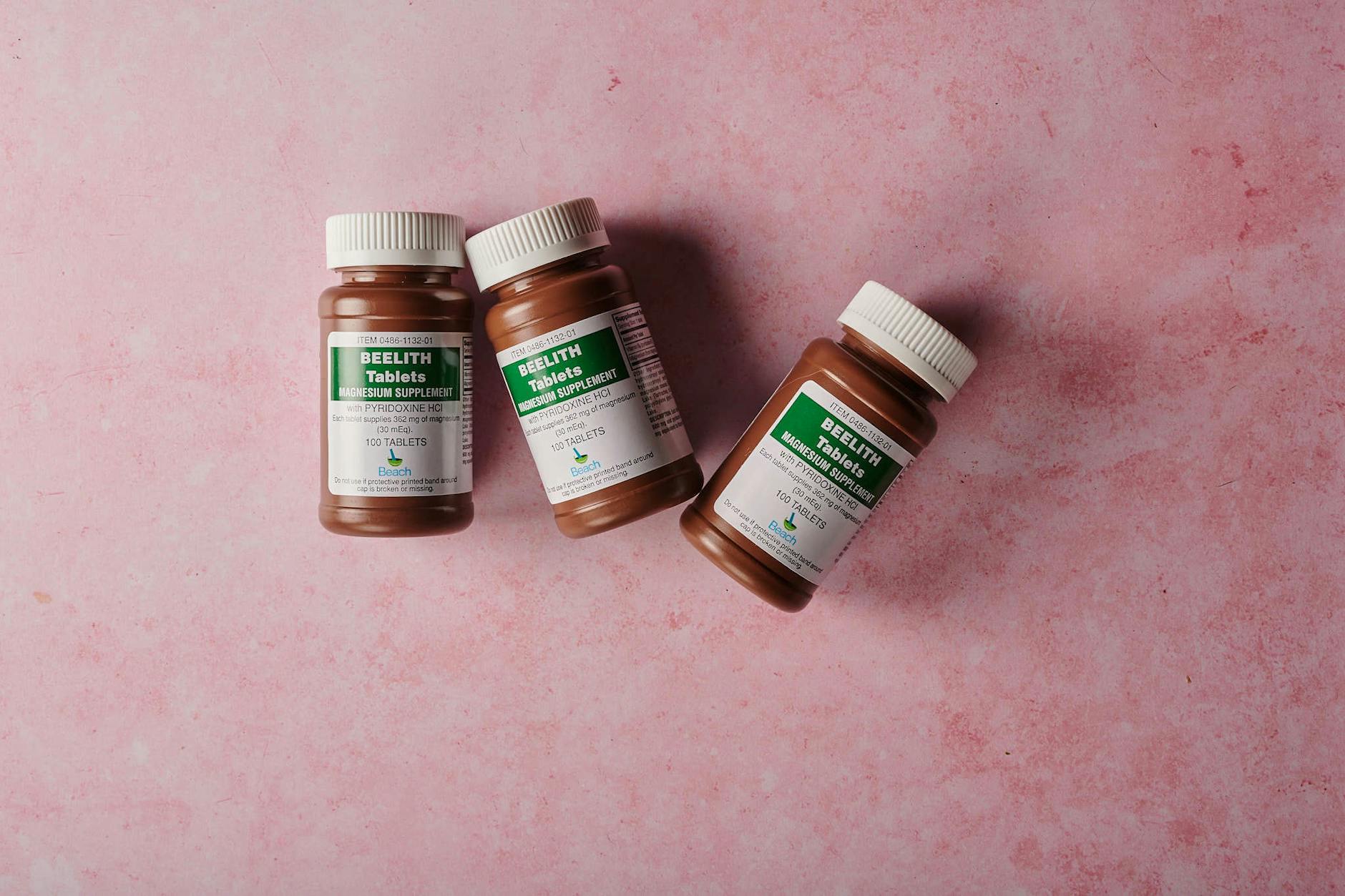
- A 2026 randomised trial of magnesium L-threonate alone (N=100, 6 weeks) improved overall cognition and cut an estimated "brain cognitive age" by 7.5 years versus placebo — the strongest single-ingredient human signal so far.
- The same trial found no benefit on objective, wearable-measured sleep, and the headline "brain magnesium crosses the barrier" story still rests largely on a 2010 rodent paper.
- Human cognition data is real but thin: a handful of small trials, several with industry involvement, and no head-to-head win over cheaper glycinate or citrate.
- For most people chasing better sleep, correcting a magnesium shortfall is what helps — and any absorbable form does that for a fraction of the price.
The 2026 trial, and why it's the cleanest test yet
For fifteen years, the case for magnesium L-threonate — sold mostly under the brand name Magtein — rested on one striking rodent paper and a couple of small, muddy human trials. In early 2026, that changed slightly. A randomised, double-blind, placebo-controlled trial gave 100 adults aged 18–45 with self-reported poor sleep either 2 g/day of magnesium L-threonate or placebo for six weeks 1. It is the first reasonably clean test of the single ingredient in people — earlier "positive" trials bundled threonate with other actives, which made it impossible to know what was doing the work.
The cognitive results were genuinely positive. Compared with placebo, the threonate group improved on the National Institutes of Health Cognition Toolbox total composite (p=0.043), with the largest effects on working and episodic memory, and showed a 7.5-year reduction in an estimated "brain cognitive age" plus faster reaction time (p=0.031) 1. That is the best human cognition signal threonate has produced. It deserves to be taken seriously — and it deserves the caveats that the marketing leaves out. The trial used Magtein-branded material, the investigators have a track record of industry-sponsored supplement trials, and a fluid-reasoning test (Raven's Progressive Matrices) showed no benefit at all (p=0.953) 1. A real signal on memory; nothing on raw reasoning. Both facts are true at once.
This is not advice to buy or skip threonate. It is a map of exactly how strong — and how thin — the evidence is, so the decision is yours to make with a clinician and your own budget.
Mechanism: the signal threonate is supposed to pull
Start with the problem threonate claims to solve. Magnesium is everywhere in the body, but the brain guards its own supply tightly — most oral magnesium forms barely move the level on the far side of the blood–brain barrier. The pitch for L-threonate is that the threonate carrier sneaks magnesium across that barrier where glycinate, citrate, and oxide cannot. In plain terms, the signal it is meant to pull is a rise in central magnesium availability, and downstream of that, a steadier version of the synaptic signalling the brain uses to lay down memory.
Here is where precision matters. In the mechanism work, raising intraneuronal magnesium upregulates NR2B-containing NMDA receptors, increases functional synapse density, and strengthens long-term potentiation — the cellular substrate of learning 2. Later work showed the threonate anion itself, ferried via glucose transporters, is what lets the compound lift neuronal magnesium where plain magnesium salts fail 3. That is a coherent, well-characterised story. The catch is that almost all of it comes from rodents and cultured neurons.
The brain-magnesium mechanism is real and elegant. It is also, in humans, mostly inferred — we have measured the synapses in rats, not in you.
On the human side, direct evidence that oral threonate raises brain magnesium in living people is still scarce. A 2024 review of magnesium brain delivery treats threonate as a promising route to improve barrier permeability — explicitly noting that human safety-and-efficacy data was still being gathered, not settled 4. That is why the "raises brain magnesium better than other forms" claim earns an EMERGING grade and not a higher one: strong in animals, mechanistically plausible, not yet nailed down in people.
The human evidence, counted honestly
If you actually count the human trials, the list is short. The foundation is the 2010 rodent paper that put threonate on the map: elevating brain magnesium enhanced learning, working memory, and long-term memory in young and aged rats 5. Influential — 355 citations and counting — but a rat study.
The first human signal came in 2016: a randomised, placebo-controlled trial of MMFS-01 (magnesium L-threonate) in 44 older adults aged 50–70 with self-reported cognitive complaints. It reported improvement on a composite of executive function, working memory, and attention over 12 weeks 6. Promising, but small, brief, and run by the compound's developers. A 2022 trial of 109 healthy Chinese adults reported broad memory gains — but it tested a multi-ingredient formula (threonate plus phosphatidylserine, vitamin C, and vitamin D), so the win cannot be pinned on threonate, and it too was industry-run 7. Then comes the 2026 single-ingredient trial above 1, which is the cleanest of the set.
| Trial | N · design | What it actually showed |
|---|---|---|
| Slutsky 2010 5 | Rats · preclinical | Brain-magnesium elevation enhanced learning and memory. Animal-only signal. |
| Liu 2016 (MMFS-01) 6 | 44 · RCT, 12 wk | Cognitive composite improved in older adults. Small, developer-run. |
| Zhang 2022 7 | 109 · RCT, 30 d | Memory improved — but multi-ingredient formula; can't isolate threonate. |
| Lopresti 2026 1 | 100 · RCT, 6 wk | Cognition + brain-age improved; single ingredient. No effect on reasoning. |
Four small studies, two of them developer- or industry-linked, one confounded by other actives, and zero head-to-head trials pitting threonate against a cheaper magnesium form. That is a real but EMERGING base for the cognition claim — enough to be interesting, not enough to call it settled. If you want the broader picture of how the forms compare on absorption, we lay that out in our magnesium forms breakdown.
Sleep: where the claim is weakest
Threonate is increasingly marketed for sleep, and this is where the gap between story and data is widest. The 2026 trial is instructive precisely because it measured sleep two ways. On subjective reports, the threonate group showed a greater improvement in sleep-related impairment (p=0.043), and a subgroup with worse baseline sleep improved on sleep disturbance 1. But on the Oura ring — objective, wearable-measured sleep — there were no group differences in any sleep outcome 1. The wearable did pick up a lower resting heart rate (p=0.030) and higher heart-rate variability (p=0.036), a stress-and-recovery signal, but not better sleep architecture.
Read that honestly: people felt a bit better about their sleep; their sleep, as measured, did not change. And critically, there is no trial showing threonate beats glycinate or citrate for sleep. Our read of the 2025 magnesium-and-sleep RCT found the strongest sleep data sits with cheaper bisglycinate, not threonate. Hence the WEAK grade on "better for sleep than other forms": there is no head-to-head superiority data, full stop.
The deficiency confound nobody markets
Here is the quiet truth under most "magnesium helped me sleep" stories. A large share of adults run low on magnesium, and a meta-analysis of magnesium for insomnia in older adults found it modestly shortened the time to fall asleep — on low-to-very-low-quality evidence, using plain, cheap magnesium 8. A separate systematic review of magnesium and sleep concluded that observational links are real but the randomised data is inconsistent 9. The most parsimonious reading: when someone is short on magnesium, topping it up helps, and any absorbable form does that.
That is what earns the deficiency claim a MODERATE grade — the strongest in this article. It also reframes the entire threonate pitch. If your benefit comes from correcting a shortfall, you are paying a premium for a delivery mechanism you may not need. A simple serum check is a reasonable starting point; our lab-range interpreter can help you read it in context, and it is a question worth bringing to a clinician before you spend on the expensive form.
The cost math
Magnesium L-threonate is roughly 8% magnesium by weight. To hit the ~144 mg of elemental magnesium used in the trials, you swallow around 2 g of compound — typically three large capsules — and pay a meaningful multiple of what an equivalent dose of glycinate or citrate costs. You are buying the threonate carrier and the brain hypothesis attached to it, not more magnesium.
Is that premium justified by superior human outcomes? On the current evidence, no — which is why that claim grades WEAK. There is a plausible mechanism and a genuine, if small, cognition signal. There is also no trial showing threonate outperforms a cheaper form in a head-to-head, and the one objective sleep readout we have came back null 1. If you are buying threonate for the brain story, buy it knowing you are funding a promising hypothesis, not a proven upgrade.
What we still don't know
- Brain magnesium in living humans. No published trial directly measures whether oral threonate raises magnesium in the human brain — the load-bearing claim is still inferred from animals.
- Head-to-head form trials. There is no RCT comparing threonate against glycinate or citrate for either cognition or sleep. Until one exists, "better form" is marketing, not evidence.
- Independent replication. The cleanest human trial is recent, single, and industry-adjacent. A non-industry replication would move this from EMERGING toward MODERATE.
- Older and impaired populations. The strongest theoretical case is in age-related decline, yet the largest single-ingredient trial enrolled adults 18–45. The dementia data remains tiny and open-label.
Content reviewed by the Wellness Radar editorial team. Educational only — not medical advice. Always consult a clinician before changing any protocol.
References
- Lopresti AL, Smith SJ. The effects of magnesium L-threonate (Magtein) on cognitive performance and sleep quality in adults: a randomised, double-blind, placebo-controlled trial. Front Nutr. 2026;12. DOI · PMC12832366
- Abumaria N, et al. Effects of elevation of brain magnesium on fear conditioning, fear extinction, and synaptic plasticity. J Neurosci. 2011;31(42):14871-14881. DOI · PMID 22016520
- Sun Q, Weinger JG, Mao F, Liu G. Regulation of structural and functional synapse density by L-threonate through modulation of intraneuronal magnesium concentration. Neuropharmacology. 2016;108:426-439. DOI · PMID 27178134
- Mathew AA, Panonnummal R. A mini review on the various facets affecting brain delivery of magnesium and its role in neurological disorders. Biol Trace Elem Res. 2022;200(11):4665-4678. DOI · PMID 35013904
- Slutsky I, Abumaria N, Wu LJ, et al. Enhancement of learning and memory by elevating brain magnesium. Neuron. 2010;65(2):165-177. DOI · PMID 20152124
- Liu G, Weinger JG, Lu ZL, Xue F, Sadeghpour S. Efficacy and safety of MMFS-01, a synapse density enhancer, for treating cognitive impairment in older adults: a randomized, double-blind, placebo-controlled trial. J Alzheimers Dis. 2016;49(4):971-990. DOI · PMID 26519439
- Zhang C, Hu Q, Li S, et al. A Magtein, magnesium L-threonate, -based formula improves brain cognitive functions in healthy Chinese adults. Nutrients. 2022;14(24):5235. DOI · PMID 36558394
- Mah J, Pitre T. Oral magnesium supplementation for insomnia in older adults: a systematic review & meta-analysis. BMC Complement Med Ther. 2021;21(1):125. DOI · PMID 33865376
- Arab A, Rafie N, Amani R, Shirani F. The role of magnesium in sleep health: a systematic review of available literature. Biol Trace Elem Res. 2023;201(1):121-128. DOI · PMID 35184264