Cooling mattresses: does Eight Sleep earn the price?
The viral sleep-tech of the moment is a bed that knows how warm you are and does something about it. Eight Sleep’s Pod, BedJet’s air system, the ChiliPad and Sleepme water units — they actively heat and cool the sleeping surface, track your night, and promise deeper sleep, faster onset, and better recovery. The split here is unusually clean, so lead with it: the underlying principle is genuinely well-supported. Cooling the body at the right moment is one of the most reliable triggers for falling asleep and for deepening slow-wave sleep, and that is settled physiology, not marketing. What outruns the evidence is the specific premium device — its headline numbers come largely from its own maker, independent trials are thin, the onboard sleep-stage tracking carries the same imprecision as every consumer tracker, and the price runs into thousands. Honest read: the temperature science is real and cooling likely helps many people, but a $30 fan captures much of the benefit the $4,000 mattress is selling.
How this article was built: Primary sources: the Moyen et al. 2024 one-week temperature-controlled-mattress-cover study in Bioengineering; the Haghayegh et al. 2019 passive-body-heating systematic review and meta-analysis in Sleep Medicine Reviews; the 2024 conductive-cooling slow-wave-sleep crossover trial in Scientific Reports; the 2023 nighttime-ambient-temperature analysis in older adults in Sleep Advances; the 2023 core-body-temperature and nocturnal-HRV study in the Journal of Applied Physiology; the 2025 temperature-controlled-cover study in healthy adults in BioMedInformatics; the Chee et al. 2023 eleven-device consumer-tracker validation in JMIR mHealth and uHealth; and the 2024 wrist-tracker-versus-polysomnography meta-analysis in the Journal of Clinical Sleep Medicine — all retrieved and verified directly through PubMed and the Consensus research database, with manufacturer-affiliated work flagged in the text.
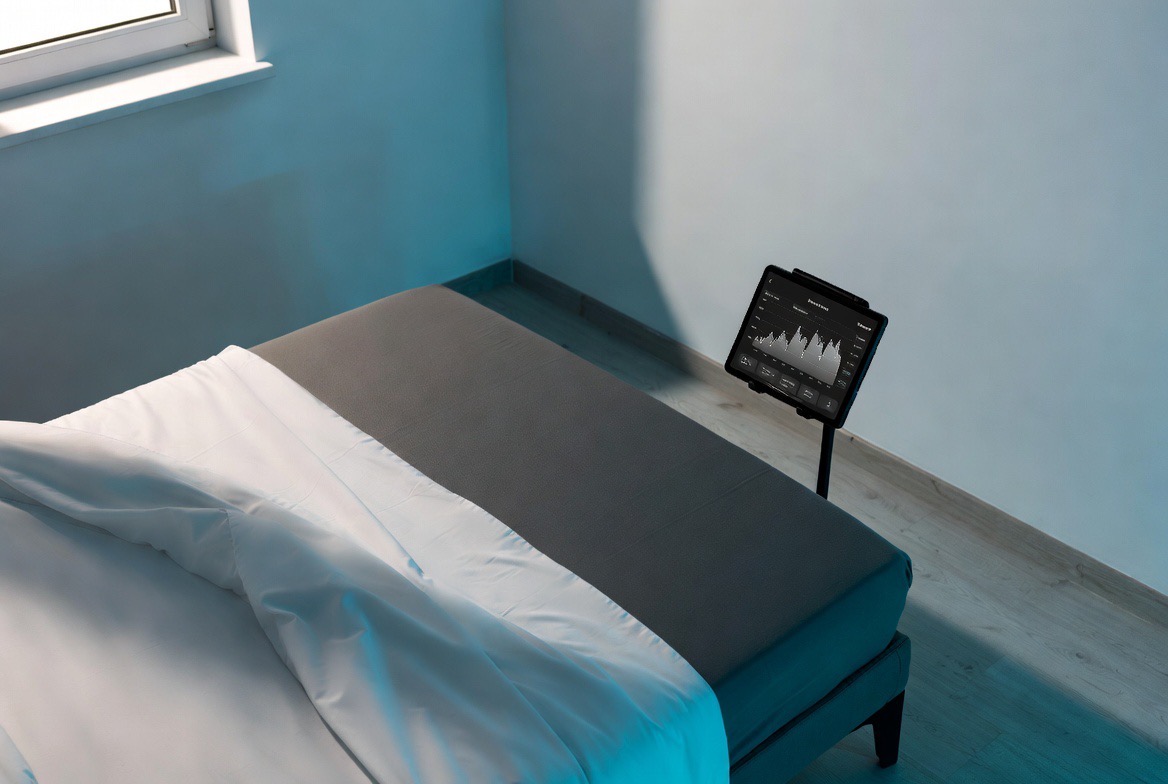
- The temperature science is solid; the device claims are oversold. Cooling the body to fall asleep and deepen slow-wave sleep is settled physiology — warm baths, cool rooms, and cool surfaces all shorten sleep onset and improve sleep in controlled trials.2 The leap from “cooling helps” to “this $4,000 mattress is the way to get it” is where the evidence thins.
- Cooler surface, deeper sleep — modestly. A 2024 crossover trial found a conductive cooling mattress added roughly 7–8 minutes of deep sleep and lowered resting heart rate; a one-week mattress-cover study reported larger deep- and REM-sleep gains, but that one was run by the device’s maker.13
- The specific-device evidence is largely manufacturer-generated. The most-cited Eight Sleep data comes from the company’s own researchers, with no large independent RCT confirming the premium device beats a cheap cooler. The onboard sleep-stage tracking inherits every consumer-tracker limitation.67
- A cheaper cooler captures most of the benefit. The mechanism is heat removal, and a fan, a cracked window, or a sub-$1,000 water cooler all remove heat. The premium tier buys two-zone control, automation, and tracking — convenience, not a separate physiological effect.4
- What a smart cooling mattress actually is
- The mechanism: why a cooler body falls asleep faster
- The evidence: cooling works, the device claims wobble
- The manufacturer-data gap
- The tracking question
- How to actually get the benefit: a tiered view
- Price, subscriptions, and other grey areas
- Open questions
- What this article is not saying
- References
What a smart cooling mattress actually is
Strip away the app and the marketing and these products do one physical thing: they move heat into or out of the surface you sleep on. The Eight Sleep Pod and the ChiliPad/Sleepme line do it by circulating temperature-controlled water through a thin grid of tubing in a cover that sits on top of your existing mattress. BedJet does it with forced air. All of them let you set a target temperature, hold it through the night, and — on the higher-end units — schedule it to drop in the early night and rise toward morning. The premium Eight Sleep version adds two independent zones so partners can run different temperatures, onboard sensors that estimate your sleep stages and heart rate, and an algorithm that nudges the temperature automatically.
That feature stack is worth separating into two very different categories before grading anything. The first is thermal: heating and cooling the surface. This is the part with decades of physiology behind it, and it is the same whether the heat is moved by a $4,000 mattress or a $30 box fan. The second is informational and automated: the tracking, the scores, the auto-adjusting algorithm, the two-zone control. That second category is what justifies the price gap over a simple cooler — and it is the category where the evidence is thinnest. This piece sits in our sleep coverage because the cooling mattress is a near-perfect case study in confusing a real mechanism with a specific, expensive product.
The mechanism: why a cooler body falls asleep faster
Your body runs on a daily core body temperature (CBT) rhythm, and sleep is wired into its downslope. In the hours before bed, CBT begins to fall, and sleep onset reliably occurs while it is dropping; you wake as it bottoms out and climbs again. The way the body drops core temperature is counterintuitive: it warms the skin of the hands and feet. Blood vessels in those distal regions dilate — distal vasodilation — shunting warm blood to the surface so heat radiates away into the surrounding air. The bigger the gap between warm extremities and a cooler core, measured as the distal-proximal skin temperature gradient, the faster sleep tends to arrive.5
A cool sleeping surface plugs straight into this loop. By giving the warmed skin somewhere to dump heat — a cool cover pulls heat away by conduction far more efficiently than still air — it accelerates the core-temperature drop the brain is waiting on. The signal it pulls toward is faster sleep onset and, in the first sleep cycles, deeper slow-wave sleep (SWS), the large-amplitude N3 stage most associated with feeling restored. Experimental work shows that pushing greater heat loss during sleep increases the depth and duration of N3 and quiets the heart.3 This is also why the classic “warm bath an hour before bed” trick works: the bath warms the skin, triggers vasodilation, and the rebound heat loss afterward drops core temperature into the sleep-friendly zone.2
The science isn’t “a cold bed feels nice.” It’s that dropping core temperature is one of the body’s actual triggers for sleep — and a cool surface helps pull that trigger.
There is a thermoneutral window to respect, though. Cooling helps because it assists the natural drop; cooling too aggressively can backfire, because once skin temperature falls far enough the body constricts those distal vessels to conserve heat, which is the opposite of what you want at sleep onset. The research on bedroom climate captures this as a band rather than “colder is always better”: sleep efficiency is highest in a moderate range, with measurable losses as the room drifts warm.4 The useful target is a surface cool enough to permit heat loss without driving you into a shiver — warm skin, cool core, not a cold bed.
The evidence: cooling works, the device claims wobble
Start with the strong layer, because it is genuinely strong. The meta-analytic case that manipulating body and surface temperature improves sleep does not rest on any gadget. A systematic review and meta-analysis of passive body heating — warm baths and showers timed before bed — pooled thirteen quantitative datasets and found that water heating of roughly 40–42.5°C improved self-rated sleep quality and efficiency, and, when timed one to two hours before bed, shortened sleep-onset latency by around ten minutes.2 Ambient-temperature work points the same direction from the other side: in community-dwelling older adults, sleep efficiency peaked in a moderate range and fell measurably as nighttime temperature rose beyond it, with warmer nights also linked to autonomic disruption and higher heart rate.4 Temperature is not a minor lever on sleep; it is one of the primary ones.
Now the layer specific to active cooling surfaces, which is thinner and more mixed. A 2024 randomized crossover trial of a high-heat-capacity conductive cooling mattress found a real but modest effect: roughly seven to eight extra minutes of deep (N3) sleep per night and a drop in resting heart rate of a couple of beats per minute, consistent with greater overnight heat loss calming the cardiovascular system.3 That is a believable, mechanism-consistent result — and also a reminder of scale: seven minutes of deep sleep is worth having, but it is not the transformation the marketing implies. A separate 2025 study of a temperature-controlled mattress cover in healthy adults likewise reported improvements in perceived sleep and some objective measures, while being candid that effects varied between people.6
| Cooling approach | What the evidence shows | Independence of the data |
|---|---|---|
| Cooler room / ambient temperature | Sleep efficiency peaks in a moderate range; warmer nights cut efficiency and raise heart rate.4 | Independent observational + controlled work. |
| Pre-bed warm bath/shower (rebound cooling) | ~10-minute shorter sleep onset; better efficiency and slow-wave sleep in meta-analysis.2 | Independent meta-analysis, 13 datasets. |
| Conductive cooling mattress (generic) | ~7–8 extra minutes of deep sleep; lower resting heart rate in a crossover RCT.3 | Independent randomized crossover; small. |
| Eight Sleep Pod cover (one-week study) | Larger deep- and REM-sleep gains and improved HRV — but in a free-living, maker-run design.1 | Manufacturer-affiliated; no clinical control arm. |
| Premium device vs cheap cooler | No head-to-head trial showing the expensive unit beats a fan or sub-$1,000 cooler.1 | Evidence gap, not evidence of equivalence. |
The manufacturer-data gap
Here is the part the glossy reviews skip. The single most-cited dataset on the Eight Sleep Pod specifically — a one-week, free-living study reporting that cooler temperatures in the first half of the night improved deep sleep by about 22% and REM by about 25%, alongside better heart rate and HRV — was conducted by researchers affiliated with the company that makes the device.1 That does not make the numbers fraudulent, and the direction of effect lines up with the independent physiology. But manufacturer-run studies carry well-documented optimism baked in: outcome choices, comparison conditions, and analysis decisions all tend to favor the product, and a free-living design with no blinded clinical control arm cannot separate the cooling from placebo and expectation. When you have paid four thousand dollars for a bed that tells you it is improving your sleep, you are primed to sleep better and to rate it better.
The honest summary is a gap, not a debunking. The principle the device runs on is well-supported by independent science. The specific claim — that this particular premium device delivers a meaningfully larger benefit than a cheaper way of removing the same heat — has no large, independent, peer-reviewed RCT behind it. That is exactly why the “Eight Sleep outperforms in independent trials” claim grades WEAK rather than MODERATE: the absence of head-to-head evidence is not evidence the premium tier is worthless, but it is the absence of the proof its price implies.1
The tracking question
The other half of the premium pitch is measurement: the mattress watches your night and hands back a sleep score, time in each stage, and a recovery readout. Treat that with the same caution as any consumer sleep tracker, because the physics is similar and the limitations are well-mapped. A large multicenter validation of eleven consumer sleep trackers found that the better devices estimate total sleep time reasonably but that sleep-stage classification is the weak point, with stage-detection sensitivity scattered widely below clinical accuracy.7 A 2024 meta-analysis of wrist-worn trackers against polysomnography reached the same verdict: duration is decent, the minute-by-minute breakdown of light, deep, and REM is only fair.8
A mattress sensor has a harder job than a finger or wrist device in one respect — it infers your state from movement and ballistic signals through a layer of foam, with no direct contact with your pulse or skin temperature — and an easier job in another, since it never has to be worn. The net is the same honest framing: trust the broad trend of how long and how consistently you slept, and hold the per-stage minutes and the single nightly “score” loosely. If a number on the app starts dictating how you feel about a night you actually slept fine through, the tracking has stopped helping. We make the fuller version of this argument in our read on the Oura ring and what sleep trackers really measure.
How to actually get the benefit: a tiered view
Place the options on a spectrum of cost versus how much of the real, evidence-backed cooling effect each one captures. This is a calibration guide, not a prescription, and not a buying recommendation for any brand.
Foundational — remove heat for almost nothing. The mechanism is heat loss, and the cheapest interventions deliver most of it. A cooler bedroom set toward the moderate efficient range, breathable bedding, a fan for airflow, and the pre-bed warm bath or shower that triggers rebound cooling are all independently evidence-supported and cost little or nothing.24 For most people most of the time, this tier is the whole story.
Research-curious — a dedicated surface cooler. If you run hot, sleep with a partner who runs cold, or live somewhere a fan can’t keep up, a water- or air-based cooling pad or cover targets the surface directly, and the generic-device evidence supports a modest deep-sleep and heart-rate benefit.3 Sub-$1,000 single-zone units exist and capture the thermal effect without the premium tier’s subscription and tracking layer.
Experimental — the premium automated smart mattress. The top tier — two-zone control, auto-adjusting algorithms, onboard tracking, a recurring app fee — buys convenience and data, not a separate physiological effect that the independent literature can confirm.1 If the automation and partner zoning genuinely solve a problem you have, that is a reasonable luxury purchase. Buying it expecting a clinically distinct result over a cheaper cooler is buying ahead of the evidence.
The most defensible way to think about every cooling product is to separate the lever from the brand. The lever — dropping body and surface temperature at the right time — is one of the best-supported sleep interventions there is, and you can pull it with a window, a fan, or a bath before you ever spend four figures. The brand is selling you automation, zoning, and a nightly score on top of that lever, and those extras are convenience features with thin independent backing, not a second mechanism. The Manual lays the sleep-tech category out side by side — cooling, tracking, light, sound — with what each one’s evidence genuinely supports and where the consumer hardware is selling precision it doesn’t have. See the Manual →
Price, subscriptions, and other grey areas
A few things deserve a flag beyond the science. First, price and ongoing cost: the premium smart mattresses sit at roughly $2,000 to $5,000, and several lock their most useful analytics and automation behind a recurring monthly subscription, so the device is an ongoing expense rather than a one-time purchase. That recurring fee is part of the honest accounting, and it is the single biggest reason the “worth it over a cheaper cooler” claim grades WEAK.1
Second, the cooling has limits: water- and air-based systems pull heat well but can struggle to hold a deep chill in a hot, humid room, and the pump or fan unit makes some noise and needs occasional water top-ups and cleaning. Third, two-zone marketing: dual-zone control is genuinely useful for couples with mismatched thermal preferences — one of the clearer real-world wins of the premium tier — but it is a comfort and relationship feature, not a sleep-architecture upgrade. Fourth, data: a continuous record of your sleep, heart rate, and movement is sensitive health information held by a private company; read the policy on storage and sharing. None of these is a reason to avoid cooling. They are part of deciding which tier of it to pay for.
Open questions
Several specific gaps keep the device-level verdict at emerging-to-weak rather than solid. There is no large, independent, blinded RCT comparing a premium smart mattress head-to-head against a cheap fan or a sub-$1,000 cooler, so the central marketing claim — that the expensive unit is meaningfully better — is untested where it matters most. The best-known device-specific data is manufacturer-run and free-living, which cannot separate cooling from expectation. The onboard tracking has not been validated against polysomnography to the standard the scores imply, and like any consumer tracker its algorithm can change with a firmware update. And almost all of the cooling-surface trials run for a week or two in healthy adults, leaving long-term adherence, durability of the effect, and performance in people with insomnia or sleep apnea genuinely under-studied. These are the questions a buyer should keep open.
What this article is not saying
This is not “cooling your sleep is a gimmick.” The opposite: dropping body and surface temperature at the right time is one of the most reliable, best-supported sleep levers there is, and getting your bedroom and body cooler is one of the highest-yield, lowest-cost changes most people can make.2
This is not “the premium devices don’t work.” They remove heat, and removing heat helps; the automation and zoning solve real comfort problems for some people. The narrower point is that their specific superiority over far cheaper cooling has not been independently demonstrated, and their tracking sells more precision than it has.17
And this is not a recommendation to buy, or not buy, any particular mattress. The point is calibration: cool the body, because the science behind that is strong; treat the four-figure smart mattress as a convenience-and-data luxury rather than a proven clinical upgrade; and never let a nightly sleep score override how a night actually felt. Used that way — the same way our broader read on weighted blankets and sleep argues for matching the spend to the evidence — cooling is a genuinely useful tool. Sold as a $4,000 cure, it is promising a precision and a magnitude the data does not support.
References
- Moyen NE, Ediger TR, Taylor KM, et al. Sleeping for One Week on a Temperature-Controlled Mattress Cover Improves Sleep and Cardiovascular Recovery. Bioengineering (Basel). 2024;11(4):352. DOI · PMID 38671774
- Haghayegh S, Khoshnevis S, Smolensky MH, Diller KR, Castriotta RJ. Before-bedtime passive body heating by warm shower or bath to improve sleep: A systematic review and meta-analysis. Sleep Med Rev. 2019;46:124-135. DOI · PMID 31102877
- Vogt KE, Kulkarni A, Pandey R, et al. Enhanced conductive body heat loss during sleep increases slow-wave sleep and calms the heart. Sci Rep. 2024;14:4669. DOI · PMID 38409252
- Baniassadi A, Manor B, Yu W, Travison T, Lipsitz L. Nighttime Ambient Temperature and Sleep in Community-Dwelling Older Adults. Sleep Adv. 2023;4(1):zpad046. DOI · PMID 37745067
- Vandeputte R, Vandenberghe A, De Roeck D, et al. Core body temperature changes before sleep are associated with nocturnal heart rate variability. J Appl Physiol. 2023;134(6):1468-1477. DOI · PMID 37102698
- Moyen NE, Barnes MJ, Perry BG, et al. Under the Covers: The Effect of a Temperature-Controlled Mattress Cover on Sleep and Perceptual Measures in Healthy Adults. BioMedInformatics. 2025;7(4):55. DOI · PMC12550930
- Chee NIYN, Ghorbani S, Golkashani HA, Leong RLF, Ong JL, Chee MWL. Accuracy of 11 Wearable, Nearable, and Airable Consumer Sleep Trackers: Prospective Multicenter Validation Study. JMIR Mhealth Uhealth. 2023;11:e50983. DOI · PMID 38051587
- Chinoy ED, Cuellar JA, Jameson JT, Markwald RR. Performance of consumer wrist-worn sleep tracking devices compared to polysomnography: a meta-analysis. J Clin Sleep Med. 2024;20(7):1147-1162. DOI · PMID 38450536