Baxdrostat is the first drug to block aldosterone at its source. The FDA just approved it.
On May 18, 2026, the FDA approved baxdrostat — brand name Baxfendy — as the first aldosterone synthase inhibitor ever cleared for hypertension. This is not another me-too pill. For the first time, a drug shuts off the enzyme that makes aldosterone instead of just blocking the receptor downstream of it. That distinction is the whole story. Roughly 10 million American adults have blood pressure that won't come down on three or more drugs, and a large share of those cases are aldosterone-driven. Here is what the BaxHTN trial actually showed, why the mechanism matters, and the one safety number every prescriber will be watching.
How this article was built: Primary sources: the FDA approval announced May 18, 2026 (reported by the American College of Cardiology and the AstraZeneca media release), the phase 3 BaxHTN trial published in the New England Journal of Medicine in 2025, the published rationale-and-design paper for the BaxHTN/BaxAsia/Bax24 program, and the American Heart Association epidemiology on apparent treatment-resistant hypertension.
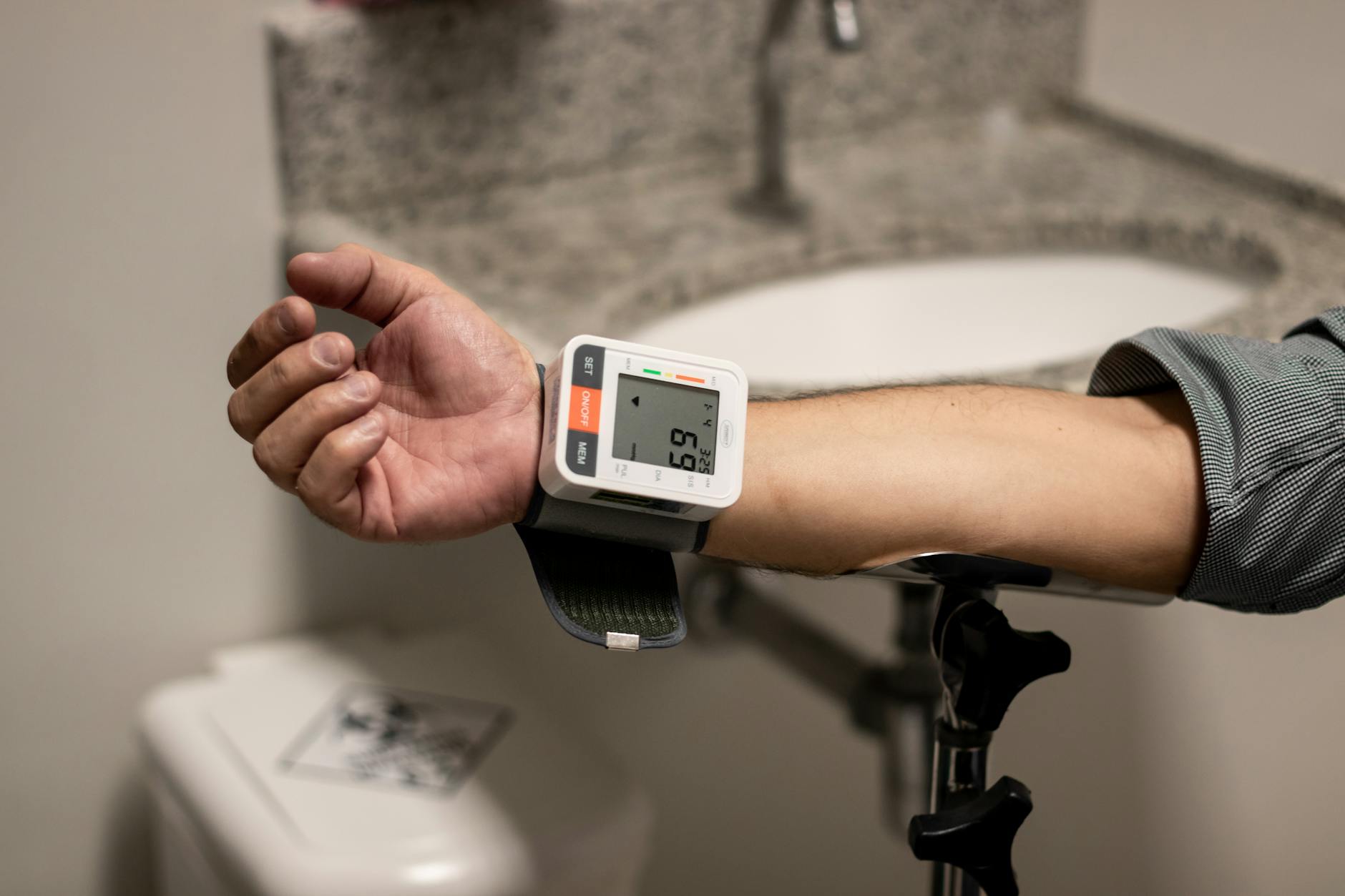
- On May 18, 2026 the FDA approved baxdrostat (Baxfendy) — the first-in-class aldosterone synthase inhibitor for uncontrolled / resistant hypertension.
- In the phase-3 BaxHTN trial (n=796), it cut systolic blood pressure ~8.7–9.8 mmHg beyond placebo, on top of standard care.
- It works by shutting off aldosterone production at the source (CYP11B2) — a cleaner target than older mineralocorticoid blockers like spironolactone.
- The watch item: dose-dependent severe hyperkalemia (potassium above 6.0 mmol/L). It ships with potassium monitoring — not a start-or-stop-it-yourself drug.
What the FDA actually approved
On May 18, 2026, the FDA approved baxdrostat under the brand name Baxfendy. The indication is specific and worth quoting plainly: it is an add-on treatment to lower blood pressure in adults whose hypertension is not adequately controlled on their existing medications. It is not a first-line drug. It is the drug you reach for when the standard regimen has already failed to get the number down. It comes as a once-daily oral tablet in 1 mg and 2 mg strengths, and AstraZeneca expects it on US pharmacy shelves by early June 2026.
The phrase that matters in the FDA announcement is "first-in-class." Baxdrostat is the first aldosterone synthase inhibitor — a drug that targets the enzyme CYP11B2, encoded by the gene of the same name, which the adrenal gland uses to manufacture aldosterone. No approved hypertension drug had ever worked at that exact point in the pathway before. Every other tool that touches aldosterone works one step downstream.
That sounds like a technicality. It is not. It is the reason this approval is a genuine event rather than another line extension, and it is the reason cardiologists who treat hard cases have been watching this molecule for years.
Why blocking the enzyme beats blocking the receptor
Aldosterone is the hormone that tells your kidneys to hold onto sodium and water and dump potassium. Hold onto more sodium and water, and your blood volume rises, and your blood pressure with it. In a meaningful fraction of people with stubborn hypertension, the adrenal gland is simply making too much aldosterone, and that excess is the engine driving the pressure that won't come down.
The existing answer to this is the mineralocorticoid receptor antagonist class — spironolactone and eplerenone. These drugs let aldosterone keep circulating at high levels but block the receptor it would otherwise dock onto. It works. Spironolactone is one of the most effective add-ons in resistant hypertension. But the signal aldosterone carries is only partly silenced, because the hormone is still there, still elevated, still pressing on every other tissue that has a receptor for it. And spironolactone is dirty — it hits the androgen and progesterone receptors too, which is why it produces breast tenderness and gynecomastia in men and menstrual disruption in women often enough to make patients quit.
Baxdrostat works one step earlier. It turns down the enzyme that makes the hormone in the first place, so circulating aldosterone falls rather than just being blocked at one destination. You are not jamming the receptor — you are cutting the supply of the signal at its origin. That is a cleaner intervention in principle, and it sidesteps the sex-hormone side effects that come from spironolactone's lack of selectivity.
Spironolactone blocks the door aldosterone walks through. Baxdrostat shuts off the factory that builds aldosterone. That is the whole difference, and it is not a small one.
The engineering challenge that held this class back for two decades is selectivity. The enzyme that makes aldosterone, CYP11B2, is nearly a structural twin of CYP11B1 — the enzyme that makes cortisol, your primary stress hormone. Hit the wrong one and you knock out cortisol production, which is dangerous. Baxdrostat was designed to be highly selective for CYP11B2 over CYP11B1, and in the trial program that selectivity held up: there were no reported cases of adrenal insufficiency, the failure mode everyone was watching for. That is the breakthrough underneath the approval — not just blocking aldosterone synthesis, but doing it without collateral damage to the cortisol axis.
The aldosterone problem in resistant hypertension
To understand why this drug matters, look at the scale of the problem it targets. Hypertension affects roughly 116 million American adults, and around 92 million of them do not have it controlled. A subset of those — by American Heart Association estimates, on the order of 10 million US adults — have apparent treatment-resistant hypertension: blood pressure that stays high despite three or more drugs, including a diuretic, at adequate doses.
These are the patients who exhaust the playbook. They are on a calcium channel blocker, an ACE inhibitor or ARB, and a thiazide, and the number still won't budge. For a large share of them, the reason is aldosterone excess that the standard three-drug regimen does nothing to address. This is exactly the population baxdrostat was built for, and exactly the population the BaxHTN trial enrolled. Uncontrolled blood pressure is not a cosmetic lab value — it is the single largest modifiable driver of stroke, heart failure, kidney failure, and cardiovascular death. Moving these patients into control is high-stakes.
The BaxHTN trial: the numbers that mattered
The approval rests on BaxHTN, a multinational, randomized, double-blind, placebo-controlled phase 3 trial published in the New England Journal of Medicine in 2025. After a placebo run-in, 796 patients were randomized 1:1:1 to baxdrostat 2 mg, baxdrostat 1 mg, or placebo, once daily, on top of their existing standard-of-care regimen. Patients had to have seated office systolic blood pressure of 140 mmHg or higher despite stable treatment with two drugs (uncontrolled) or three or more drugs including a diuretic (resistant). The majority — 73% — met the stricter resistant-hypertension bar. These were genuinely hard cases.
At 12 weeks, the placebo-adjusted reduction in seated systolic blood pressure was 8.7 mmHg for the 1 mg dose and 9.8 mmHg for the 2 mg dose. From baseline, the 2 mg arm fell 15.7 mmHg and the 1 mg arm fell 14.5 mmHg. Baxdrostat met its primary endpoint and all secondary endpoints.
baxdrostat 1 mg
−14.5 from baseline
baxdrostat 2 mg
−15.7 from baseline
12-week core period
73% resistant HTN
Put that in clinical context. A placebo-adjusted systolic reduction of roughly 9 to 10 mmHg, in a population that has already failed multiple drugs, is meaningful. Epidemiologically, every 10 mmHg of sustained systolic reduction is associated with a substantial drop in stroke and major cardiovascular events. Getting that magnitude in patients who had nowhere left to go is the result that justified the approval. The 2 mg dose did slightly more than the 1 mg dose — a clean dose-response — and the trade for that extra millimeter or two shows up in the safety data.
The hyperkalemia watch
Here is the number every prescriber will track. Because aldosterone normally drives potassium out of the body, suppressing it does the opposite: potassium goes up. That is the predictable, mechanism-linked risk of any drug in this lane, and it showed up in BaxHTN exactly where you would expect it.
Severe hyperkalemia — blood potassium above 6.0 mmol/L — occurred in 0.4% of placebo patients, 2.3% on baxdrostat 1 mg, and 3.0% on baxdrostat 2 mg. The signal is real and it is dose-dependent. It is also, in absolute terms, manageable: a few percent, in a high-risk population, in a trial setting with monitoring. High potassium is not a nuisance side effect — at the extreme it disrupts heart rhythm — which is why this drug will come with potassium monitoring, particular caution in patients with reduced kidney function, and careful handling alongside ACE inhibitors, ARBs, or potassium-sparing agents that push potassium the same direction. The reassuring half of the safety story is the cortisol axis: no cases of adrenal insufficiency were reported, which is the clearest evidence that the CYP11B2 selectivity held up in humans.
The honest read on baxdrostat: a real first-in-class mechanism, a clinically meaningful blood-pressure drop in patients who had run out of options, and a single dominant safety variable — potassium — that is predictable, monitorable, and dose-dependent. That is a good profile for a drug aimed at hard cases. It is not a reason for anyone with ordinary, well-controlled hypertension to ask for it.
Who this drug is actually for
The label and the trial point at the same patient. Below is the framing I'd use — not a prescribing guide, but the shape of who is and isn't in the picture.
Adults whose blood pressure stays above goal despite three or more well-dosed drugs including a diuretic, especially where workup points to aldosterone excess. This is the BaxHTN population. The add-on indication, the mechanism, and the trial evidence line up directly. For these patients baxdrostat is a genuinely new option where the prior shelf was thin.
Patients not yet at the resistant threshold but uncontrolled on two agents, and patients who would otherwise get a mineralocorticoid receptor antagonist but can't tolerate spironolactone's sex-hormone side effects. The selectivity advantage is real here. Requires a physician weighing the hyperkalemia risk against the specific situation.
This is not a starter drug and was never studied as one. Anyone whose pressure is controlled on standard therapy, or who hasn't yet optimized a first-line regimen and lifestyle, has no business reaching for a brand-new add-on with a potassium signal. Newer and first-in-class is not the same as better-for-you. The value of baxdrostat is concentrated in the hard cases.
What this approval does not mean
This is not a cure for hypertension, and it is not a replacement for the first-line drugs that already control most people's blood pressure cheaply and safely. The win here is narrow and real: a mechanism that didn't exist in approved form before, aimed at the patients the existing playbook leaves behind.
This is not a green light to ask your doctor to switch you onto the newest pill. If your pressure is controlled, the rational move is to keep doing what's working. New drugs carry the cost of unknowns — the long tail of rare effects that only surfaces once millions of people take a molecule outside the controlled conditions of a trial. That risk is worth taking when the alternative is uncontrolled, organ-damaging pressure. It is not worth taking for the novelty.
And this is not the end of the aldosterone story. Baxdrostat is the first of its class across the FDA line, with a broader trial program — including dedicated studies in different populations — still reading out. The receptor-blockers had a thirty-year head start; the synthase-inhibitors just arrived. For the right patient, that's the part that matters: there is now a tool that works where the old ones didn't, and it cuts the signal at its source instead of jamming the door.
Baxdrostat is a precise illustration of a principle that runs through the whole signaling framework — that cutting a hormone at its source behaves differently from blocking it at the receptor, and that selectivity is what separates a clean intervention from a messy one. The Manual works through the same logic across the hormonal-axis compounds: where to intervene in a pathway, what the feedback does when you do, and how to read selectivity claims without taking them on faith. See the Manual →
References
- Flack JM, Azizi M, Brown JM, et al. Efficacy and safety of baxdrostat in uncontrolled and resistant hypertension (BaxHTN). N Engl J Med. 2025;393(14):1363-1374. DOI: 10.1056/NEJMoa2507109. PMID: 40888730.
- American College of Cardiology. FDA Update: Agency Approves Baxdrostat to Treat Adults With HTN. Latest in Cardiology, May 19, 2026. https://www.acc.org/latest-in-cardiology/articles/2026/05/19/15/49/fda-update-agency-approves-baxdrostat-to-treat-adults-with-htn
- AstraZeneca. Baxfendy approved in the US as the first and only aldosterone synthase inhibitor treatment for adults with hypertension. Media release, May 18, 2026. https://www.astrazeneca.com/media-centre/press-releases/2026/Baxdrostat-MNR-2026.html
- AstraZeneca. Baxdrostat demonstrated statistically significant and clinically meaningful reduction in systolic blood pressure in patients with hard-to-control hypertension in the BaxHTN Phase III trial. Media release, August 30, 2025. https://www.astrazeneca.com/media-centre/press-releases/2025/baxdrostat-demonstrated-statistically-significant-clinically-meaningful-reduction-sbp-patients-hard-control-hypertension-baxhtn-phase-iii-trial.html
- European Society of Cardiology. Blood-pressure reductions with baxdrostat in patients with uncontrolled or resistant hypertension. ESC Press Office, Hot Line, ESC Congress 2025. https://www.escardio.org/The-ESC/Press-Office/Press-releases/Blood-pressure-reductions-with-baxdrostat-in-patients-with-uncontrolled-or-resistant-hypertension
- Williams B, Flack JM, Azizi M, et al. Baxdrostat for uncontrolled and resistant hypertension: rationale and design of the Phase 3 clinical trials BaxHTN, BaxAsia, and Bax24. 2025. PMC12586160. https://www.ncbi.nlm.nih.gov/pmc/articles/PMC12586160/
- Carey RM, Calhoun DA, Bakris GL, et al. Resistant Hypertension: Detection, Evaluation, and Management — A Scientific Statement From the American Heart Association. Hypertension. 2018;72(5):e53-e90. DOI: 10.1161/HYP.0000000000000084. PMID: 30354828.
- Persell SD. Prevalence of resistant hypertension in the United States, 2003-2008. Hypertension. 2011;57(6):1076-1080. DOI: 10.1161/HYPERTENSIONAHA.111.170308. PMID: 21502568.
- Freeman MW, Halvorsen YD, Marshall W, et al. Phase 2 trial of baxdrostat for treatment-resistant hypertension (BrigHTN). N Engl J Med. 2023;388(5):395-405. DOI: 10.1056/NEJMoa2213169. PMID: 36342143.
- Tobe SW. Baxdrostat and the future of aldosterone-targeted therapy. Hypertens Res. 2025. DOI: 10.1038/s41440-025-02415-5. https://www.nature.com/articles/s41440-025-02415-5