Tretinoin and retinoids for skin aging: what the evidence actually shows
I'll say it plainly: topical tretinoin is the single most evidence-backed anti-aging molecule you can put on your face. Not a probiotic, not a peptide serum, not a $300 cream — a cheap, decades-old prescription retinoid with randomized, double-blind, vehicle-controlled trials behind it going back to the 1980s. The trials measured real things: fine wrinkles fading, hyperpigmentation lightening, new collagen laid down in biopsied skin. But the headline hides three caveats the marketing never mentions — it takes months, it irritates before it improves, and the over-the-counter "retinol" most people actually buy is a weaker, thinner-evidenced cousin. Here is the honest, cited read on what retinoids do, who they're for, and where the gold standard earns its name.
How this article was built: Primary sources retrieved from PubMed: the Weiss et al. 1988 vehicle-controlled tretinoin trial in JAMA; the Griffiths et al. 1994 (JAAD) and 1995 (Archives of Dermatology) tretinoin RCTs; the Bagatin/Sumita group's randomized tretinoin and adapalene trials (JEADV, Int J Dermatol, Eur J Dermatol); the Chien et al. 2022 retinol-vs-tretinoin biomarker RCT in JAMA Dermatology; and two recent systematic reviews / network meta-analyses (Am J Clin Dermatol 2024; Scientific Reports 2025).
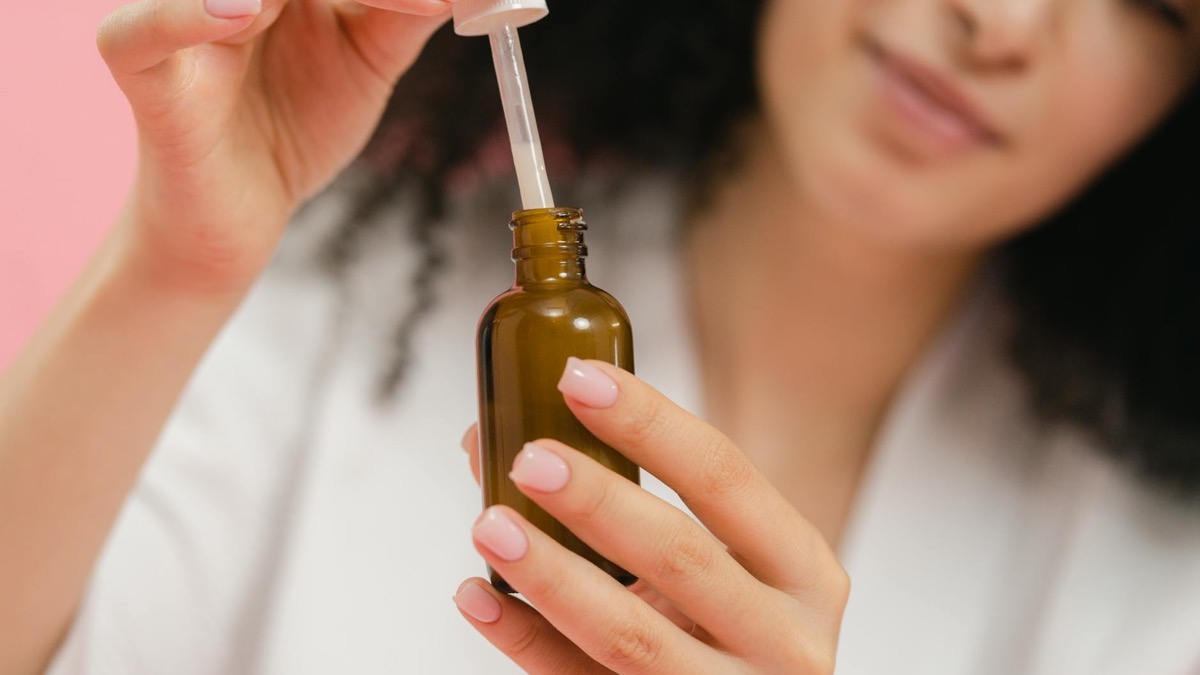
- Topical tretinoin (all-trans retinoic acid) is the most evidence-backed anti-aging molecule in dermatology — randomized, double-blind, vehicle-controlled trials going back to 1988 show real improvement in photoaging, fine wrinkles, and pigmentation.
- The key biological finding: tretinoin doesn't just exfoliate. It switches on retinoic-acid-receptor signaling that lays down new collagen and curbs the enzymes (MMPs) that break it down — remodeling sun-damaged skin, not just resurfacing it.
- The honest caveats: it irritates before it improves ("retinization"), and it works on a timescale of months, not weeks — 12 to 24+ weeks of consistent use, and you have to keep using it.
- Over-the-counter retinol is real but weaker and thinner-evidenced than prescription tretinoin; the further down the potency ladder you go (retinol, retinyl esters), the gentler — and the less proven.
- Who it's for: anyone serious about photoaging who can tolerate the ramp-up and commit to sunscreen. Who it's not for: anyone pregnant or trying to conceive.
- What tretinoin and the retinoids actually are
- How retinoids work: receptors, collagen, turnover
- The prescription tretinoin evidence — the strong stuff
- OTC retinol and the rest of the ladder
- Adapalene and the other retinoids
- The potency-vs-irritation tradeoff
- Retinization and the realistic timeline
- A tiered way to think about it
- Grey areas and open questions
- What this article is not saying
- References
What tretinoin and the retinoids actually are
"Retinoid" is the family name for vitamin A and its derivatives. The molecule that actually does the work in skin is retinoic acid — the biologically active form your skin cells respond to. Tretinoin is retinoic acid (all-trans retinoic acid), applied directly. That's why it's prescription-only and why it's the benchmark: you're putting the active form on the skin, no conversion required.
Everything sold over the counter is a step or two removed from that active form, and your skin has to convert it. Retinol — the most common OTC ingredient — gets oxidized to retinaldehyde, then to retinoic acid, a two-step conversion that loses potency at each rung. Retinaldehyde (retinal) is one step closer to the active form than retinol. Retinyl esters (retinyl palmitate, retinyl acetate) sit furthest from the action and are the weakest. Adapalene and tazarotene are synthetic retinoids; adapalene 0.1% is the one that went over the counter for acne. Picture a ladder: retinoic acid at the top, then retinaldehyde, then retinol, then retinyl esters at the bottom. The higher you climb, the more potent — and, as we'll see, the more irritating.
Why does this matter for aging skin? Because the headline "retinoids fight wrinkles" is true at the top of that ladder and gets progressively shakier as you descend. The marketing flattens the ladder into one word. The evidence does not.
How retinoids work: receptors, collagen, turnover
Retinoic acid is a hormone-like signaling molecule. It enters skin cells and binds nuclear retinoic acid receptors (RARs) and retinoid X receptors (RXRs), which act as switches on gene transcription — turning specific genes up and others down. This receptor binding is the whole mechanistic spine, and it's why retinoids do far more than slough off dead surface cells.
Two things happen that matter for aging skin. First, epidermal turnover and differentiation normalize: the epidermis thickens in a healthy way, cells differentiate more orderly, and the compacted, dull surface of photoaged skin remodels. Older vehicle-controlled work documented this directly — tretinoin produced significant epidermal thickening and increased dermal vascularity versus vehicle on histology.[5] Second, and more importantly for the long game, retinoic acid signaling shifts the balance of dermal collagen. Photoaging is, at the molecular level, a story of collagen loss: ultraviolet light ramps up matrix metalloproteinases (MMPs) — enzymes that chew up collagen — while suppressing new collagen synthesis. Retinoids push back on both sides of that equation.
This isn't hand-waving. In a randomized comparative trial, tretinoin treatment increased dermal type I collagen on immunohistochemistry alongside reduced elastosis.[7] Mechanistic work in human dermal models showed retinoic acid up-regulates collagen synthesis pathways — including via insulin-like growth factor signaling — while opposing the UVA-driven collagen breakdown.[8] And a 2022 JAMA Dermatology biomarker RCT confirmed that retinoic-acid-receptor signaling (CRABP2 induction) tracks with the clinical effect, with changes in a type IV collagenase (MMP2) correlating with improvement in fine wrinkles.[11] The takeaway: retinoids remodel the dermis. That's the difference between a retinoid and an exfoliant, and it's why the effect is durable rather than cosmetic.
The prescription tretinoin evidence — the strong stuff
Here's where tretinoin earns the "gold standard" label, and it's not a marketing line — it's the literature. The foundational trial is Weiss and colleagues, published in JAMA in 1988: a 16-week randomized, double-blind, vehicle-controlled study where each patient applied tretinoin to one forearm and vehicle to the other, with half also treating the face. Every patient showed statistically significant improvement in photoaging on the tretinoin forearm but not the vehicle forearm; 14 of 15 tretinoin-treated faces improved versus none of the vehicle faces, with confirming histologic changes.[1] A within-subject, placebo-controlled design where the treated side wins and the control side doesn't is about as clean as topical dermatology gets.
It replicated. Griffiths et al. ran a vehicle-controlled tretinoin trial in Chinese and Japanese patients and found that after 40 weeks, hyperpigmented lesions were lighter or much lighter in 90% of the tretinoin group versus 33% on vehicle, with a histologically confirmed ~41% drop in epidermal pigmentation.[3] Another Griffiths trial directly compared 0.1% and 0.025% tretinoin against vehicle over 48 weeks; both concentrations produced significant improvement in facial photoaging and ~30% epidermal thickening versus vehicle.[5] More recent randomized work from the Bagatin group keeps confirming it — tretinoin 0.05% cream improved photoaging scores (a ~20% reduction) and ultrasonographic markers of dermal aging,[9] and tretinoin increased dermal collagen I while reducing elastosis on biopsy.[7]
And the systematic reviews land in the same place. A 2024 systematic review in Am J Clin Dermatol states flatly that tretinoin is the gold-standard topical anti-aging agent, working through epidermal growth and differentiation plus collagenase inhibition, with most comparator agents proving equal or weaker.[12] A 2025 Bayesian network meta-analysis of 23 RCTs (3,905 participants) ranked tretinoin, retinol, and isotretinoin among the agents that significantly improved fine wrinkles, with tretinoin showing the most favorable safety profile of the effective options.[13] When the within-subject RCTs, the long-duration vehicle-controlled trials, the histology, and the meta-analyses all point the same direction, you're allowed to call it settled. For prescription tretinoin in photoaging, the evidence is strong.
improved vs 0/vehicle
Weiss, JAMA 1988, RCT
vs 33% on vehicle
Griffiths, 40-wk RCT
3,905 participants
2025 network meta-analysis
OTC retinol and the rest of the ladder
Now the honest part, because this is where the marketing and the evidence part ways. Most people never get a tretinoin prescription — they buy a retinol serum at the pharmacy and assume it does the same thing. It's in the same family, and it's not nothing. But the evidence for OTC retinol is genuinely thinner than for tretinoin, and you should know that before you spend.
The cleanest data point comes from a 2022 randomized, double-blind JAMA Dermatology trial that pitted a tretinoin-precursor formulation (retinol plus retinyl esters) head-to-head against tretinoin 0.02% in patients with moderate-to-severe facial photodamage. After 24 weeks there was no statistically significant difference in photoaging scores between the precursor formula and tretinoin — and the precursor caused erythema six times less often.[11] That sounds like a win for retinol, and it partly is. But read it carefully: it was a small single-center study (20 analyzed), it used a specific high-strength precursor formulation rather than a typical drugstore serum, and the molecular work showed the precursor did not significantly move procollagen or the classic MMPs the way tretinoin's mechanism predicts — the clinical equivalence ran through a different (MMP2) pathway. "No significant difference" in a 20-person study is not the same as "proven equal."
Older evidence-based reviews say the same thing in plainer language: there is a substantial body of evidence behind tretinoin in photoaging, but the evidence behind retinoid-based cosmeceuticals "remains sparse," and a 10% retinol gel achieved bleaching comparable to 0.1% tretinoin in pigmentation specifically — a narrow endpoint, not whole-face anti-aging.[6] Retinol earned a spot among "evidence-based" cosmetic actives for aging skin via effects on collagen biosynthesis, but the reviewers were explicit that controlled studies are lacking for most cosmeceutical claims.[10] So: OTC retinol is real, it's better tolerated, and for someone who can't or won't use tretinoin it's a defensible choice. But the grade is moderate, not strong, and the further down the ladder you go — toward retinyl palmitate and the trace-dose "retinol" in many moisturizers — the weaker the case gets.
Tretinoin has the randomized trials. Retinol has the marketing budget. They are not the same molecule, and they are not backed by the same evidence — pretending otherwise is how people end up disappointed after three weeks.
Adapalene and the other retinoids
Adapalene deserves a specific mention because it's cheap, available over the counter (at 0.1% for acne), and unusually well tolerated. In a randomized, investigator-blinded trial, adapalene 0.3% gel was non-inferior to tretinoin 0.05% cream for photoaged skin over 24 weeks — comparable improvement in global photoaging, periorbital and forehead wrinkles, and pigmentation, with a similar safety profile.[2] That's a meaningful result: a synthetic retinoid that's more photostable and often gentler, holding its own against the gold standard in a head-to-head. It's a reasonable option, particularly for people who already tolerate it from acne use.
Retinaldehyde is the other one worth flagging. A cosmeceutical review concluded that, among the vitamin-A precursors, retinaldehyde has the strongest large-RCT support for beneficial effects on aging skin — it's one rung closer to retinoic acid than retinol, which plausibly explains the edge.[6] If you're shopping OTC and want the precursor with the best evidence behind it, retinaldehyde is the better-supported pick than generic retinol, even if it's harder to find. Tazarotene (prescription) is potent and effective but tends to be the most irritating of the bunch, which is the recurring theme of this whole class.
The potency-vs-irritation tradeoff
Here's a question the early researchers actually tested, because it matters: does retinoid irritation cause the improvement, or is it a side effect of it? If retinoids only worked by mildly injuring and provoking the skin, you'd expect more irritation to mean more benefit. The Griffiths 48-week trial answered it cleanly: 0.1% and 0.025% tretinoin produced essentially the same clinical and histologic improvement, despite the 0.1% causing significantly more erythema and scaling.[5] Same benefit, more irritation at the higher dose — which means the repair mechanism is largely separate from the irritation. You don't need to suffer more to gain more.
That single finding reshapes how to use the whole class. It means the smart move is the lowest effective strength you can use consistently, not the strongest you can tolerate. The 2022 precursor trial reinforces it from the other direction — a gentler retinol formulation matched low-dose tretinoin on photoaging scores while causing six times less erythema.[11] The 2025 network meta-analysis makes the practical point at the class level: among effective agents, tretinoin had the most favorable safety profile, while some alternatives (tazarotene, glycolic acid) bought their potency with higher adverse-event rates.[13] Potency and tolerability are a dial, not a hierarchy of "better." The best retinoid is the one you'll actually keep applying.
Retinization and the realistic timeline
This is the caveat that sinks more people than any other, so I'll be blunt about it. Retinoids get worse before they get better. The first few weeks bring what's called retinization — dryness, flaking, redness, sometimes a transient breakout — as the skin adjusts. The clinical guidance going back decades is explicit that patients must be warned about this "retinoid reaction," told that improvement is gradual, and told that regular application has to continue even after they see results, because the gains depend on continued use.[4] People who quit at week three because their skin got flaky are quitting during the part that was always going to happen, right before the part they wanted.
And the real benefit is slow. The trials that demonstrated improvement ran 16 weeks, 24 weeks, 40 weeks, 48 weeks.[1][3][5][9] Fine wrinkles and collagen remodeling are measured on a scale of months, realistically 12 to 24+ weeks, not the "results in two weeks" of an ad. Anyone promising fast wrinkle reversal from a retinoid is either selling something or misunderstanding the biology — you're remodeling the dermis, which is a slow tissue process, not buffing the surface. Set the expectation at "give it three to six months, consistently," or don't bother starting.
A tiered way to think about it
This is not medical advice and it is not a dosing protocol — strength, frequency, and whether a retinoid is right for you are clinician decisions, especially given the pregnancy contraindication. But as a way to organize the landscape by how much evidence and commitment each tier asks:
Foundational (best evidence-to-effort ratio). The genuinely well-supported, broadly accessible end. An OTC retinaldehyde or retinol product applied consistently at night, paired — non-negotiably — with daily broad-spectrum sunscreen. Sunscreen isn't an add-on here; photoaging is sun damage, and a retinoid without sun protection is filling a leaking bucket. This tier is for people who want real, evidence-backed improvement with minimal medical overhead.
Research-curious (the gold standard, with a clinician). Prescription tretinoin (or adapalene, which performed non-inferiorly[2]), started low and slow under guidance, with a deliberate retinization ramp-up and the expectation of months to benefit. This is the tier with the strongest randomized evidence — it's "research-curious" only in that it requires a prescription and a willingness to manage tolerability, not because the evidence is uncertain.
Experimental (thin evidence, proceed skeptically). Higher-strength prescription retinoids like tazarotene, aggressive combination regimens, or chasing the strongest concentration on the theory that more is better — which the irritation data specifically contradict.[5] Also the bottom-of-the-ladder retinyl esters marketed as anti-aging despite minimal controlled support. More irritation or more marketing, not necessarily more benefit.
Grey areas and open questions
Sun sensitivity is real and bidirectional. Retinoids make skin more sensitive to UV, which is precisely why daily sunscreen is part of the package and why most people apply them at night. The irony worth holding onto: the thing you're treating (photoaging) is UV damage, and the treatment temporarily makes you more vulnerable to more of it. Sunscreen discipline isn't optional with a retinoid — it's the other half of the intervention.
The OTC "retinol" marketing problem. Plenty of products advertise "retinol" while containing a trace dose, an unstable formulation that degrades on the shelf, or a weak ester far down the ladder. The 2022 trial that matched a precursor to tretinoin used a specific high-strength formulation,[11] not a generic moisturizer with a retinol sticker. Concentration, the specific molecule, stability, and packaging (retinoids degrade with light and air) all matter, and most labels won't tell you enough to judge. Caveat emptor — "contains retinol" is not a strength.
Open questions. Much of the strongest data is in lighter (Fitzpatrick I–III) skin and in study populations skewed toward women, a limitation the recent meta-analysis flags directly.[13] The optimal OTC molecule and concentration for intrinsic (non-sun) aging is less settled than the photoaging case. And the long-term head-to-head of retinaldehyde versus retinol versus low-dose tretinoin — matched for tolerability — still isn't as clean as it should be. The class is well-proven; the fine-grained "which exact product" question is not fully answered.
Retinoids are the proven backbone, but they're one layer of a stack that also includes sun protection, the copper-peptide and growth-factor angle, ingestible collagen, and the antioxidants that protect what the retinoid rebuilds. The right question is rarely "retinol: yes or no," it's "what does the evidence actually support across the whole routine, and in what order." The Peptide Manual maps the topical anti-aging landscape against the injectable and ingestible options — what each one's randomized evidence supports, where the tolerability tradeoffs bite, how retinoids interact with peptides and acids, and the realistic timelines for each. See the Manual →
What this article is not saying
This is not "everyone should be on tretinoin." It is the best-evidenced topical for photoaging, but it irritates, it demands months of consistency, and it is flatly off-limits in pregnancy and when trying to conceive. Whether it's right for your skin and your situation is a clinician's call.
This is not "retinol is a scam." OTC retinol and especially retinaldehyde are real, better-tolerated options with genuine — if thinner — evidence. The point is calibration: don't expect drugstore retinol to match prescription tretinoin's trial record, and don't expect either to work in three weeks.
And this is not a substitute for medical advice. Retinoids increase sun sensitivity, commonly cause a retinization phase, and are contraindicated in pregnancy. If you're pregnant, breastfeeding, trying to conceive, or have reactive skin, talk to a clinician or board-certified dermatologist before starting anything in this class. The job of this piece is to tell you what the evidence shows and where it stops — so that conversation is an informed one.
References
- Weiss JS, Ellis CN, Headington JT, et al. Topical tretinoin improves photoaged skin. A double-blind vehicle-controlled study. JAMA. 1988;259(4):527-532. PMID: 3336176.
- Bagatin E, Gonçalves HS, Sato M, et al. Comparable efficacy of adapalene 0.3% gel and tretinoin 0.05% cream as treatment for cutaneous photoaging. Eur J Dermatol. 2018;28(3):343-350. DOI: 10.1684/ejd.2018.3320. PMID: 30105991.
- Griffiths CE, Goldfarb MT, Finkel LJ, et al. Topical tretinoin (retinoic acid) treatment of hyperpigmented lesions associated with photoaging in Chinese and Japanese patients: a vehicle-controlled trial. J Am Acad Dermatol. 1994;30(1):76-84. DOI: 10.1016/s0190-9622(94)70011-7. PMID: 8277035.
- Goldfarb MT, Ellis CN, Voorhees JJ. Topical tretinoin: its use in daily practice to reverse photoageing. Br J Dermatol. 1990;122(Suppl 35):87-91. DOI: 10.1111/j.1365-2133.1990.tb16131.x. PMID: 2186791.
- Griffiths CE, Kang S, Ellis CN, et al. Two concentrations of topical tretinoin (retinoic acid) cause similar improvement of photoaging but different degrees of irritation. A double-blind, vehicle-controlled comparison of 0.1% and 0.025% tretinoin creams. Arch Dermatol. 1995;131(9):1037-1044. PMID: 7544967.
- Babamiri K, Nassab R. Cosmeceuticals: the evidence behind the retinoids. Aesthet Surg J. 2010;30(1):74-77. DOI: 10.1177/1090820X09360704. PMID: 20442078.
- Bagatin E, Guadanhim LRS, Enokihara MMSS, et al. Low-dose oral isotretinoin versus topical retinoic acid for photoaging: a randomized, comparative study. Int J Dermatol. 2014;53(1):114-122. DOI: 10.1111/ijd.12191. PMID: 24168514.
- Shim JH, Shin DW, Lee TR, et al. The retinoic acid-induced up-regulation of insulin-like growth factor 1 and 2 is associated with prolidase-dependent collagen synthesis in UVA-irradiated human dermal equivalents. J Dermatol Sci. 2012;66(1):51-59. DOI: 10.1016/j.jdermsci.2011.12.008. PMID: 22245250.
- Sumita JM, Miot HA, Soares JLM, et al. Tretinoin (0.05% cream vs. 5% peel) for photoaging and field cancerization of the forearms: randomized, evaluator-blinded, clinical trial. J Eur Acad Dermatol Venereol. 2018;32(10):1819-1826. DOI: 10.1111/jdv.15020. PMID: 29704456.
- Pavicic T, Steckmeier S, Kerscher M, Korting HC. Evidence-based cosmetics: concepts and applications in photoaging of the skin and xerosis. Wien Klin Wochenschr. 2009;121(13-14):431-439. DOI: 10.1007/s00508-009-1204-9. PMID: 19657604.
- Chien AL, Kim DJ, Cheng N, et al. Biomarkers of tretinoin precursors and tretinoin efficacy in patients with moderate to severe facial photodamage: a randomized clinical trial. JAMA Dermatol. 2022;158(8):879-886. DOI: 10.1001/jamadermatol.2022.1891. PMID: 35675051.
- Siddiqui Z, Zufall A, Nash M, et al. Comparing tretinoin to other topical therapies in the treatment of skin photoaging: a systematic review. Am J Clin Dermatol. 2024;25(6):873-890. DOI: 10.1007/s40257-024-00893-w. PMID: 39348007.
- Lin L, Chen X, Liu C, et al. Comparative efficacy of topical interventions for facial photoaging: a network meta-analysis. Sci Rep. 2025;15(1):26889. DOI: 10.1038/s41598-025-12597-0. PMID: 40707570.