Fadogia agrestis: hype, rat studies, and real risk
Few ingredients have ridden the testosterone-booster wave harder than Fadogia agrestis — a West African shrub now stacked into countless “natural T” capsules and marketed as a needle-free way to push your own hormones up. Here is the part the marketing leaves out: there is not a single published human trial of Fadogia agrestis. The entire efficacy story comes from a small cluster of rat studies. And the very same rodent literature that shows a testosterone bump also documents dose-dependent damage to the testes. This is the honest, cited read on what Fadogia actually has behind it — why the rat signal exists, what would have to be proven before anyone could call it effective or safe, and where to look instead.
How this article was built: Primary sources: the Yakubu et al. 2005 aphrodisiac/testosterone study in Asian Journal of Andrology, the Yakubu et al. 2008 testicular-function study in the Journal of Ethnopharmacology, the Ogunro & Yakubu 2022 erectile-dysfunction model in Reproductive Sciences, the Leitão et al. 2020 Tongkat Ali randomized trial in Maturitas, and the Kotirum et al. 2015 Tongkat Ali meta-analysis in Complementary Therapies in Medicine — all retrieved and verified through PubMed and the Consensus research database.
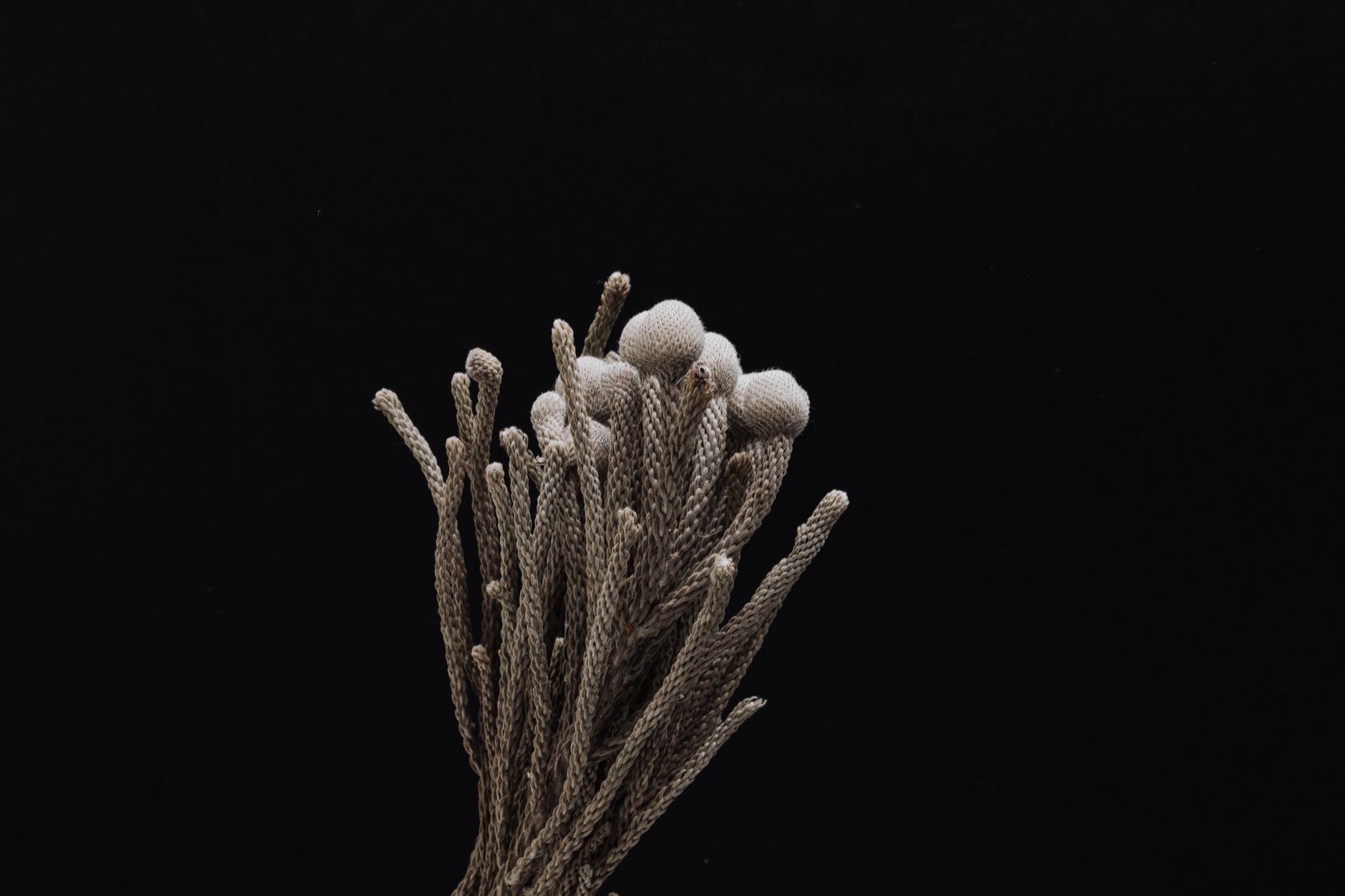
- The evidence is animal-only. There are no published human trials of Fadogia agrestis — none. Every efficacy claim traces back to a small set of rat studies, mostly from one research group.1
- The rat signal is real but narrow. An aqueous stem extract raised serum testosterone and mating behavior in male rats over five days, in a way that looked dose-dependent.1 That is interesting biology — not proof it does the same in people.
- The same literature shows toxicity. When researchers ran the extract for 28 days at higher doses, it altered testicular function markers in a pattern they called adverse to the testes — with recovery only at the lowest dose.2 The thing marketed to boost your hormones can damage the organ that makes them.
- The honest verdict: not proven, not clearly safe. No standardization, no human pharmacokinetics, no human safety data. If you want a testosterone botanical with actual human trials, Tongkat Ali and shilajit are far better studied.
What Fadogia agrestis actually is
Fadogia agrestis is a flowering shrub in the Rubiaceae family, native to West Africa, where the stem has a long history in traditional medicine as an aphrodisiac. That folk-use history is genuine, and it is also where the entire modern interest begins — not in a clinical discovery, but in a traditional reputation that a small number of researchers decided to test in animals.
Over the last few years it has been pulled out of relative obscurity and pushed to the front of the natural-testosterone shelf, usually paired with Tongkat Ali in capsules sold on the promise of higher testosterone without injections or a prescription. The marketing leans on two ideas at once: that it is “clinically studied” and that, because it is a plant, it is inherently safe. Both ideas collapse the moment you read the actual papers. The studies exist — but they are in rats, and the safety story runs the opposite direction the labels imply.
One detail matters before any claim about Fadogia: there is no accepted standardization. Different products use different parts of the plant, different extraction methods, and different declared “percentages” with no validated marker compound behind them. When an ingredient has no human pharmacology and no agreed standard, the number on the bottle is essentially decorative. For a fuller map of how the named botanicals stack up against each other, the sex and hormones hub is the better starting point than any single label.
The proposed mechanism
The signal it is supposed to pull is straightforward in theory: raise circulating testosterone, and downstream of that, improve libido and sexual function. In the rat work, the extract was associated with higher serum testosterone alongside more frequent mating behaviors, and the authors proposed that the testosterone rise was the driver of the behavioral changes.1 Phytochemical screening of the extract found alkaloids and saponins, with weaker traces of anthraquinones and flavonoids — saponins being the class most often invoked, hand-wavingly, as the “active” testosterone-relevant fraction.1
A separate rat model explored the erectile-function angle, reporting that the extract restored nitric-oxide and cyclic-GMP signaling and a panel of antioxidant enzymes in penile and testicular tissue of rats whose function had been chemically impaired — an effect the authors framed as working through an antioxidant mechanism.3 Note how cautious the researchers themselves were: that paper explicitly recommended use “after clinical trials,” a clinical-trials step that, years later, still has not happened.3
The crucial caveat is that all of this is mechanism-plausible, not trial-tested in humans. A compound that nudges a hormone in a rodent over a few days is a hypothesis generator, not a verdict. Plenty of substances move testosterone in rats and do nothing measurable, or something unwanted, in men. The mechanism is interesting precisely because it has not been checked where it counts.
The evidence: all of it is in rats
The anchor study is Yakubu and colleagues’ 2005 paper. Male albino rats were given an aqueous extract of Fadogia agrestis stem at 18, 50, and 100 mg/kg of body weight once daily, with sexual-behavior parameters and serum testosterone measured at days 1, 3, and 5. All doses increased mount and intromission frequency and raised serum testosterone, with the authors describing the testosterone rise as suggestive of dose-dependence.1 On its own terms, that is a clean preliminary signal — in rats, over five days.
That single five-day behavioral study is, functionally, the load-bearing wall under the entire “Fadogia boosts testosterone” marketing claim. It is a small open-label-style animal experiment, not a controlled human trial, and the dose-dependence language is the authors’ own characterization, not a confirmed dose-response curve in people. Read it as the start of an inquiry, not the conclusion of one.
The later 2022 erectile-dysfunction work used a different setup — rats whose sexual function had been suppressed by paroxetine — and again reported improvements in tissue-level biomarkers with the extract, comparable on several measures to the reference drug sildenafil.3 Useful as supporting biology, but it is the same species, the same research lineage, and the same missing translation to humans. Across the whole published record, the consistent pattern is this: every efficacy finding is in rats, and independent replication outside that lineage is thin.
trials
efficacy or safety
testosterone study
in rats, not people
toxicity signal
altered testicular markers
The toxicity signal nobody markets
Here is the finding that should change how you read every Fadogia label. The same research group that reported the testosterone bump also ran a longer study — 28 days at 18, 50, and 100 mg/kg — looking specifically at testicular function. Compared with controls, the extract significantly shifted a panel of testicular markers: it raised the testes-to-body-weight ratio, testicular cholesterol, sialic acid, glycogen, and certain enzyme activities, while lowering others including testicular protein.2 The authors’ own interpretation was blunt: these alterations are “indications of adverse effects on the male rat testicular function” that “may adversely affect the functional capacities of the testes.”2
The dose detail is the part that matters most. Recovery of those markers happened mainly at the lowest dose, 18 mg/kg, which is also the dose the authors tied to traditional folk use; at that low dose they concluded the extract “does not exhibit permanent toxicity.”2 Translation: the margin between “active” and “hurting the organ that makes testosterone” is narrow and dose-dependent — in rats, where we can at least measure it. In humans, where there is no pharmacokinetic data and no agreed dose, nobody can tell you where that line sits.
The thing being sold to boost your hormones is, in the only species it has been tested in, capable of damaging the very organ that makes them — at doses not far above the “active” one.
This is the through-line of the whole topic, and it is exactly backwards from the marketing. “It’s natural, so it’s safe” is not a finding; it is a slogan. The actual finding is a documented, dose-dependent testicular toxicity signal in the only animal it has been studied in. That does not prove Fadogia harms human testes — we have no human data either way — but it is the opposite of reassurance, and it is the single most important fact the category leaves off the label.
A botanical with a documented dose-dependent toxicity signal in animals and zero human safety data is not something to self-experiment with, particularly if fertility matters to you, if you have any liver or kidney concern, or if you take other medications. The testes are not a forgiving tissue to gamble on. If your goal is addressing real low-testosterone symptoms, that is a blood panel and a clinician conversation — not an unstandardized capsule with no human record.
The human gap, stated plainly
Let us be unambiguous, because the marketing depends on blurring this: there are no published human randomized controlled trials of Fadogia agrestis. No human efficacy data. No human safety data. No human pharmacokinetics — meaning no one has measured how much is absorbed, how long it lasts, how it is metabolized, or what a meaningful human dose even is. Searches of the peer-reviewed literature return rat studies and review articles built on those rat studies, and no controlled trial in people. The one human report that does exist is a 2025 case report of fatal multi-organ failure in a man using a stack that included Fadogia agrestis alongside anabolic steroids and an aromatase inhibitor — too confounded to pin on Fadogia, but a long way from the reassurance the labels imply, and the closest thing to human safety data the ingredient has.6
That gap is not a technicality. It is the whole story. “Clinically studied” is a phrase that should mean human trials; applied to Fadogia, it is at best a reference to animal work and at worst simply false. Until there is at least one well-designed human trial measuring testosterone, safety markers, and ideally testicular and fertility endpoints, the honest description is “traditional aphrodisiac with a rodent testosterone signal and a rodent toxicity signal” — not “testosterone booster.”
Where it fits: a tiered view
It helps to place Fadogia honestly on a spectrum of how settled the evidence is and who, if anyone, it is for.
Foundational — this is where testosterone actually moves. Sleep, resistance training, body composition, managing alcohol, and treating real medical drivers of low testosterone do more for your hormones than any botanical, and they have the evidence behind them. If your testosterone is genuinely low and symptomatic, the foundational tier is a clinician, a blood panel, and a real diagnosis — covered in our look at why testosterone declines. That is the high-yield lever, every time.
Research-curious — the better-evidenced botanicals. If you want to experiment with a plant compound and you have the foundations handled, the rational move is to start with the ones that actually have human trials — Tongkat Ali and shilajit — not the one whose only human-relevant data point is a toxicity warning extrapolated from rats. More on those below.
Experimental — Fadogia agrestis. Fadogia sits in the most speculative tier there is: animal-only efficacy, an animal toxicity signal, no standardization, and no human safety net. “Experimental” is generous; “unproven and potentially risky” is more accurate. This is not a recommendation to use it — it is an honest placement of where the evidence puts it, which is below the threshold most people imagine when they buy it.
Better-studied alternatives
If the appeal of Fadogia is “a natural ingredient that might help testosterone or libido,” two options carry actual human data and deserve the attention first.
Tongkat Ali (Eurycoma longifolia) has been run through human randomized trials — the opposite of Fadogia’s record. A six-month, double-blind, placebo-controlled trial in aging men with androgen-deficiency symptoms found that 200 mg daily, especially combined with exercise, improved erectile function and raised total testosterone.4 A systematic review and meta-analysis of randomized trials found a real but modest effect on erectile function, strongest in men starting from a lower baseline, while calling for more efficacy trials — an appropriately measured conclusion.5 It is not a miracle, and the effect sizes are modest, but it is genuinely in a different evidence class. We cover it in detail in the Tongkat Ali trial-data breakdown.
Shilajit likewise has human work behind its testosterone and energy claims, with its own real caveats around heavy-metal contamination and purity that you have to take seriously. The honest, cited read is in our shilajit evidence review. Neither of these is hype-free — but both clear the bar Fadogia does not even approach: they have been studied in people.
The honest question is rarely “Fadogia: yes or no.” It is “what actually moves my testosterone and energy, and where does any botanical rank against sleep, training, body fat, and treating the real medical drivers?” The Manual maps the men’s-hormone compounds and botanicals against each other — what each one’s evidence genuinely supports, the human-versus-animal divide, who benefits and who is wasting their money, and how to think about risk before you swallow anything. See the Manual →
Grey areas and open questions
The single-lineage problem. The core efficacy and toxicity findings trace back to one Nigerian research program studying the same plant.12 That work is legitimate and internally consistent, but science earns confidence through independent replication, and there is little of it. We should not over-read the testosterone signal or the toxicity signal as settled — both are early.
Standardization is undefined. Without a validated marker compound and a human dose, two Fadogia products can differ wildly in what they actually contain. That makes both efficacy and safety unknowable at the bottle level — you cannot reason about a dose-response when the dose itself is undefined.
The fertility question is wide open. The rat data point most relevant to anyone considering Fadogia — the altered testicular markers at higher doses2 — is exactly the kind of endpoint that demands human study before use, especially for men who want to preserve fertility. There is none. That is not a small gap.
What would change the verdict. A well-designed human trial — randomized, placebo-controlled, with a standardized extract, measuring serum testosterone, full safety chemistry, and testicular or fertility endpoints — could move Fadogia out of the hype tier. That is the bar. Until something clears it, the grade stands.
The verdict
Fadogia agrestis is not a proven testosterone booster, and it is not a demonstrably safe one. The efficacy story is a small set of rat studies, anchored by a single five-day behavioral experiment.1 The safety story — in the only species tested — includes a dose-dependent testicular toxicity signal, with recovery only at the lowest dose.2 There is no human efficacy data, no human safety data, no human pharmacokinetics, and no standardization. The marketing has gotten far, far ahead of the science.
This is not a claim that Fadogia is worthless or that it definitely harms people — we do not have the human data to say either. It is a claim that the confident “natural testosterone booster” framing is unsupported, and that the one thing the literature does flag is a reason for caution, not enthusiasm. If you care about testosterone, fix the foundations and get a real panel; if you want a botanical, start with the ones that have actually been tested in people. Fadogia, for now, is a rodent hypothesis wearing a supplement label.
References
- Yakubu MT, Akanji MA, Oladiji AT. Aphrodisiac potentials of the aqueous extract of Fadogia agrestis (Schweinf. Ex Hiern) stem in male albino rats. Asian J Androl. 2005;7(4):399-404. DOI: 10.1111/j.1745-7262.2005.00052.x. DOI · PMID 16281088. (Animal study — rats.)
- Yakubu MT, Akanji MA, Oladiji AT. Effects of oral administration of aqueous extract of Fadogia agrestis (Schweinf. Ex Hiern) stem on some testicular function indices of male rats. J Ethnopharmacol. 2008;115(2):288-292. DOI: 10.1016/j.jep.2007.10.004. DOI · PMID 18023305. (Animal study — rats; documents testicular toxicity signal.)
- Ogunro OB, Yakubu MT. Fadogia agrestis (Schweinf. Ex Hiern) stem extract restores selected biomolecules of erectile dysfunction in the testicular and penile tissues of paroxetine-treated Wistar rats. Reprod Sci. 2023;30(2):690-700. DOI: 10.1007/s43032-022-01050-6. DOI · PMID 35969364. (Animal study — rats.)
- Leitão AE, Vieira MCS, Pelegrini A, da Silva EL, Guimarães ACA. A 6-month, double-blind, placebo-controlled, randomized trial to evaluate the effect of Eurycoma longifolia (Tongkat Ali) and concurrent training on erectile function and testosterone levels in androgen deficiency of aging males (ADAM). Maturitas. 2021;145:78-85. DOI: 10.1016/j.maturitas.2020.12.002. DOI · PMID 33541567. (Human randomized controlled trial — comparison ingredient.)
- Kotirum S, Ismail SB, Chaiyakunapruk N. Efficacy of Tongkat Ali (Eurycoma longifolia) on erectile function improvement: systematic review and meta-analysis of randomized controlled trials. Complement Ther Med. 2015;23(5):693-698. DOI: 10.1016/j.ctim.2015.07.009. DOI · PMID 26365449. (Human systematic review & meta-analysis — comparison ingredient.)
- Kang J, et al. Severe biventricular failure, ARDS, and DIC linked to Fadogia agrestis, trimethylglycine, and anastrozole: a case report on unregulated supplement and AAS use. Am J Respir Crit Care Med. 2025. Abstract. (Human case report — confounded by concurrent anabolic-steroid and aromatase-inhibitor use; not an efficacy trial.)