Ashwagandha for sleep: what the trials actually show
Ashwagandha is sold as a calm-down adaptogen, but the most defensible thing it does in the clinic is help people sleep. Two meta-analyses now pool the randomized evidence, and they agree on a modest, statistically real improvement in sleep — strongest in people who actually have insomnia, at around 600 mg a day, taken for at least two months. That is a genuine signal, not marketing. But the trials are small, most come from a narrow set of affiliated groups, the standardized extracts on the shelf are not interchangeable, and the safety record carries three real flags the labels do not mention: liver injury, thyroid disruption, and a hard stop in pregnancy. Here is the honest read — angled on sleep, with the receipts.
How this article was built: Primary sources, retrieved and verified through PubMed: the Cheah et al. 2021 systematic review and meta-analysis in PLOS One, the Fatima et al. 2024 meta-analysis in Human Psychopharmacology, the Langade et al. 2019 actigraphy insomnia trial in Cureus, the Langade et al. 2020 sleep trial in the Journal of Ethnopharmacology, the Bokan et al. 2023 herb-induced-liver-injury review in Pharmaceuticals, the Casiano-Manzano et al. 2025 hepatotoxicity case in the Revista Española de Enfermedades Digestivas, the van der Hooft et al. 2005 thyrotoxicosis case in the Nederlands Tijdschrift voor Geneeskunde, and the Gopal et al. 2021 perimenopause hormonal trial in the Journal of Obstetrics and Gynaecology Research.
- The benefit is small but real. A 2021 meta-analysis of five randomized trials (400 people) found ashwagandha extract significantly improved overall sleep, with a pooled effect size of about −0.59 — a small-to-moderate nudge, not a knockout.1
- It works best where it is needed most. The effect was strongest in people diagnosed with insomnia, at doses of 600 mg/day, taken for eight weeks or longer — the typical trial protocol was 300 mg twice daily.13
- Read the evidence honestly. The trials are small (often 40–80 people), several share overlapping research groups, and the standardized extracts — KSM-66 versus Sensoril — are chemically different products, so results do not transfer cleanly between brands.2
- The safety flags are real. Ashwagandha has documented liver-injury cases (one needing a transplant), can raise thyroid hormone levels, and is contraindicated in pregnancy — this is not a risk-free herb.57
What ashwagandha actually is
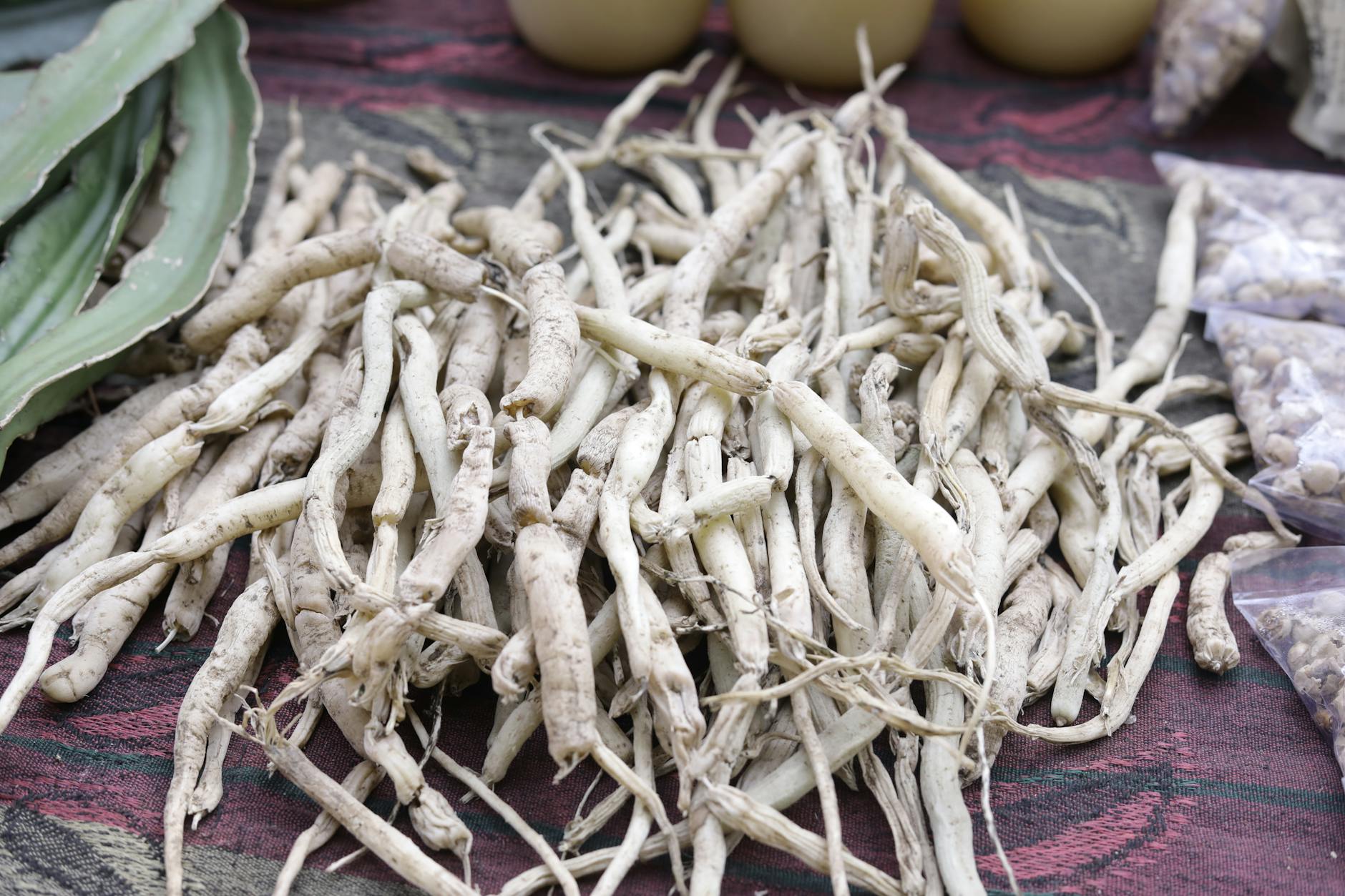
Ashwagandha (Withania somnifera) is a shrub used in Ayurvedic medicine for centuries, and the species name is the tell: somnifera means “sleep-inducing.” The part that matters is the root, and the active fraction is a family of steroidal lactones called withanolides. Modern supplements are sold as standardized root extracts — the two dominant commercial ones are KSM-66 and Sensoril — and that standardization is the whole ballgame, because the raw powder, a full-spectrum root extract, and a leaf-heavy extract are not the same thing in your bloodstream.
Most people meet ashwagandha as a stress or anxiety supplement, and that is where its larger evidence base sits. We have a separate, fully cited read on ashwagandha for cortisol and stress — if that is your question, start there. This article is narrower on purpose. It asks one thing: does ashwagandha help you sleep, and what do the sleep-specific trials measure?
Why it touches sleep at all
The honest answer is that the sleep mechanism is less cleanly mapped than the marketing implies, and it runs along two plausible lines. The first is the stress axis. Ashwagandha’s best-replicated biological signal is a downshift in the body’s stress output — the cortisol-lowering effect covered in the companion piece — and since racing, cortisol-driven arousal is one of the most common reasons people cannot fall or stay asleep, calming that signal plausibly clears the runway for sleep. On this reading, better sleep is partly a downstream consequence of less stress, not a direct sedative action.
The second line is more specific. Preclinical work points to triethylene glycol, a compound isolated from ashwagandha leaves, as a sleep-inducing component acting on the brain’s inhibitory GABA system — gamma-aminobutyric acid, the main “slow down” signal in the central nervous system. That is mechanism-plausible but largely animal-derived, so treat it as a candidate explanation, not a settled one. The practical takeaway: ashwagandha appears to work partly by lowering the arousal that keeps you awake, rather than by forcing unconsciousness the way a hypnotic drug does — which fits the modest, build-over-weeks effect the trials report.
The meta-analysis verdict
The cleanest place to start is not any single trial but the two meta-analyses that pool them, because they wash out the noise of small samples. The anchor is Cheah and colleagues’ 2021 systematic review and meta-analysis, which searched eight databases and trial registries and pulled together five randomized placebo-controlled trials totaling 400 participants.1 The headline: ashwagandha extract produced a small but statistically significant improvement in overall sleep, with a standardized mean difference of −0.59 (95% confidence interval −0.75 to −0.42).1
A standardized mean difference of around 0.59 is, in plain terms, a small-to-moderate effect — real, measurable, but not the kind of transformation that needs a 95%-confidence-interval explanation to be felt. The same review found the effect was more prominent in three subgroups: adults diagnosed with insomnia, a treatment dose of at least 600 mg/day, and a treatment duration of eight weeks or more.1 That subgroup pattern matters, because it tells you who and how: this is a slow-building aid for people with a genuine sleep problem, not a fast fix for an occasional bad night.
The second meta-analysis, Fatima and colleagues in 2024, looked at Withania somnifera for anxiety and insomnia and pooled five RCTs (254 participants). It reported that ashwagandha significantly improved several objective-leaning sleep parameters — sleep onset latency (how long it takes to fall asleep), total sleep time, the Pittsburgh Sleep Quality Index, and sleep efficiency — but not wake after sleep onset or total time in bed.2 The split is informative: ashwagandha looks better at helping you get to sleep and use your time in bed efficiently than at stopping you waking in the night.
Now the caution that both reviews carry, and that the marketing does not. Cheah’s authors were explicit that the body of safety data is thin and that “more safety data would be needed to assess whether it would be safe for long-term use.”1 Fatima’s pooled analysis showed high statistical heterogeneity — the trials disagreed with each other more than you would like — and the authors called for larger samples before drawing firm conclusions.2 The signal is consistent. The foundation under it is still narrow.
The sleep-specific trials
Underneath the pooled numbers sit a handful of individual trials, and the two most cited come from Langade and colleagues. The 2019 study is the one to know, because it used actigraphy — a wrist sensor that objectively logs movement-derived sleep — rather than relying only on what people reported.3 Sixty patients with insomnia and anxiety were randomized 2:1 to either 300 mg of a full-spectrum ashwagandha root extract twice daily or placebo, for ten weeks.3
After ten weeks, the ashwagandha group had a significantly shorter sleep onset latency than placebo (29.0 versus 33.9 minutes, p = 0.019), and a meaningful jump in sleep efficiency — the share of time in bed actually spent asleep — from about 75.6% at baseline to 83.5%, beating the placebo group’s rise.3 Subjective sleep quality also improved significantly (p = 0.002).3 The 2020 follow-up extended this to 80 people split between healthy volunteers and insomnia patients over eight weeks, and again found significant gains in sleep onset latency and sleep efficiency — with the effect, tellingly, larger in the insomnia group than in the healthy sleepers.4
That last detail is the through-line of the whole topic: ashwagandha’s sleep effect scales with how much room there is to improve. Give it to a good sleeper and there is little to gain; give it to someone with insomnia and the signal sharpens. It is the opposite of a sedative, which flattens everyone equally.
that worked best
usually 300 mg twice a day
on sleep
small-to-moderate, 5 RCTs
for the effect
it builds, it doesn’t hit
Dose, timing, and the extract problem
We do not give prescriptive doses here, but the trial protocol is worth stating plainly because it is consistent. Across the sleep studies, the dose was 300 mg of a standardized root extract taken twice daily — 600 mg total — for eight to ten weeks.34 Unlike a hypnotic, the studied schedule was not a single bedtime dose; it was a steady twice-daily intake whose benefit accrued over weeks, consistent with a stress-axis-mediated effect rather than an acute sedative one. If you want to think about washout and how long a daily compound takes to reach steady levels, our half-life tool walks through the logic.
Here is the part the marketing glosses over. “Ashwagandha” is not one product. The two dominant standardized extracts — KSM-66 (a root-only extract standardized to a lower withanolide percentage by a different process) and Sensoril (a root-and-leaf extract standardized to a higher withanolide content) — have different chemical fingerprints, different studied doses, and different intended use cases. A trial run on one does not automatically validate the other, and a bargain-bin raw powder validates neither. When you read “clinically studied,” the fair question is always: studied as which extract, at what dose, for how long.
Ashwagandha’s sleep effect scales with how much room there is to improve. Give it to a good sleeper and little happens; give it to someone with real insomnia and the signal sharpens. That is the opposite of a sedative.
The safety flags the labels skip
This is where the honest version of ashwagandha diverges hardest from the wellness-aisle version, and it matters more for a daily sleep aid than for occasional use, because sleep is a chronic-dosing use case.
The liver. The clearest concern is herb-induced liver injury. A 2023 review applied the updated RUCAM causality method — the standard tool for attributing liver damage to a specific agent — to the reported ashwagandha cases and added two new ones, both scoring “probable” for an ashwagandha link.5 Critically, that review notes prior reported cases including one that ended in liver transplantation.5 A 2025 case report drives the point home: ashwagandha triggered acute-on-chronic liver failure in a patient with preexisting liver disease, and its authors flag the danger specifically for people whose livers are already compromised.6 The injuries typically showed up weeks to months in — exactly the timeframe a nightly sleep user would be in — and improved after stopping. That is the pattern of a real, if uncommon, drug-induced liver injury, not a coincidence.
The thyroid. Ashwagandha can raise circulating thyroid hormone levels. The cleanest documented signal is a published case of thyrotoxicosis — a dangerous excess of thyroid hormone — in an otherwise healthy woman taking ashwagandha for fatigue; her symptoms and labs resolved after she stopped.7 For most people this is a non-event, but if you take thyroid medication or have a thyroid condition, ashwagandha is not neutral — it can push your levels in a way that interacts with your treatment.
Pregnancy, and the hormonal footprint. Ashwagandha is traditionally considered an abortifacient and is contraindicated in pregnancy — this is a hard stop, not a caution. It also has a measurable hormonal footprint: a randomized trial in perimenopausal women found ashwagandha significantly raised serum estradiol and lowered follicle-stimulating hormone and luteinizing hormone versus placebo.8 That was a desired effect in that menopausal context, but it underlines that ashwagandha is hormonally active, which is the last thing you want unmonitored during pregnancy or conception.
Liver, thyroid, pregnancy. If you have any liver condition or drink heavily, ashwagandha’s hepatotoxicity signal is a real reason for caution.5 If you take thyroid medication, it can shift your levels.7 If you are pregnant or trying to conceive, do not use it at all.8 None of this means ashwagandha is dangerous for most healthy adults at studied doses — it means a daily sleep supplement deserves the same scrutiny you would give a medication, because for these three groups it behaves like one.
Where it fits: a tiered view
It helps to place ashwagandha honestly on a spectrum of how settled the evidence is and who it is for.
Foundational — fix the inputs first. No supplement competes with sleep basics: a consistent schedule, a cool dark room, morning light, and capping late caffeine and alcohol. If your sleep environment and routine are a mess, that is the higher-yield lever, every time — and it is free.
Research-curious — the targeted trial-of-one. If your foundations are solid and you have genuine, ongoing trouble settling — especially if stress-driven racing-mind arousal is the culprit — ashwagandha is one of the better-evidenced botanical options, with two meta-analyses behind it.12 Judge it over the eight-week window the trials used, with a known standardized extract, and not if you fall into any of the safety-flag groups. Compare its evidence against the alternatives in our sleep coverage before committing.
Experimental — treating it as a fix for real insomnia. Using ashwagandha to self-manage clinical insomnia, or leaning on it indefinitely in place of addressing an underlying problem, is the weakest-supported and riskiest use — the long-term safety data simply are not there, and the liver signal grows more relevant the longer you dose.15
Ashwagandha is a real, modest, stress-mediated sleep aid — but it sits inside a much larger sleep-and-recovery toolkit, and the worst mistake is treating any single compound as the answer. The right question is rarely “ashwagandha: yes or no,” it’s “what actually moves my sleep, and how does ashwagandha rank against magnesium, glycine, light timing, and temperature?” The Manual maps the sleep-and-recovery compounds against each other — what each one’s evidence genuinely supports, the dose and timing windows, who benefits, and how to stack them without fooling yourself. See the Manual →
Grey areas and open questions
The small-trial problem. The individual sleep trials are small — typically 40 to 80 people — and several share overlapping research groups and commercial affiliations. A small sample is not the same as a wrong result, but it does mean the effect-size precision is low and independent, well-powered replication is the missing ingredient. The two meta-analyses help, but they can only pool what exists, and the 2024 review’s high heterogeneity is a sign the underlying trials are not yet telling one tidy story.2
Extract non-equivalence. Because KSM-66 and Sensoril are chemically distinct, the evidence base is fragmented across products that are not interchangeable. There is no head-to-head trial establishing which standardized extract is best for sleep specifically, so “ashwagandha works for sleep” is really “these particular extracts, at these doses, in these populations, worked.”
No long-term safety-and-efficacy data. The trials run weeks, not years. For a compound with a documented liver signal, the absence of long-duration nightly-use safety data is the gap that matters most — and it is the reason indefinite nightly use sits in the experimental tier.5
Insomnia is a diagnosis, not a vibe. The trials studied people with insomnia or unsatisfactory sleep, but chronic insomnia frequently rides on top of anxiety, depression, pain, sleep apnea, or circadian disorders, and the evidence-based first-line treatment is cognitive behavioral therapy for insomnia (CBT-I), not a supplement. If you cannot sleep most nights for weeks, that is a clinician conversation.
What this article is not saying
This is not “ashwagandha doesn’t work.” Within its limits, two meta-analyses and the underlying actigraphy trials point the same direction: a small but genuine improvement in sleep quality and onset latency, strongest in people with insomnia at 600 mg a day over two months.13 Dismissing it outright is as wrong as overselling it.
This is not “ashwagandha will transform your sleep.” The effects are modest, the trials are small and partly affiliated, the extracts are not interchangeable, and there is no large independent long-term replication. It is a slow-building, stress-mediated nudge — not a sedative, and not a sleeping pill.
And this is not “ashwagandha is risk-free.” It carries documented liver, thyroid, and pregnancy concerns that a daily sleep habit makes more relevant, not less. The point of this piece is to tell you what the sleep trials show and where they stop — and what to weigh before you make it a nightly thing. If your real question is stress and cortisol rather than sleep, read the companion piece on ashwagandha for cortisol and stress.
References
- Cheah KL, Norhayati MN, Husniati Yaacob L, Abdul Rahman R. Effect of Ashwagandha (Withania somnifera) extract on sleep: A systematic review and meta-analysis. PLoS One. 2021;16(9):e0257843. DOI: 10.1371/journal.pone.0257843. PMID: 34559859.
- Fatima K, Malik J, Muskan F, et al. Safety and efficacy of Withania somnifera for anxiety and insomnia: Systematic review and meta-analysis. Hum Psychopharmacol. 2024;39(6):e2911. DOI: 10.1002/hup.2911. PMID: 39083548.
- Langade D, Kanchi S, Salve J, Debnath K, Ambegaokar D. Efficacy and Safety of Ashwagandha (Withania somnifera) Root Extract in Insomnia and Anxiety: A Double-blind, Randomized, Placebo-controlled Study. Cureus. 2019;11(9):e5797. DOI: 10.7759/cureus.5797. PMID: 31728244.
- Langade D, Thakare V, Kanchi S, Kelgane S. Clinical evaluation of the pharmacological impact of ashwagandha root extract on sleep in healthy volunteers and insomnia patients: A double-blind, randomized, parallel-group, placebo-controlled study. J Ethnopharmacol. 2020;264:113276. DOI: 10.1016/j.jep.2020.113276. PMID: 32818573.
- Bokan G, Glamočanin T, Mavija Z, et al. Herb-Induced Liver Injury by Ayurvedic Ashwagandha as Assessed for Causality by the Updated RUCAM: An Emerging Cause. Pharmaceuticals (Basel). 2023;16(8):1129. DOI: 10.3390/ph16081129. PMID: 37631044.
- Casiano-Manzano S, Torres-Larrubia M, Masa-Caballero A, et al. Changing perspectives: unveiling the risks of ashwagandha-induced hepatotoxicity. Rev Esp Enferm Dig. 2025;117(5):288-289. DOI: 10.17235/reed.2023.10080/2023. PMID: 37982556.
- van der Hooft CS, Hoekstra A, Winter A, de Smet PAGM, Stricker BHCh. Thyrotoxicosis following the use of ashwagandha. Ned Tijdschr Geneeskd. 2005;149(47):2637-2638. PMID: 16355578.
- Gopal S, Ajgaonkar A, Kanchi P, et al. Effect of an ashwagandha (Withania somnifera) root extract on climacteric symptoms in women during perimenopause: A randomized, double-blind, placebo-controlled study. J Obstet Gynaecol Res. 2021;47(12):4414-4425. DOI: 10.1111/jog.15030. PMID: 34553463.