BRP, the Stanford “natural Ozempic” peptide: what the hype gets wrong
A 12-amino-acid peptide called BRP cut appetite by up to half in mice and pigs — and, unlike the drugs it’s being compared to, it did it without nausea and without touching lean muscle. The headlines call it a “natural Ozempic without the side effects.” The signal is real and genuinely exciting. The framing is running about three years ahead of the data. There are zero human trials. Nobody can buy this. And “without side effects” is a hope, not a finding. Here’s the honest version.
How this article was built: Primary source — the Coassolo et al. 2025 paper in Nature from Katrin Svensson’s Stanford lab, read directly for the actual animal numbers; cross-checked against the body-composition literature on approved GLP-1 drugs (Karakasis 2024 network meta-analysis, Bikou 2024 systematic review, the SURMOUNT-5 head-to-head). Every animal-only result is labelled as such. Where a claim is a headline rather than a finding, we grade it HYPE and say why.
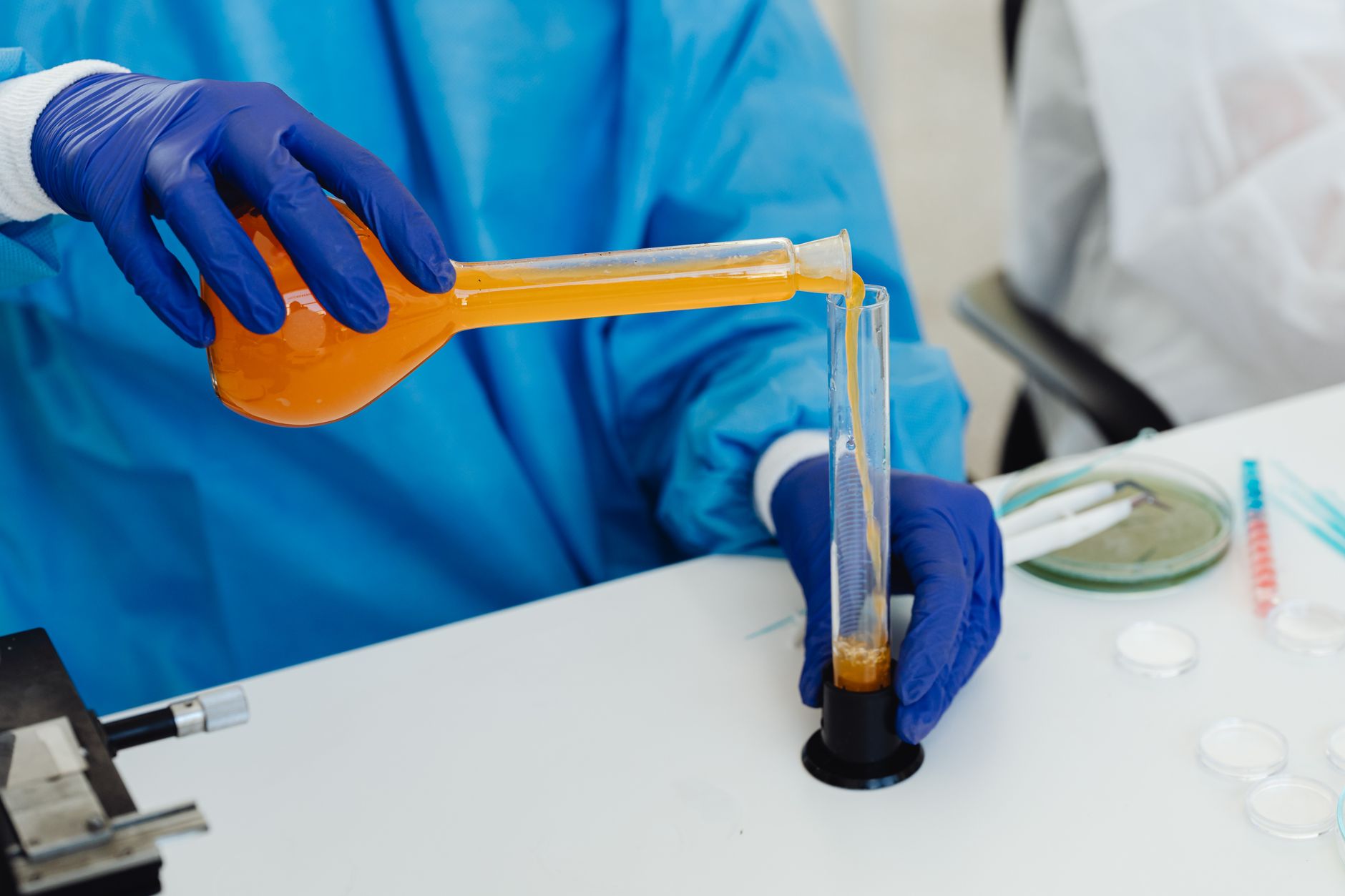
- A Stanford team used an algorithm to scan thousands of hidden peptide fragments and found BRP — BRINP2-Related Peptide, a 12-amino-acid chain. Injected before a meal, it cut food intake by up to 50% over the next hour in both mice and minipigs.1
- The interesting part: BRP pulls an appetite signal in the brain that is independent of the GLP-1 receptor — the target Ozempic and Wegovy hit. In a 14-day study, obese mice on BRP lost fat mass while lean muscle was spared, and the animals showed no nausea or aversion.1
- The honest caveat, stated plainly: this is preclinical. Mice and pigs only. Zero human trials. “Natural Ozempic without side effects” is a headline, not a result — you cannot read a clean human safety profile off animal data.
- Who this is for: people who want to track a genuinely promising obesity target early. It is not something you can take. Anything sold as “BRP” right now is black-market and unverified.
What Stanford actually found
In March 2025, a team led by Katrin Svensson at Stanford published a paper in Nature with a genuinely clever premise.1 The body makes a lot of its signalling peptides by taking a larger precursor protein — a prohormone — and snipping it into active fragments with cutting enzymes. The most famous product of that process is GLP-1 (glucagon-like peptide-1), the appetite-and-glucose signal that the entire Ozempic class is built to mimic. Svensson’s group asked a simple question: how many other active fragments are getting cut out by the same machinery that nobody has bothered to characterise?
They built a computational tool, ran it across hundreds of human prohormones, and predicted more than 2,600 previously uncharacterised peptide fragments. They narrowed to roughly a hundred candidates likely to act in the brain, screened them on lab-grown neurons, and one 12-amino-acid fragment lit those cells up about tenfold over baseline.1 That fragment is BRP — BRINP2-Related Peptide, named for the parent protein (BRINP2) it’s cut from. It circulates naturally in human cerebrospinal fluid, which is part of why the “natural” label got attached to it.
Then came the result that made the internet lose its mind. When the researchers gave a single intramuscular injection of BRP to lean mice and to minipigs — pigs whose metabolism and eating patterns track human biology far better than a mouse’s does — before feeding, food intake over the next hour dropped by up to 50% in both species.1 In a separate 14-day study, obese mice on BRP lost roughly 4 grams of fat mass while untreated controls gained about 3 grams — and crucially, that loss was fat-selective, with lean body mass left intact.1 No signs of nausea or aversion. That is a striking package of findings. It is also, every word of it, from animals.
The mechanism: a different signal from GLP-1
Here is what makes BRP scientifically interesting rather than just another appetite molecule. Approved weight-loss drugs — semaglutide, tirzepatide — pull the GLP-1 receptor signal (tirzepatide adds a second one, the GIP receptor). BRP doesn’t. In the Nature work, BRP’s appetite effect was preserved in animals where leptin, the GLP-1 receptor, and the melanocortin-4 receptor were taken out of the picture.1 In plain terms: it pulls a different lever. The signal it triggers runs through hypothalamic neurons via a cAMP/PKA/CREB/FOS cascade, lighting up appetite-control regions deep in the hypothalamus rather than the hindbrain.1
Why does that distinction matter so much to the people writing the headlines? Because the dose-limiting problem with the GLP-1 class is nausea, and nausea is driven largely by the hindbrain and brainstem circuitry those drugs engage. A molecule that suppresses appetite while leaving that circuitry alone could, in principle, deliver the benefit without the queasiness. In the animals, BRP did exactly that. But read the verb carefully: could. A clean nausea profile in a mouse is a reason to run the human trial, not a substitute for it. The hypothesis is excellent. It is still a hypothesis.
BRP is exciting precisely because it pulls a different signal than the Ozempic class — which is also exactly why nobody yet knows what that signal does across a human body over months. A new pathway is a new unknown.
The evidence, with the numbers
Let me lay out the strength and the limits of this honestly, because both are real.
What’s strong. The discovery method is elegant and the effect sizes are large. A roughly 50% acute cut in food intake is not a marginal signal, and seeing it replicate from mice into minipigs — a non-rodent species chosen specifically because it mirrors human metabolism better — is more than most early obesity candidates ever show.1 The fat-selective body-composition result over 14 days is the single most compelling part, and I’ll explain below why it matters more than the appetite number.
What’s limiting, and non-negotiable to state. This is one paper, from one lab, in animals. There is no human trial. There is no published human dose, no human safety data, no human efficacy, nothing on what happens when you pull this signal for months instead of days. By our grading rubric an animal-only finding, however clean, does not climb above EMERGING — and that is the grade both the appetite/fat result and the GLP-1-independent mechanism earn here. Not because the science is weak; because the evidence base is one study deep and hasn’t touched a person.
The contrast that anchors the whole story is body composition, and this is where the honest comparison to approved drugs actually lives. Across the GLP-1 class, roughly a quarter of the weight people lose is not fat — it’s fat-free mass, including skeletal muscle. A 2024 network meta-analysis of 22 randomized trials put lean-mass loss at about 25% of total weight lost, with semaglutide and tirzepatide among the least effective at sparing it.2 A separate systematic review of semaglutide trials found lean-mass loss ranging from almost nothing up to about 40% of total weight reduction depending on the trial.4 That muscle cost — the “Ozempic face” you’ve seen, which is partly lost facial fat and partly lost tissue underneath it — is the most legitimate knock on the current drugs. BRP’s fat-selective result in mice is exciting precisely because it gestures at a way around that problem. But “gestures at, in mice” is the operative phrase.
“Natural Ozempic” — what that phrase is hiding
The phrase doing the heavy lifting in every viral post is “natural Ozempic without the side effects.” Pull it apart and three different sleights of hand fall out.
“Equal to Ozempic” is a category error. Semaglutide and tirzepatide carry years of human Phase 3 evidence. STEP and SURMOUNT enrolled thousands of people; the SURMOUNT-5 head-to-head ran 72 weeks and measured a 20.2% mean weight reduction on tirzepatide against 13.7% on semaglutide in people.3 BRP has measured an acute appetite drop in mice and pigs over one hour, and fat loss in mice over two weeks. Putting those on the same shelf because both involve appetite is like comparing a flight that’s landed thousands of times to a wind-tunnel model of a wing. Both relate to flying. Only one has carried passengers. Grading the “equal to Ozempic” claim as anything but HYPE would be dishonest.
“Without side effects” is unproven, full stop. What the paper actually shows is no observed nausea or aversion in animals.1 That is a promising signal and a reason for optimism about the mechanism. It is not a human safety profile. You cannot demonstrate a clean side-effect profile from mouse and pig data — side effects are exactly the thing that emerges when you scale from a controlled animal cohort to millions of varied human bodies over years. Every drug that ever failed in trials looked clean in animals first. “No side effects” is the claim a clinical program exists to test, not a box this research has checked.
“Natural” is the most slippery word of the three. Yes, BRP is a fragment your own body produces. So is GLP-1 — the “natural” molecule that semaglutide is engineered to mimic. “Naturally occurring” tells you nothing about whether an injected pharmacological dose is safe or effective in humans. Insulin is natural. Cortisol is natural. The word is doing reassurance work the data hasn’t earned.
The grey areas nobody is putting in the headline
Two things need saying directly, because the excitement is busy hiding them.
You cannot take this, and you cannot buy it. There is no approved BRP product. There is no clinic prescribing it, no pharmacy compounding it, no legitimate research-chemical supplier selling a verified version. Stanford has filed intellectual property around the discovery and a path toward human trials is the stated next step — which, on a normal timeline, means years before any human even receives a validated dose under supervision. If you see “BRP” for sale online today, understand what that is: an unverified product of unknown identity, purity, and dose, riding a headline. Buying a vial labelled BRP from a grey-market site is not getting ahead of the science. It’s injecting an unknown. Don’t.
The fat-selective result is the part worth tracking — honestly. If BRP’s muscle-sparing fat loss held up in humans, it would matter more than the appetite headline, because lean-mass preservation is the genuine weak point of the current drugs.2 That’s the honest reason to keep an eye on this target. It is also still a single 14-day mouse experiment. Hold both at once: the most exciting finding and the thinnest evidence base are the same data point. For now, the established way to protect muscle through a fat-loss phase isn’t a peptide that doesn’t exist yet — it’s a protein floor, resistance training, and, for people coming off a GLP-1, a deliberate lean-mass cleanup phase.
What we genuinely don’t know yet
Anything human. Dose, safety, efficacy, durability, how the body adapts over months, whether the no-nausea finding survives contact with actual patients — all unknown. The entire human question is open.
What pulling a brand-new appetite signal does downstream. The GLP-1 receptor is one of the most-studied targets in metabolic medicine. BRP’s pathway is not. A novel signal means novel unknowns: off-target effects, long-term consequences of chronically engaging a circuit evolution didn’t design to be pushed daily. New mechanism is a feature for efficacy and a question mark for safety, simultaneously.
Whether the fat-selectivity is real in humans. The muscle-sparing result is the most valuable claim in the paper and the one resting on the least data. A 14-day mouse study is a starting gun, not a finish line. Until a human body-composition trial exists, it stays a promising hypothesis.
The honest bottom line: BRP is one of the more genuinely interesting obesity findings in years, and the “natural Ozempic” framing is doing it a disservice by promising today what the science might deliver in years — or might not deliver at all. Track the target. Read the trials when they come. Ignore anyone selling you the molecule before they exist. For how we weigh this kind of early signal against approved options, start with our peptides desk and the peptides worth knowing in 2026.
References
- Coassolo L, et al. (Svensson KJ, senior author). Prohormone cleavage prediction uncovers a non-incretin anti-obesity peptide. Nature. Published online March 5, 2025. (Svensson lab, Stanford; identifies BRINP2-Related Peptide [BRP], a 12-mer; up to ~50% acute reduction in food intake in mice and minipigs; fat-selective weight loss over 14 days in obese mice with lean mass spared; acts independently of leptin, GLP-1 receptor and MC4R; no nausea/aversion observed.) DOI 10.1038/s41586-025-08683-y
- Karakasis P, Patoulias D, Fragakis N, et al. Effect of glucagon-like peptide-1 receptor agonists and co-agonists on body composition: systematic review and network meta-analysis. Metabolism. 2025;164:156113. (22 RCTs, 2,258 participants; lean-mass loss ~25% of total weight lost; semaglutide and tirzepatide among the least effective at preserving lean mass.) DOI 10.1016/j.metabol.2024.156113
- Aronne LJ, Horn DB, le Roux CW, et al. Tirzepatide as compared with semaglutide for the treatment of obesity (SURMOUNT-5). N Engl J Med. 2025. (Phase 3b, 751 adults, 72 weeks; mean weight change −20.2% tirzepatide vs −13.7% semaglutide; human Phase 3 efficacy.) DOI 10.1056/NEJMoa2416394
- Bikou A, Dimitriadis K, Karakasis P, et al. A systematic review of the effect of semaglutide on lean mass: insights from clinical trials. Expert Opin Pharmacother. 2024;25(5):611-619. (6 studies, 1,541 adults; weight loss primarily fat mass, but notable lean-mass reductions from ~0% to ~40% of total weight lost in larger trials.) DOI 10.1080/14656566.2024.2343092