Lean mass preservation on GLP-1s — the protein floor and resistance training case.
STEP 1 reported about 40% of semaglutide-induced weight loss as lean soft tissue. SURMOUNT-1 reported about 25% with tirzepatide. Some of that is appropriate, some of it is not, and the protein-floor-plus-resistance-training intervention has the cleanest RCT support for tilting the ratio in your favor.
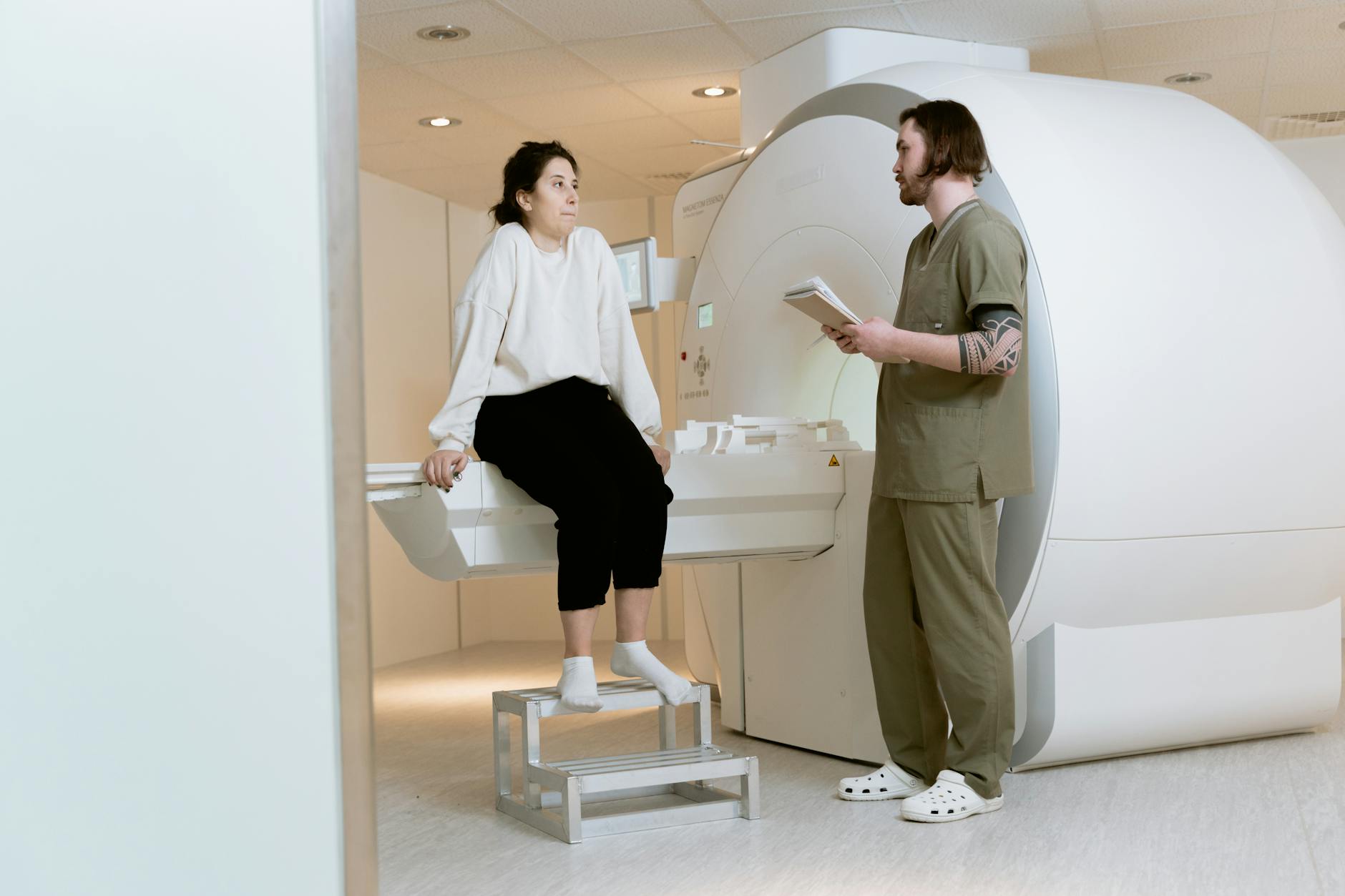
The muscle-loss critique, taken seriously
From the moment semaglutide entered the general weight-loss conversation, a counter-narrative followed: GLP-1s strip muscle. Sarcopenic obesity. "Ozempic face" — soft tissue loss visible in the face — and "Ozempic ass" — visible loss in the gluteal region. The criticism reached mainstream press and a level of cultural traction that the clinical literature has not entirely earned, but it is not wrong, either. Just incomplete.
The honest framing: every meaningful weight loss includes some lean mass loss. Lean mass is not synonymous with skeletal muscle — it includes organ tissue, skin, connective tissue, water, and non-muscle proteins. The amount of weight loss attributable to lean tissue depends on the rate of loss, the magnitude of the deficit, the baseline body composition, the protein intake, and the resistance-training stimulus. GLP-1s do not have a special mechanism that specifically destroys muscle; they produce large, rapid weight loss, and large rapid weight loss produces proportionally more lean loss than slow weight loss does. The intervention is the variable. The biology is constant.
What STEP and SURMOUNT actually reported
STEP 1 body-composition substudy. In a DXA (dual-energy X-ray absorptiometry) subset of 95 semaglutide-treated participants in STEP 1, total body weight declined 15.3 kg from baseline over 68 weeks. Total fat mass declined 10.4 kg (~25% of baseline fat mass). Lean soft tissue declined 6.9 kg (~9.7% of baseline lean mass). Lean tissue accounted for approximately 39% of total weight lost, with fat accounting for approximately 61%. Critically, the proportion of body weight made up of lean tissue actually increased by about 3 percentage points, because fat was lost faster than lean [Wilding 2021 STEP 1 body comp].
SURMOUNT-1 body-composition substudy. In a DXA subset of 124 tirzepatide-treated participants, the ratio improved. Fat mass declined 15.9 kg (~34% of baseline fat mass) and lean soft tissue declined 5.6 kg (~11% of baseline lean mass). Lean tissue accounted for approximately 26% of total weight lost, fat for approximately 74%. The proportional shift toward fat-mass-dominant loss is consistent with what would be expected from a more potent agent producing more total weight loss across the same duration [Look 2025 SURMOUNT-1 body comp].
For context, a meta-analysis of dietary weight-loss interventions without pharmacotherapy reports lean-mass fraction of total weight loss generally in the range of 20–30%. The STEP 1 figure is at the higher end of that range; the SURMOUNT-1 figure is in the middle. The GLP-1 trial data on body composition is not catastrophically off the dietary baseline — but the magnitude of the absolute lean-mass loss is larger, because the total weight loss is larger.
The percentage of weight lost as lean tissue on a GLP-1 looks similar to the percentage in dietary trials. The absolute kilograms of lean tissue lost are larger — because the total kilograms of weight lost are larger.
"Appropriate" lean loss vs sarcopenic loss
Not all lean-mass reduction is bad. As fat mass declines, less connective tissue is required to support that fat, less skin is required to cover it, smaller organs are required to perfuse it, and less water is held in the system. The lean compartment rationally shrinks alongside the fat compartment. Some of the "lean mass loss" reported on DXA is appropriate scaling, not pathological wasting.
The concerning piece is the skeletal-muscle subset of lean mass — the contractile tissue that does the work of insulin disposal, physical function, and resting metabolic rate. Sarcopenic loss is when total skeletal muscle mass and strength decline beyond what is appropriate for the body mass remaining. A young adult with substantial muscle reserve who loses 6 kg of lean tissue on a GLP-1 may be functionally unaffected. An older adult who is already in the lower half of age-normative muscle mass and loses the same 6 kg may cross into clinically meaningful sarcopenia. Age, baseline composition, and post-intervention function matter more than the absolute number on the DXA report.
The data we do not yet have at scale: longitudinal strength, functional capacity (gait speed, chair stand, grip strength), and falls outcomes in GLP-1-treated older adults over multi-year timeframes. Existing analyses are short, and most enrolled relatively younger populations. The translation to a 68-year-old with stage-1 sarcopenia starting tirzepatide for the first time is genuine inference, not direct evidence [Tinsley 2025 lean tissue].
The protein floor — 1.6 g/kg and distribution
The protein requirement for preserving lean mass during energy restriction is higher than the protein requirement for weight maintenance. The Nunes 2022 systematic review and meta-analysis of protein intake in healthy adults documented dose-response improvements in lean mass gain or retention up to approximately 1.6 g/kg/day, with diminishing returns above that level [Nunes 2022]. In older adults — particularly those with sarcopenia or in catabolic states — estimated requirements are higher still, with indicator-amino-acid-oxidation studies producing estimates around 1.7 g/kg/day for older adults with established sarcopenia [Indicator AA 2025].
Per-meal distribution also matters. The leucine-trigger threshold for maximal muscle protein synthesis sits at approximately 25–40 g of high-quality protein per meal, with older adults requiring the higher end of that range due to anabolic resistance [Witard 2014]. Front-loading a daily protein target into one meal underperforms distributing it across three to four meals at the leucine threshold.
For a 75 kg adult on a GLP-1, the practical protein floor is approximately 120 g per day distributed across three to four meals. For a 90 kg adult, approximately 145 g per day. These numbers are aspirational, not punitive — the appetite suppression that makes GLP-1s effective for weight loss also makes hitting them harder. Protein-density-first meal planning (Greek yogurt, cottage cheese, lean meats, fish, protein powders, eggs) becomes a practical necessity rather than an optimization.
On an unrestricted diet, missing the protein target on one day is buffered by total intake. On a GLP-1 with substantial appetite suppression, total intake may sit 30–40% below baseline. The protein deficit is proportionally larger, the anabolic stimulus is correspondingly weaker, and the lean-mass consequences are larger over the same timeframe. The protein floor is not an optional optimization — it is the floor.
The resistance-training case — Lundgren and beyond
The Lundgren et al. study (NEJM 2021, with body-composition substudies in Lancet Diabetes & Endocrinology and follow-up analyses through 2024) provides the cleanest evidence for the exercise prescription. The trial enrolled adults with obesity through an 8-week diet-only weight loss phase, then randomized 195 participants to four groups for one year: placebo, structured exercise alone, liraglutide alone, or liraglutide plus exercise.
The body-composition outcomes were striking. The exercise-plus-liraglutide group maintained more lean mass than the liraglutide-alone group, with a substantially better fat-to-lean loss ratio. The exercise-only group retained essentially all of the lean mass lost during the diet phase. The combined intervention produced the largest fat-mass reduction with the best composition outcome [Lundgren 2021 NEJM].
Bellicha and colleagues pooled GLP-1 trials with structured exercise interventions in a 2024 systematic review and reported that resistance training reduced lean-mass loss by approximately 40–50% relative to no-exercise comparators across the dataset [Bellicha 2024]. The effect was larger for resistance training than for aerobic training, and larger still for combined resistance-and-aerobic protocols.
The mechanistic story is straightforward. Resistance training provides the anabolic signal — the mechanical stress on muscle fibers that recruits muscle protein synthesis pathways. Adequate dietary protein provides the substrate. Without the signal, the substrate is incompletely utilized. Without the substrate, the signal hits an empty larder. The two interventions are complementary in a way that makes either alone weaker than the combination.
A practical protocol, tiered
Frameworks, not protocols. Take this to a clinician — and ideally to a coach or trainer who can structure progression.
Protein at 1.2–1.4 g/kg/day distributed across three meals. Two resistance sessions per week emphasizing compound movements (squat or leg-press pattern, hinge or deadlift pattern, horizontal push, vertical or horizontal pull). Aim for 7,000+ steps per day. Realistic for the beginner or the patient with significant deconditioning at baseline.
Protein at 1.6 g/kg/day across three to four meals at the leucine threshold per meal. Three resistance sessions per week, progressive overload, compound-lift base with supplemental work. 150 minutes of moderate aerobic activity weekly. This is the protocol with the cleanest match to the Lundgren and Bellicha RCT data.
For older adults, lifelong-deconditioned adults, or adults with strong functional goals beyond weight loss. Protein at 1.8 g/kg/day. Four structured resistance sessions per week with clear progressive overload. Quarterly DXA scans to track fat-to-lean ratio. Quarterly functional testing — grip strength, sit-to-stand, gait speed. This is the highest-effort protocol; the body-composition return on that effort is disproportionate.
We will not tell you that GLP-1s "cause sarcopenia." The weight-loss-driven lean reduction is not the same as the neuromuscular process of age-related sarcopenia, and conflating them muddies the clinical picture. We will not tell you to skip the drug to preserve muscle — the cardiometabolic and quality-of-life benefits of GLP-1 therapy in the appropriate patient are substantial. We will tell you that the muscle conversation is real, that the published trial data is imperfect on this specific endpoint, and that the protein-and-training protocol is the highest-yield way to address it. Related: the comparative-efficacy discussion is in tirzepatide vs semaglutide, the regain question in GLP-1 weight regain, and the upstream-marker case in insulin resistance.
References
- Wilding JPH, et al. Impact of semaglutide on body composition in adults with overweight or obesity: exploratory analysis of the STEP 1 study. J Clin Endocrinol Metab. 2021;106(8):e3104-e3115.
- Look M, et al. Body composition changes during weight reduction with tirzepatide in the SURMOUNT-1 study of adults with obesity or overweight. Diabetes Obes Metab. 2025;27(4):1234-1246.
- Lundgren JR, et al. Healthy weight loss maintenance with exercise, liraglutide, or both combined. N Engl J Med. 2021;384(18):1719-1730.
- Bellicha A, et al. Effects of exercise training on lean mass preservation during pharmacological weight loss: a systematic review and meta-analysis. Obes Rev. 2024;25(7):e13735.
- Nunes EA, et al. Systematic review and meta-analysis of protein intake to support muscle mass and function in healthy adults. J Cachexia Sarcopenia Muscle. 2022;13(2):795-810.
- Witard OC, et al. Myofibrillar muscle protein synthesis rates subsequent to a meal in response to increasing doses of whey protein at rest and after resistance exercise. Am J Clin Nutr. 2014;99(1):86-95.
- Indicator Amino Acid Oxidation Study Group. Dietary protein requirements of older adults with sarcopenia determined by the indicator amino acid oxidation technology. Frontiers in Nutrition. 2025;12:1486482.
- Tinsley GM, Nadolsky S. Preservation of lean soft tissue during weight loss induced by GLP-1 and GLP-1/GIP receptor agonists: a case series. SAGE Open Medical Case Reports. 2025.
- Garvey WT, et al. Tirzepatide once weekly for the treatment of obesity in people with type 2 diabetes (SURMOUNT-2): a double-blind, randomised, multicentre, placebo-controlled, phase 3 trial. Lancet. 2023;402(10402):613-626.
- Linge J, et al. Tirzepatide and muscle composition changes in people with type 2 diabetes (SURPASS-3 MRI): a post-hoc analysis of a randomised, open-label, parallel-group, phase 3 trial. Lancet Diabetes Endocrinol. 2025;13(3):199-210.
- Heymsfield SB, et al. Energy content of weight loss: kinetic features during voluntary caloric restriction. Metabolism. 2012;61(7):937-943.