Bill Gates and the mosquito releases: what's actually real, and what the panic gets wrong
Programs funded by Bill Gates’s money are releasing tens of millions of mosquitoes a week, and the public revolt is loud. Most of the viral outrage gets the science flat wrong — the “mutant bug factory” everyone is screaming about isn’t even genetically modified. But being wrong about the mechanism doesn’t make the discomfort illegitimate. There are three different programs here, and people are blending them into one. Untangle them and the honest objections come into focus: nobody asked the people inside the release zone, some of this is genuinely irreversible, and a sovereign government just threw one of these programs out. I’m not here to cheerlead a billionaire’s planet-scale biology experiment.
How this article was built: Primary sources: the Utarini et al. 2021 AWED randomized trial in the New England Journal of Medicine; the World Mosquito Program’s own technical description of the Wolbachia method; Target Malaria’s official statement on its suspension in Burkina Faso; reporting in Nature and Science on the Burkina Faso halt and the Gates-funded project; a Snopes fact-check on the Florida Keys Oxitec claims; and the Florida Keys Mosquito Control District’s trial documentation — all retrieved and verified directly.
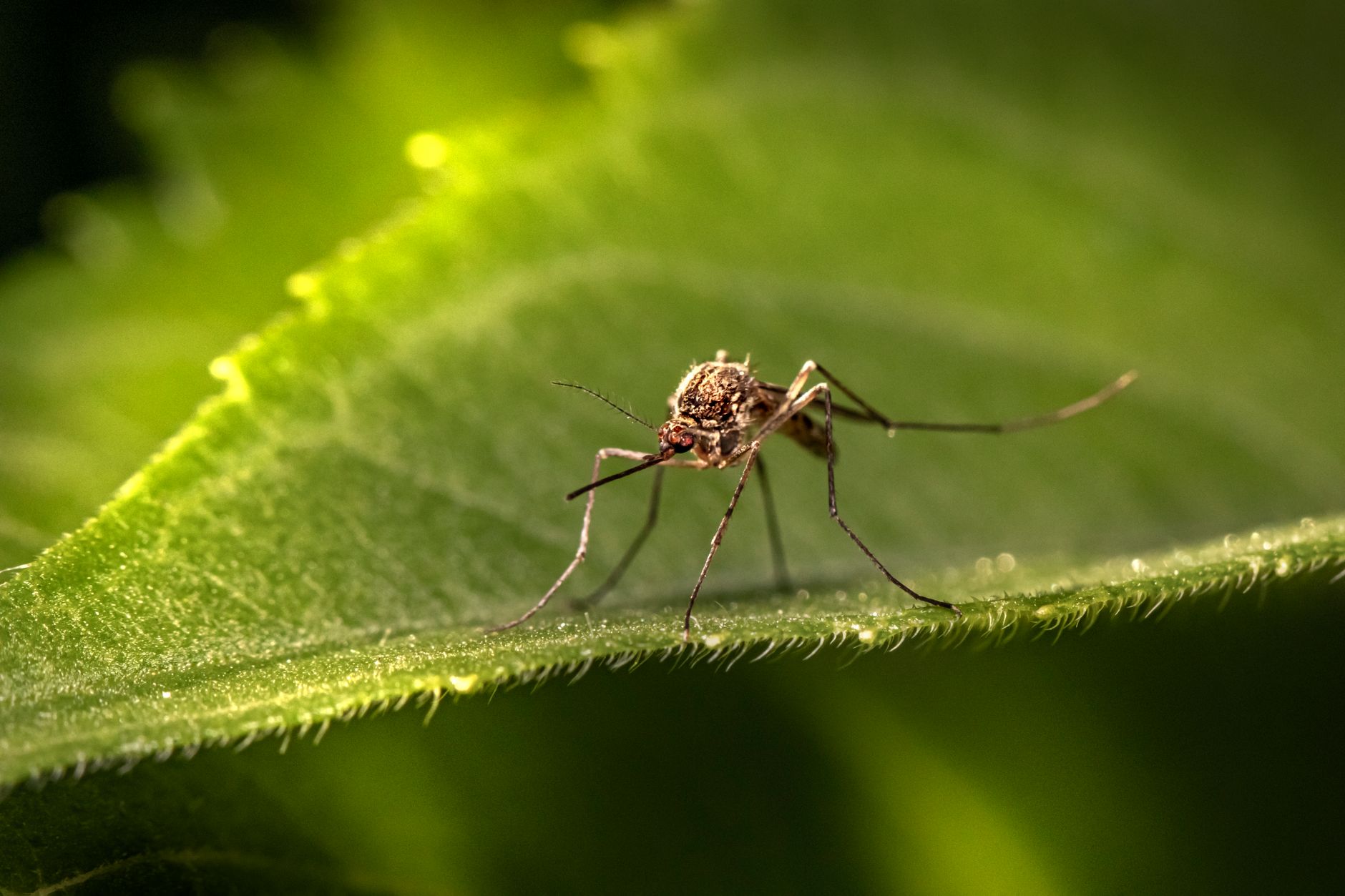
- There are three different programs people are blending into one: the World Mosquito Program (Wolbachia bacteria), Oxitec (genetically modified, self-limiting), and Target Malaria (the gene drive). They use opposite methods and carry completely different risk profiles.2
- The “30 million GMO mosquitoes a week” story going viral is the Wolbachia program — and those mosquitoes are not genetically modified. The Wolbachia is a naturally occurring bacterium inside the insect; the mosquito’s own DNA is untouched. The viral framing is simply false.2
- The real story is the one that didn’t trend: on 22 August 2025, Burkina Faso’s government suspended all Target Malaria activities and ordered remaining mosquito samples destroyed, citing biosafety, low effectiveness, scientific sovereignty, and unresolved consent.34
- The Wolbachia approach genuinely cuts dengue — a randomized trial found a 77% reduction in symptomatic dengue.1 But efficacy was never the objection. You can reduce disease and still run roughshod over consent, sovereignty, and the right of people to decline being inside the experiment. Both things are true at once.
- The panic, and the part of it that’s real
- Three programs, not one — learn the difference
- The dengue data is genuinely good
- Burkina Faso: a government said no
- Consent: the objection nobody can wave away
- Irreversibility: the gene-drive problem
- Sovereignty and who voted for this
- What we genuinely don’t know
- What this article is not saying
- References
The panic, and the part of it that’s real
Here is what set the internet on fire: programs backed by the Bill & Melinda Gates Foundation are breeding and releasing mosquitoes by the tens of millions a week, and a wave of people decided this was a billionaire conducting biological warfare on the public. The number that went viral — roughly 30 million mosquitoes released per week — is real. The framing wrapped around it is mostly nonsense.
I want to be precise about where I stand, because this is the kind of story where the loudest voices on both sides are wrong. The people claiming these are depopulation bugs, or that the mosquitoes inject vaccines, or that this is some covert sterilisation scheme, are spreading garbage that falls apart the moment you read a single primary source. I’m not going to launder that. But the establishment response — that anyone uneasy about this is an anti-science crank — is its own kind of dishonesty. The discomfort is legitimate. It’s just pointed at the wrong target.
The real problems with releasing engineered insects into the open air are not science fiction. They are old, boring, serious problems: nobody asked the people who live inside the release zone, some versions of this are genuinely permanent once you start, and a sovereign national government recently looked at one of these Gates-funded programs and threw it out of the country.34 You can hold that and still accept that the dengue data is good. That’s the honest position, and it’s the one almost nobody is taking.
Three programs, not one — learn the difference
The single biggest reason this debate is a mess is that three completely different programs are being treated as one. They use opposite biological strategies. They carry different risks. Lumping them together is how you end up calling a bacterium “a GMO” and a one-village test “a planet-wide gene release.” If you learn nothing else from this piece, learn these three apart.
One — the World Mosquito Program (Wolbachia). This is the “30 million a week” story, and it is NOT genetically modified. The World Mosquito Program (WMP) is a nonprofit that began at Monash University in Australia and is funded by the Gates Foundation and Wellcome — Gates funds it, Gates does not run it. WMP breeds Aedes aegypti mosquitoes that carry Wolbachia, a bacterium that occurs naturally in about half of all insect species.2 The bacterium is a microbe living inside the insect; it is not an edit to the mosquito’s genome. The program states this plainly: the method “does not…involve genetic modification,” because the genetic material of the mosquito is not altered.2 The strategy is population replacement: release Wolbachia-carrying mosquitoes, let them breed with wild ones, and the bacterium spreads through the local population. Wolbachia-carrying Aedes are far worse at transmitting dengue, Zika and chikungunya, so as the bacterium spreads, disease transmission falls. WMP now operates in roughly fifteen countries, including Colombia, Brazil, Indonesia, Mexico, Vietnam and Australia. In Colombia’s Aburrá Valley, dengue incidence reportedly fell by the order of 94–97% after Wolbachia established.8 So when someone shows you a video of a “mutant GMO mosquito factory,” understand that the thing they are pointing at is bacteria in a bug, not a genetic edit. The viral “they’re releasing GMO mosquitoes” claim, applied to this program, is simply false — and saying so is what lets the real criticism land.
Two — Oxitec. This one genuinely is genetically modified. Oxitec, a commercial company, engineers male Aedes mosquitoes with a “self-limiting” gene: when they mate with wild females, their female offspring die before reaching adulthood, which suppresses the population over time. Oxitec mosquitoes were released in the Florida Keys (roughly 2021 through summer 2024, starting at around 12,000 males a week with the OX5034 strain) and in Brazil. Here is the nuance the viral posts skip: the Gates Foundation funded Oxitec’s separate malaria work — about $5.8 million in 2018 — but did not fund the Florida Keys project.6 Florida itself was split: a 2016 county referendum showed local support, alongside loud, organised local opposition. Critics argued the rollout was rushed and poorly communicated, and warned it would “needlessly put Floridians, the environment, and endangered species at risk.”67 The release phase ended in summer 2024, and the program is now before the US Environmental Protection Agency for a registration decision.7
Three — Target Malaria. The gene drive. This is the genuinely unprecedented one. Target Malaria, funded by the Gates Foundation and Open Philanthropy, is building toward a gene drive: a genetic system engineered to force a trait — for example, female sterility — through nearly an entire species, spreading faster than normal inheritance allows. That is the part that should make you sit up. A gene drive is, by design, not local and not recallable. Once it is self-propagating, there is no button to press to take it back. This is the program where the deepest objections live, and it is where the real news of the last year happened.
A bacterium in a bug, a self-limiting gene that fades if you stop, and a drive built to be permanent are not the same risk. Treating them as one insect is how an honest objection turns into a conspiracy theory — and how a real danger gets dismissed as one.
The dengue data is genuinely good — and that was never the question
I’m not going to pretend the Wolbachia approach doesn’t work, because it does, and pretending otherwise is the same misinformation move in the opposite direction. The strongest evidence is the AWED trial — Utarini and colleagues, published in the New England Journal of Medicine in 2021. It was a cluster-randomized controlled trial run in Yogyakarta, Indonesia: the city was divided into zones, some received Wolbachia deployments and some did not, and dengue was tracked across them.1 The result was large. Symptomatic dengue fell by 77.1% in the Wolbachia clusters, and dengue hospitalisations fell by 86.2%.1 That is a serious, well-designed result, and it is the single best piece of evidence in this whole field.
Independent risk assessments in Australia, Vietnam, Indonesia and Colombia have repeatedly concluded that the risk of Wolbachia release is “negligible to low.” I’ll grant that too. But hold two caveats. First, those assessments lean on short timeframes and, in many cases, on framing supplied by the programs themselves. “Low measured risk so far” is not the same statement as “the people who live there agreed to be the test.” Second, a lot of the efficacy and safety data in this field comes from the programs that run the releases, or from researchers they fund. The AWED trial is genuinely strong and relatively independent in design, and I’m crediting it as such. But the broader evidence base has a built-in conflict that you should keep in view.
Here is the part that matters, and it’s the spine of my whole position: efficacy was never the objection. You can cut dengue by three-quarters and still have done something ethically serious by deciding, on behalf of everyone in a city, that they would host your experiment. A program can be effective and still be imposed. The dengue numbers are an argument for the intervention’s value. They are not an answer to the question of who got to consent to it. Conflating those two is the move that lets a good result paper over a real problem.
Burkina Faso: a government looked at a Gates-funded program and said no
This is the story that should have been the headline, and it barely registered next to the cartoon version. On 11 August 2025, Target Malaria researchers released roughly 16,000 genetically modified male mosquitoes in the village of Souroukoudingan, Burkina Faso.3 A week later, on 18 August, national authorities asked the project to suspend. On 22 August 2025, Burkina Faso’s Ministry of Higher Education and Research suspended all Target Malaria activities in the country and ordered the remaining mosquito samples destroyed.34
Be precise about what that August release was, because the difference matters. The 16,000 mosquitoes were self-limiting genetically modified males — a step toward a gene drive, not a gene-drive release itself. The full self-propagating drive had not been let loose. What Burkina Faso halted was the program building toward that point. The reasons the government cited were not anti-vaccine hysteria; they were governance objections: biosafety risk, low impact and effectiveness, scientific sovereignty, and unresolved questions about transparency and consent.4 Communities near the test site reported that they had not been adequately informed or consulted before the release, and reporting on the project documented mounting tensions inside the Gates-funded effort well before the suspension.45
Sit with the source of that decision. This is not a fringe blog or an anonymous video. It is a sovereign national government, exercising authority over its own territory, deciding that a program underwritten by two of the most powerful philanthropies on earth had not cleared the bar of consent and sovereignty. When a state makes that call about an experiment running on its own soil and its own people, “trust the science” is not a sufficient reply. The science can be sound and the governance can still fail.
Consent: the objection nobody can wave away
This is the core of it, and it’s the part the establishment keeps ducking. You can decline a vaccine. You can decline a drug, a procedure, a clinical trial — informed consent is the bedrock of medical ethics precisely because the individual gets to say no. You cannot decline the mosquitoes in your neighbourhood. Once they’re released, everyone inside the zone is in the experiment, whether they agreed, objected, or never heard about it. There is no opt-out. That asymmetry is not a technicality; it is the central ethical problem, and it is entirely real.4
I want to be fair about how these programs handle this, because some of them do real community-engagement work — WMP and Oxitec both run consultation processes, and Florida had an actual referendum. But community engagement is not the same as informed consent, and a referendum that passes in one county does not bind the individual who voted against it and still has to live in the spray zone. The honest grade here is weak: meaningful, individual, informed consent from everyone affected is structurally impossible for an open-air release, and pretending a town-hall meeting closes that gap is exactly the move that breeds distrust.
If you want a cleaner version of the same tension in the pharmaceutical world, this is the same governance question that sits under the FDA’s peptide decisions and under the GLP-1 rollout: who decides what gets deployed at scale, and on whose behalf? With a drug you at least keep the right to refuse the prescription. With a release into the open air, that right is gone.
Irreversibility: the gene-drive problem is in a category of its own
Not all of these programs are equally serious, and I want to grade them honestly rather than tar them with one brush. Wolbachia replacement and Oxitec’s self-limiting gene are, in an important sense, recoverable: if you stop releasing, the effect fades. Self-limiting males die out by design. Wolbachia, if releases stop and the bacterium fails to establish, doesn’t self-perpetuate indefinitely on its own terms. These approaches have an off-ramp.
A true gene drive does not. It is engineered specifically to be permanent and self-spreading — to push a trait through almost an entire species and keep going on its own. That is the entire point of the technology, and it is what makes the “don’t worry, it’s reversible” reassurance false. Once a self-propagating drive is loose and established, there is no recall. Researchers are working on theoretical “reversal drives” and brakes, but those are unproven, and stacking a second planet-scale genetic intervention on top of the first to fix it is not what most people mean by “reversible.” This is genuinely unprecedented: a deliberate, designed-to-be-permanent change to a wild species, with no demonstrated undo. Grading the reversibility claim as anything but weak would be dishonest.
Sovereignty, oversight, and who voted for this
Step back from the biology for a second and look at the power structure, because this is where my discomfort actually lives. A small handful of billionaire philanthropies — the Gates Foundation, Open Philanthropy, Wellcome — are effectively underwriting vector-control policy at planetary scale. Even if you grant that every individual intervention works, “who voted for this?” is a completely fair question. These are not elected bodies. They answer to their boards, not to the populations living inside the release zones. The democratic oversight is thin to nonexistent, and the scale is enormous.
That’s not a claim that the people running these programs are malicious. Most of them are, by all evidence, trying to stop diseases that kill hundreds of thousands of people a year — malaria and dengue are real, brutal killers, and that motive is honourable. But honourable motives do not substitute for legitimate authority. When private money sets the agenda, funds the science, runs the releases, and supplies much of the data evaluating its own work, the conflict-of-interest stack is high even if every individual actor is sincere. Burkina Faso’s government understood that, which is why it reached for the word sovereignty rather than the word safety.4
What we genuinely don’t know yet
Long-term ecology. The honest answer on long-term ecological effects is that they are not well understood. Mosquitoes sit inside food webs — they feed bats, birds, fish and other insects. Most assessments concluding “negligible to low” risk are built on short timeframes, and short-term safety is not the same as a settled multi-decade ecological picture. Removing or replacing a population is a large intervention, and our measurement window is small relative to the change. That’s why this claim grades weak.
Independent long-horizon data. The strongest single trial, AWED, is genuinely good, but it is one trial in one city over a defined window.1 There is no large, fully independent, long-duration body of evidence on what happens to disease ecology, mosquito behaviour, or pathogen evolution a decade or two downstream of a population-scale replacement or suppression. The programs are, in effect, running the long-term study in real time on live populations.
Resistance and rebound. We don’t yet know how durable any of these effects are. Could dengue viruses adapt around Wolbachia’s blocking effect over many years? Could suppressed populations rebound, or could a different vector species fill the niche a suppressed one leaves behind? These are open biological questions, and “it worked for the trial period” does not answer them.
What this article is not saying
This is not “the mosquitoes are a depopulation plot,” or “they deliver vaccines,” or any of the conspiracy material attached to this story. That material is false, it falls apart against primary sources, and repeating it would make us exactly the kind of unreliable outlet I don’t want this to be. If you came here for confirmation of that, I can’t give it to you, because it isn’t true.
This is also not “these programs don’t work.” The Wolbachia dengue data is strong, the diseases being targeted are devastating, and the people running these projects are mostly trying to do good. Dismissing the whole enterprise as worthless is as dishonest as the conspiracy framing.
What this article is saying is narrower and, I think, harder to argue with: the loudest objections get the science wrong, but the quiet objections are right. Nobody meaningfully consented on behalf of the people inside the release zones. Gene drives are genuinely irreversible, and calling them anything else is spin. And a sovereign government just looked at one of these programs and said no, on grounds of sovereignty and consent. I’m not here to cheerlead a billionaire’s planet-scale biology experiment — not because the biology is necessarily wrong, but because “it works” was never a sufficient answer to “who said you could.” For more of how we weigh this kind of evidence, see our reference desk.
References
- Utarini A, Indriani C, Ahmad RA, et al. Efficacy of Wolbachia-infected mosquito deployments for the control of dengue. N Engl J Med. 2021;384(23):2177-2186. DOI: 10.1056/NEJMoa2030243. PMID 34107180. (AWED cluster-randomized trial; 77.1% reduction in symptomatic dengue, 86.2% fewer hospitalisations.)
- World Mosquito Program. The Wolbachia method: how it works. Retrieved 2026. worldmosquitoprogram.org. (States the method “does not…involve genetic modification”; Wolbachia is a naturally occurring bacterium.)
- Target Malaria. Target Malaria activities suspended in Burkina Faso. Official statement, 2025. targetmalaria.org. (11 Aug 2025 release of ~16,000 GM males; suspension 18–22 Aug 2025.)
- Nordling L. Mosquito gene-drive cancellation disrupts Africa’s malaria research. Nature (news). 2025. nature.com. (Burkina Faso halt; biosafety, effectiveness, and sovereignty concerns; community consultation disputes.)
- Vogel G. GM mosquito trial strains ties in Gates-funded project. Science (AAAS, news). 2025. science.org. (Reporting on tensions within the Gates-funded Target Malaria project.)
- Snopes. Did Bill Gates release GMO mosquitoes in Florida? Fact-check. snopes.com. (Oxitec Florida Keys release; Gates Foundation funded Oxitec’s malaria work, not the Florida Keys project.)
- Florida Keys Mosquito Control District. Oxitec mosquito trial. Program documentation. keysmosquito.org. (OX5034 self-limiting Aedes aegypti release, ~2021–2024; now before US EPA.)
- Velez ID, et al. Reduced dengue incidence following city-wide wMel Wolbachia mosquito releases throughout three Colombian cities. PLOS Negl Trop Dis. 2023. DOI 10.1371/journal.pntd.0011713. (Interrupted time-series; ~95–97% dengue reduction across the Aburrá Valley cities.)